
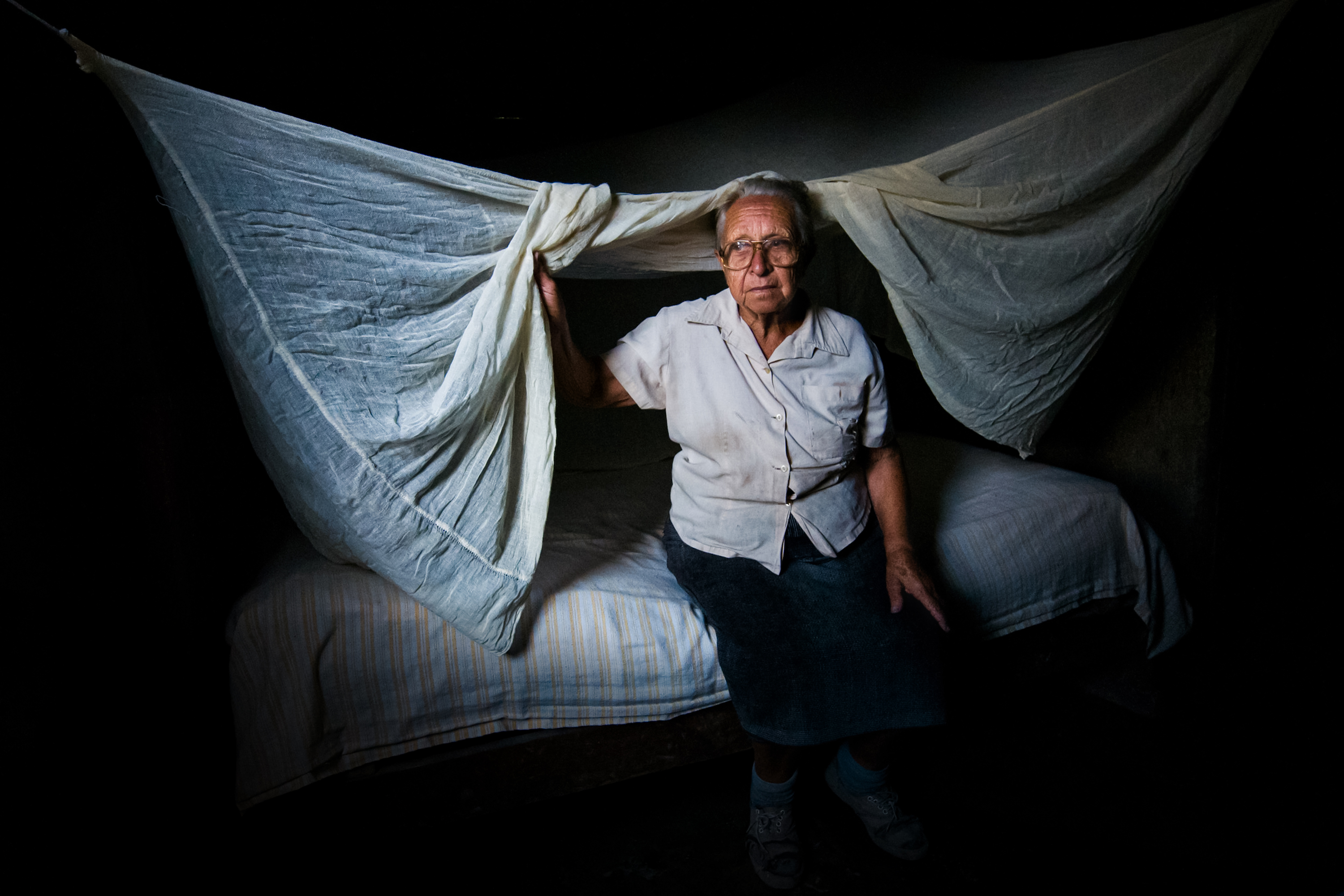
The result has been nothing short of devastating for the country’s retirees.
“It’s a nightmare in every direction. This is an SOS. Cuba is about to collapse in a fatal way,” said Ramon Saul Sanchez, a long-time anti-Cuban regime activist and president of the Democracy Movement in Miami.
“People can’t really imagine, especially from outside, making elderly people live in such inhumane conditions,” Sanchez told The Epoch Times.
“Because of the deterioration of the economy and the lack of interest of the Cuban regime, they aren’t helping those who need it,” he said. “Retirement pension maybe allows you to buy a dozen eggs a month. That’s it.”
The report noted the number of elderly dependents for every 100 working-age adults could soon reach 28 with the soaring volume of migrant outflows that began in 2022 expedited the problem.
An additional nearly 200,000 have been arrested in fiscal year 2024 through July.
These numbers have eclipsed previous large-scale migrations from Cuba to the United States, including the 1965–1973 Freedom Flights (approximately 300,000 Cubans) and the 1980 Mariel Boatlift (about 125,000 Cubans).
Plummeting birth rates have also fueled the acceleration of Cuba’s aging population for decades.
The study authors stated that fertility rates climbed past 30 births per thousand citizens for several years following Fidel Castro’s 1959 revolution.
However, once the initial optimism of the communist regime faded, that rate declined by the late 1960s.
As of 1980, Cuba’s birth rate plummeted to a historic low of 14 per thousand.

In 2023, the deputy head of Cuba’s state-run National Office of Statistics and Information, Juan Carlos Alfonso Frag, appeared on the television program “Mesa Redonda” to address concerns over Cuba’s aging population.
Frag said the country has endured low fertility and high mortality rates for four years straight.
Meanwhile, relatives of Cubans living on the island say the lack of food and medical supplies is creating daily survival challenges for their loved ones.
Living on as little as $10 a month from their government pension, Sanchez explained that people who are too old to work often lack proper medication and nutrition.
Sanchez said the country’s communist party isn’t interested in helping its most vulnerable citizens, many of whom are former supporters of Castro’s revolution or even worked for the communist party.
Sanchez said Cuba’s entrenched regime now complains it doesn’t have enough money to pay out the pensions, claiming the country’s finances are too tight.
“People are dying. Elderly people are fainting in the streets from a lack of nutrition,” he said.
Sending Help
Of retirement age himself, Sanchez has a close friend to whom he has sent medical equipment and other supplies on many occasions.
Most recently he shipped health care items after his friend broke a leg.
Even the most basic medical supplies are scarce in Cuba.
Sanchez described the situation his friend dealt with upon arriving at a hospital with his leg broken in three places.

“They took a used cast they had propped up in the corner and put it around the knee. Then they put a piece of clothing to hold it in place and sent him home.”
When the leg didn’t heal, Sanchez’s friend was told by a doctor he’d need surgery.
“I had to send him everything for them [doctors] to do the surgery,“ Sanchez said with a heavy sigh. ”I’m literally talking about everything you need to do surgery.”
Without an urgent care package of antibiotics, bandages, stitches, and even anesthetics, Sanchez said his friend’s surgery wouldn’t have been possible.
Like so many, most of his friend’s family have either left the island or passed away.
Sanchez said his organization helps hundreds of Cubans in the same situation. Some have families in the United States that can ship supplies, but others are trapped and have no lifeline at all.
“We get calls like this every single day,” he said.
Author, co-founder, and spokesperson for the Cuban Democratic Directorate, Orlando Gutiérrez-Boronat, confirmed this.
“There is a severe shortage of medication because the regime is bankrupted and has no credit anywhere in the world,” he told The Epoch Times via text.
Boronat said the elderly are now paying a disproportionate price for years of economic mismanagement at the hands of Cuba’s regime.
This is especially concerning in healthcare, given the higher number of medical conditions that afflict the elderly.

Boronat said there’s an acute lack of health care staff due to the number of doctors sent abroad by the regime, while others leave voluntarily.
He added that it’s a common practice to have medical students in charge of emergency services in most hospitals in Havana.
The Victims of Communism Memorial Foundation said the contradiction exists because Cuba has a multi-tiered approach to health care and access to high-quality treatment is reserved for medical tourists and high-ranking members of the communist party.
“The Cuban health system is collapsed and does not have adequate facilities or supplies,” the report stated.
It cited field research that observed a “widespread reliance on the black market, or the informal economy, to meet the basic needs of consumers” delivered from friends, family, or charities from overseas.
The analysis further noted common items Cubans usually get from outside the health care system include cold and flu medicines, surgical and dental equipment, and painkillers.
The impact of Cuba’s failing health care system is even more profound on the elderly.

“It is a well-known fact that the elderly population in Cuba able to be fed and dressed are receiving remittances from their families abroad,” Boronat said. “No retiree can live on the pension they receive.”
He added many of the homeless in Cuba are retirement-age individuals who lack external support.
Sanchez said even regime members are being abandoned as they age out of the workforce.
“People who fought for the [communist] revolution are coming forward now and saying ‘I gave my life for the revolution,’ we see it everywhere now,” he said.

Working Around the Regime
For Sanchez and other Cubans living in exile abroad, he said he has to be careful not to put his name on anything he sends to loved ones on the island.
He said that is because if you’re a persona non grata with the ruling party, whatever is sent will be confiscated.
Sanchez explained he has helped collect and ship containers of food, but it has to be done “in a concealed way,” so the items make it past Cuban customs.
He recently sent $500 worth of general supplies to the island.
In Miami, Sanchez said it’s common to find Cuba-specific stores that carry everything from medical supplies to appliances for those who want to ship items to their family.
“You’ll hear a lot, ‘Did you find someone to send the thermometer?’ or ‘How do I find someone to send orthopedic shoes?’” Sanchez said, echoing common conversations among Cuban exiles.
He said Cuba’s regime takes a sizeable cut of what comes into Cuba and the biggest challenge is getting critical supplies into the hands of those who need them.
While the United States doesn’t block efforts to send humanitarian aid, Sanchez said the communist party does.
“We are the main humanitarian source for the Cuban people. The American embargo doesn’t interfere with that.”
In a 2023 events analysis, the organization stated Cubans suffered three-hour blackouts every day for several months, starting in February.

But this explanation rings hollow for many since countries have been trading with Cuba for years, including biotech giants like China and Brazil.
“The health care of the population is not a priority to the regime. The segment of the people most severely hurt is the aging one, who need the most medications,” Boronat said.
When asked why older residents don’t flee Cuba with their families, Sanchez said. “Many of them in retirement don’t have the resources to buy the tickets to get out. They live in a very dire condition.”
He said younger generations sell everything they own, except the clothes on their backs, just to leave.
Others roll the ultimate dice and cross the dangerous Straits of Florida for a shot at living outside the reach of communist Cuba.
Even older residents are willing to risk crossing the treacherous waters between Cuba and Florida, according to Sanchez.
He described a recent incident where he organized help to evacuate an abandoned elderly man who was starving in his home.
Tragically, the man died just two days after being taken to a hospital.