
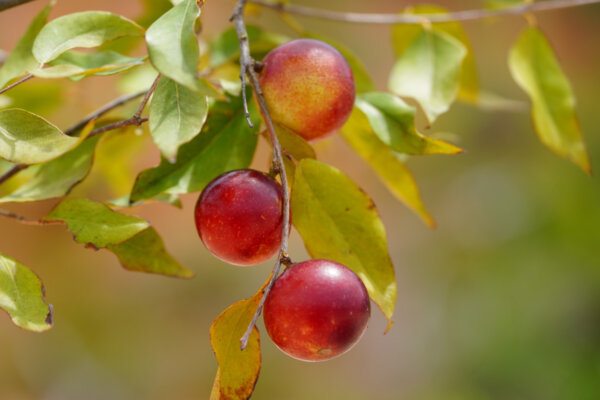
 Camu camu, a small yet powerful berry from the Amazon rainforest, could be useful in treating non-alcoholic fatty liver disease (NAFLD), recent research suggests.
Camu camu is a berry native to South America, characterized by a deep red color when ripe and a tart flavor, and is about the size of a grape
NAFLD begins with fat buildup in the liver, which can lead to severe liver conditions, such as liver scarring. Without intervention, NAFLD can potentially progress to fatal liver failure. The condition currently affects more than a quarter of adults in the United States.
Camu Camu Reduces Liver Fat
In a randomized, double-blind trial, Marette and the research team from Laval University studied 30 overweight adults with high blood lipid levels—a marker for NAFLD—who were given either 1.5 grams of camu camu powder or a placebo daily for 12 weeks.
Known for its high vitamin C levels, camu camu contains a unique mix of beneficial polyphenols, including ellagic acid and castalagin, both of which have anti-inflammatory properties.
Polyphenols and Gut Health
The benefits of camu camu are largely attributed to its impact on fat metabolism. The researchers believe that camu camu’s health effects come from its high concentration of polyphenols which assist in breaking down fat in the liver and inhibit the formation of new fat.
Camu camu’s effectiveness is enhanced by having a healthy gut microbiome, which consists of beneficial bacteria that help metabolize the polyphenols in camu camu, said Marette.
These improvements occurred without significant changes in body weight or overall body fat, suggesting that camu camu specifically targets liver health rather than general weight loss.
Looking Ahead: Advancing Treatment for All Ages
The incidence of NAFLD has surged across all age groups from 2017 and 2021, with the most significant increase observed in children under 17.
Future research aims to enhance the benefits of camu camu by identifying which gut bacteria are essential for metabolizing its polyphenols. Marette told the Epoch Times that not all participants experienced the same level of liver fat reduction, which the researchers attribute to variations in “the participants’ gut microbiota composition.”
Marette said that the next step will be to pinpoint the key bacteria needed for metabolizing these polyphenols. Researchers will also investigate the metabolic products of camu camu’s polyphenols to understand their role in reducing liver fat. The team is optimistic that camu camu could become a valuable tool for both prevention and treatment.