
OAN Staff Brooke Mallory
2:15 PM – Monday, January 19, 2026
In one of the deadliest rail accidents in Europe in recent decades, at least 40 people were killed and more than 150 injured when two high-speed trains collided near the small town of Adamuz in Córdoba province, southern Spain, on Sunday evening.
Approximately 152 people were injured in the collision.
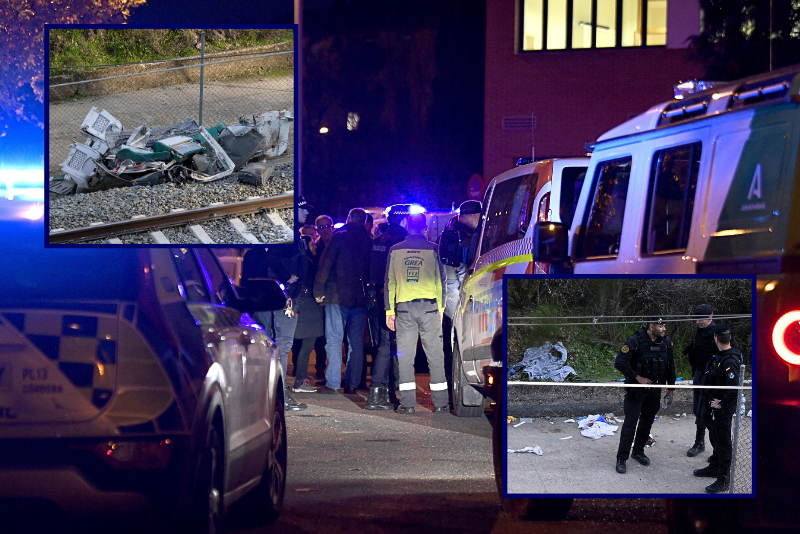
The crash, which occurred at around 7:45 p.m. local time, involved a northbound Iryo train traveling from Málaga to Madrid that derailed, with its rear carriages crossing onto the adjacent track and slamming into an oncoming Renfe train heading from Madrid to Huelva.
The front cars of the Renfe train plummeted down a 12-foot embankment, while debris scattered across the tracks, leaving twisted metal and shattered carriages in a remote, hilly olive-growing region about 360 km (approximately 223 miles) south of Madrid.
Regional authorities in Andalucía later raised the confirmed death toll to 40. Additionally, officials cautioned that the figure could climb further as search-and-rescue teams comb through the mangled wreckage, debris, and surrounding terrain for additional victims. Several of the victims were found scattered hundreds of feet from the crash site.
Among those killed were two prominent figures from the Andalusian journalism community: photojournalist María Clauss and her husband, journalist Óscar Toro, both widely respected professionals originally from the Huelva area. The other deceased victims have not yet been identified.
As of Monday afternoon, 41 people remained hospitalized, with 12 in intensive care — nine of whom were in serious condition suffering from broken bones, pelvic fractures, and facial injuries.
Emergency services swiftly activated the national mass-casualty protocol to manage the overwhelming scale of the disaster. Spain’s Civil Guard, together with fingerprint and DNA specialists, are still currently assisting in the identification of victims.
Local residents played a crucial role in the initial response, as many used their personal vehicles as ambulances — while providing blankets, tools and food to survivors amid the chaos.
One resident, Gonzalo Sánchez Aguilar, described seeing “a lot of dead bodies” with severe injuries while helping transport the wounded. However, the remote location complicated rescue efforts, as ambulances reportedly struggled to access the site via a single-track road. Heavy machinery was deployed to lift the mangled cars.
Andalucía’s emergency services and the Córdoba city government issued urgent calls for medical professionals to assist, while the Spanish Red Cross and firefighters worked tirelessly to extract survivors, including one pregnant woman.
Reports also emerged of a resident tragically discovering a deceased child and another calling for their mother in the debris.
Journalist Salvador Jiménez, aboard the Iryo train, described feeling the train hit an object before the lights went out, forcing passengers to smash windows with emergency hammers to escape. “It was like an earthquake,” he said, while noting overturned cars and people being pulled from the wreckage. Another survivor, Ana, from Málaga, who was traveling with her sister and dog, spoke of witnessing people die without being able to help, before being rescued through a blood-covered window.
The mayor of Adamuz, Rafael Ángel Moreno, was among the first to arrive at the crash site alongside a local police officer, rushing to the remote stretch of track shortly after the collision unfolded under the cover of night. What he encountered was a scene of utter devastation that he described as horrific and nightmarish: twisted metal strewn across the landscape, passengers desperately attempting to climb out of mangled carriages, and injured survivors calling out for help amid the darkness and chaos.
Authorities are now investigating what led to the derailment, with preliminary findings pointing to a broken rail joint (fishplate) that created a gap between rail sections, potentially widening as trains passed.
The Iryo train, a Frecciarossa 1000 model less than four years old, had been inspected just days earlier on January 15th, and the track was renovated in May 2025.
Human error has been virtually ruled out, with no evidence of speeding. The trains were traveling at “110-200 kph,” (68-124 mph) which is “below the 240 kph limit,” Spanish authorities added.
Safety mechanisms designed to halt trains in case of obstacles failed to activate in time. The Railway Accident Investigation Commission (CIAF) suggested the incident may have stemmed from an interaction between the track and vehicle, not signaling issues. In August 2025, the Spanish Union of Railway Drivers had warned of severe wear on the Madrid-Andalucía line due to increased traffic, urging stricter safety checks.
Transport Minister Óscar Puente described the accident as “extremely strange” and emphasized that it was too early for conclusions, while Renfe President Álvaro Fernández Heredia confirmed no speeding or human error.
Prime Minister Pedro Sánchez declared three days of national mourning starting at midnight on Monday, expressing condolences and vowing to uncover the truth behind the tragedy. He canceled his attendance at the World Economic Forum (WEF) in Davos to visit the site.
The crash has halted high-speed rail services across southern Spain, with over 200 trains canceled between Madrid and Andalucía. Airlines have ramped up flights to accommodate passengers, but disruptions are expected to last several days as investigations continue.
Stay informed! Receive breaking news alerts directly to your inbox for free. Subscribe here. https://www.oann.com/alerts
What do YOU think? Click here to jump to the comments!
Sponsored Content Below