
OAN Staff Cory Hawkins
4:54 PM – Tuesday, January 20, 2026
While promoting her fashion memoir “The Look,” Michelle Obama sparked controversy in a resurfaced clip where she appears to admit to a race-based shopping strategy.
During a November 2025 podcast, the former first lady explains that her choices weren’t just about aesthetics, but about a “mandate” to disrupt the fashion establishment by funneling attention and money to Black, Asian and Latino(a) designers.
Critics were quick to condemn her deliberate preference for designers “of color,” labeling the former first lady’s “exclusionary” approach to her wardrobe as a blatant double standard.
“If I hear of someone whose fashion that I like, and I know that they’re a person of color (POC), I try to make it a point. But the clothes have to be available. You know, I think we can all do some work to think about that balance in our wardrobes, you know? What does our closet look like, and who’s in it? Who are we supporting in it? You know? And if you have the money to buy Chanel, then you have the money to buy everybody [else]. And so let us be mindful—I think that would be my advice.”
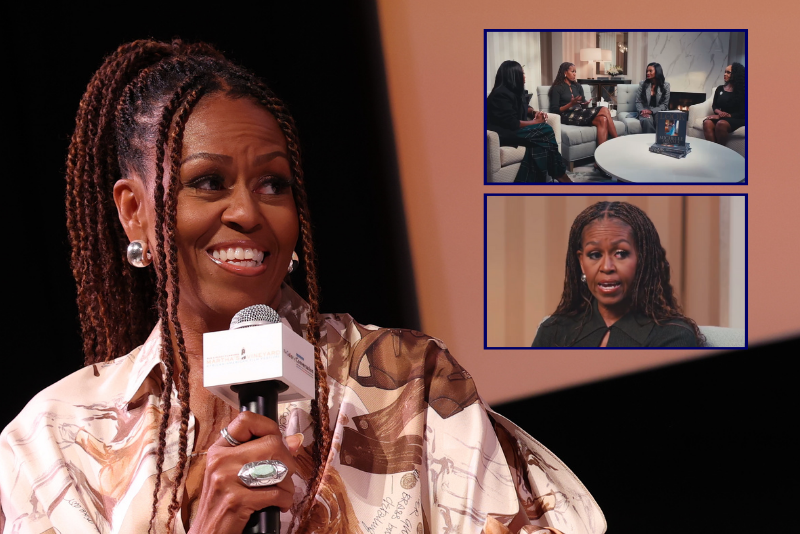
The clip features Mrs. Obama and three other Black women discussing what they described as “the importance of racial mindfulness” in consumer habits.
Using Chanel as an example — a luxury brand historically founded by White designers — Michelle argues that shoppers should actively diversify their wardrobes by prioritizing Black designers. However, she also went beyond personal choice, suggesting that the public should also factor a designer’s race into their purchasing decisions as well.
Critics quickly highlighted a media double standard while questioning what kind of fallout would transpire if any other First Lady, especially Melania Trump, had proposed choosing clothing based on the race of the designer.
Nonetheless, this isn’t the first time the 62-year-old former first lady’s racial focus has raised eyebrows.
In an October 2025 PEOPLE interview, Michelle admitted she purposely avoided wearing white during her time in the White House, claiming she did so to appear more approachable — a move that some have argued was a calculated and racially motivated optics strategy.
“I rarely wore white,” she said. “I didn’t want my clothes to stop me from engaging people. So my clothes had to be welcoming. They had to invite people in. I had to be able to give a hug.”
Michelle has also previously claimed that “as the first Black couple” in the White House, her and Barack “couldn’t afford any missteps,” suggesting ill treatment due to the color of their skin.
“You can’t afford to get anything wrong because you didn’t get the grace that I think some other families have gotten,” she added.
The ideological foundation for “The Look” was exemplified during the podcast’s premiere, when Michelle engaged in another recorded dialogue with actress Tracee Ellis Ross.
After framing Black hair and beauty standards as a struggle against “White” expectations, critics argued that the former first lady established a narrative of victimhood that she used to justify her broader agenda.
“Our hair comes out of our head naturally in a curly pattern, so when we’re straightening it to follow your [European] beauty standards, we are trapped by the straightness. That’s why so many of us can’t swim… and we run away from the water. People won’t go to the gym… because we’re trying to keep our hair straight for y’all.”
“it is exhausting and it’s so expensive and it takes up so much time … Why do we need an act, a law to tell White folks to get outta our hair? Don’t tell me how to wear my hair. Don’t wonder about it. Don’t touch it. Just don’t.”
Stay informed! Receive breaking news blasts directly to your inbox for free. Subscribe here. https://www.oann.com/alerts
What do YOU think? Click here to jump to the comments!
Sponsored Content Below