
OAN Staff Cory Hawkins
3:53 PM – Wednesday, January 28, 2026
Lawyers for Tyler Robinson, the 22-year-old man accused of assassinating Turning Point USA (TPUSA) founder Charlie Kirk, have filed a formal objection to block graphic video of the murder from being introduced as evidence.
Robinson is charged with capital murder and faces a possible death sentence if convicted of shooting Kirk on September 10th.
Meanwhile, his defense team is specifically challenging the state’s “Proposed Exhibit 4.1,” a color video clip captured from only a few feet away that includes audio of unidentified voices immediately before, during, and after the fatal shot.
Robinson’s attorneys argue the footage is “irrelevant” to their current motion to disqualify the Utah County Attorney’s Office and that its presentation would jeopardize his constitutional right to a fair trial by prejudicing potential jurors.
The case stems from the September 10, 2025, assassination at Utah Valley University, where Kirk was struck in the neck by a single bullet while speaking to a crowd of roughly 3,000 people. Investigators say Robinson fired from a rooftop approximately 140 yards away before fleeing the scene. After a 33-hour manhunt, Robinson’s father recognized his son in security footage and turned him in to authorities.
The upcoming February 3rd hearing will focus on whether local prosecutors have a conflict of interest since the adult child of a deputy county attorney in the prosecutor’s office was present at the Kirk rally. While various videos of the assassination circulated on social media minutes after the event, it remains unclear if prosecutors intend to use those public clips or if Exhibit 4.1 is a distinct piece of evidence.
Robinson’s defense has also maintained an aggressive stance toward media coverage, requesting a ban on all cameras in the courtroom to prevent what they call a “secret prosecution” fueled by “biased” electronic media.
“This proposed exhibit is clearly inadmissible. If admitted, which would be in contravention of the Utah Rules of Evidence, it should remain sealed until it is admitted into evidence, if it is, at trial,” the court filing states.
“The video of Mr. Kirk’s death has no tendency to make any fact relating to the motion to disqualify more or less probable than it would be without the introduction of the video. The state has submitted still photos and diagrams, none of which Mr. Robinson objects to, showing Mr. Kirk’s location and proximity to the audience and the believed location of the family member of a member of the prosecution team, which are wholly sufficient to impart the relevant information that the state believes should be considered by this court,” the defense continued.
Robinson’s lawyers again cited the significant public interest the case has generated.
“To make matters worse, those media entities which now purport to refer to themselves as ‘litigants’ in this prosecution, in complete disregard of this court’s admonition to the contrary, seek to ensure that every single pleading filed in and statement to this court is available for widespread public dissemination long before a neutral, untainted and reliably unbiased jury is ever impaneled, undoubtedly undermining the ability of this court and the two litigants to do so.”
First Amendment attorneys for various media outlets have countered Robinson’s request for a camera ban by noting that, despite a long history of high-profile criminal trials in Utah, no defendant in the state has ever been found to have received an unfair trial due to pretrial publicity.
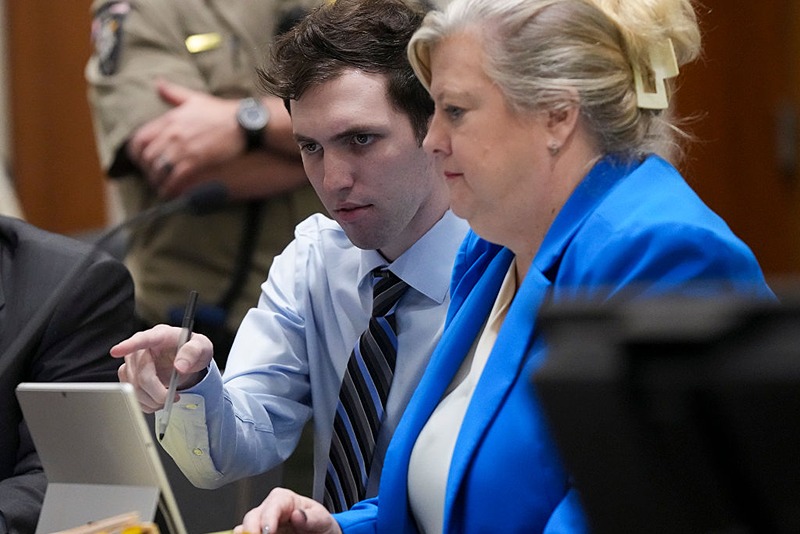
During the most recent hearing, Robinson’s defense team also expressed alarm over courtroom footage that showed the defendant conferring with his lawyers. They argued the video was not captured from a distance but was instead a close-up shot that violated a standing decorum order, leading to “absurd” public speculation from self-proclaimed lip readers and body language experts on social media.
“Repeated violations of this Court’s decorum order which … arise from improper, prohibited telescopic views of Mr. Robinson and his counsel … result in absurd but widely published opinions from putative ‘lip readers’ and others who seek fame and future from interpreting facial expressions or the lack thereof, are brushed off by the media’s in-court representatives as unintentional mistakes that will not be repeated again. This is, alas, the context in which the present hearing and the present objection must be viewed,” the defense added.
At the outset of the February 3rd hearing, Robinson’s defense team is expected to renew its request for strict limitations on courtroom media. Specifically, they are asking Judge Graf to prohibit both the videographer and the still photographer from capturing close-up images of Robinson while he is seated at the counsel table.
“Widespread publication of these images has served no legitimate purpose and merely fuels rampant, unfounded speculation about Mr. Robinson’s state of mind during these proceedings.”
Stay informed! Receive breaking news blasts directly to your inbox for free. Subscribe here. https://www.oann.com/alerts
What do YOU think? Click here to jump to the comments!
Sponsored Content Below