
Submitted by Steffan Szumowski from The Nuclear Review
Holtec International filed confidentially for an IPO recently with the SEC. The company alluded to the possibility of going public in 2026 earlier last year, as the nuclear renaissance has reignited investor interest in the almost forgotten nuclear industry. While the public market has only seen junior companies so far, Holtec is coming to market after being in the game for decades.
A Barron’s article from June of last year estimates Holtec could be worth more than $10 billion on over $500 million of annual revenue, as the company attempts to pull off the first reactor restart in American history at the Palisades nuclear plant in Michigan. The reactor restart, which has inspired multiple other restarts across the country, is one of the few things the company is known for. Yet, after decades of industry involvement, Holtec is involved in a lot more than just resurrecting nuclear reactors:
- Nuclear plant decommissioning
- Reactor restart
- Small modular reactor development
- Used nuclear fuel management
- Heat transfer equipment manufacturing
- Non-nuclear technologies
Nuclear plant decommissioning
Holtec Decommissioning International (HDI), a subsidiary of Holtec International, is responsible for taking a reactor plant with single or multiple reactor units on site from shutdown to as close to greenfield as possible. This involves handling the used nuclear fuel and dismantlement of radioactive systems and facilities.
HDI currently has three projects: Oyster Creek Generating Station in New Jersey, Pilgrim Nuclear Power Station in Massachusetts, and Indian Point Energy Center in New York. Decommissioning is further along and well past the point of no return at Oyster Creek and Pilgrim, but Indian Point was noted as a potential restart candidate by Holtec last year. Governor Hochul, even with her 5 GW new nuclear capacity target, has already come out as being against the idea of restarting Indian Point in favor of new construction projects in upstate instead.
Reactor restart
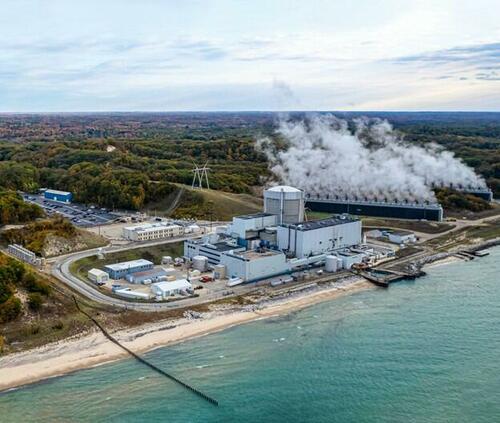
Initially announced in September of 2022, the Palisades are the first of many reactor restart efforts in the United States. Holtec purchased Palisades from Entergy in June of 2022. The DOE issued a $1.5 billion loan commitment in 2024 to support the effort and has already issued several tranches of the loan through 2025. The NRC has also created multiple novel regulatory pathways to enable the reissuance of an operator’s license for the plant, along with multiple exceptions for system restorations.
Originally targeted for the end of 2025, multiple material issues, most notably with the steam generators, have pushed the restart completion out several months. Completion is now anticipated in the middle of 2026. After the plant is restored to operations, there is no indication of Holtec looking to sell the plant to a utility, so the company will own and operate the plant through its subsidiary, Holtec Palisades.
Small modular reactor development
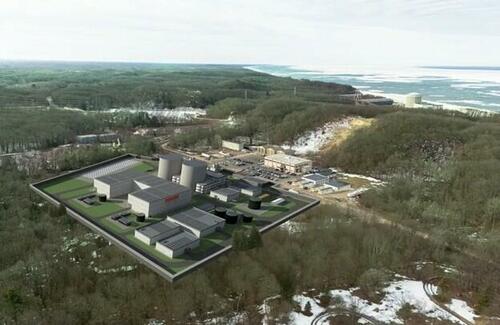
Holtec has been developing a small modular reactor for over ten years, initially called the SMR-160 and rated to about 160 MWe. Since then, the design was upgraded in 2023 to the SMR-300, now with a capacity of 320 MWe. The reactor is a pressurized water reactor (PWR) designed to operate with commercially available low enriched uranium (LEU). The development of their small reactor program is controlled by their wholly-owned subsidiary SMR LLC.
SMR LLC is actively pursuing deployment of their first two SMR-300s at the Palisades in Michigan, co-located with the reactor being restarted by HDI. The company has submitted a construction application to the NRC for what they call Pioneer Units 1 and 2. In addition to asking for permission to construct the new small reactors, Holtec is also requesting permission to begin construction on some non-nuclear systems at the site through a Limited Work Authorization. The initial deployment of the first two reactors in Michigan has also received government support in the form of a $400 million from the Department of Energy.
SMR LLC has additionally led the charge for America’s expansion in India. In early 2025, Holtec received permission from the US government to export the SMR-300 design to one of the biggest potential nuclear power markets outside of China. Holtec’s CEO has been quoted multiple times citing India as a major potential opportunity for them in the years ahead.
Used nuclear fuel management
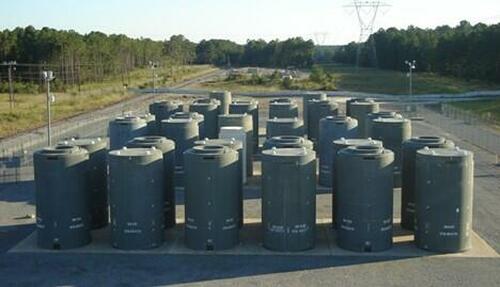
Holtec is the international leader in the safe transportation and storage of used nuclear fuel. They utilize their HI-STORM and HI-STAR dry cask systems throughout the world with the highest market share compared to their competitors. As good as they are though, there are still those in politics that use baseless fear-mongering to push back against the safe handling and storage of used nuclear fuel.
New Mexico lawmakers and executives, along with the support of the oil and gas industries, threw every wrench in their toolbox at Holtec in an effort to prevent the company from establishing the HI-STORE Consolidated Interim Storage Facility (CISF). The CISF was an attempt by Holtec to consolidate some of the nation’s more temporary dry cask storage facilities into one location. Regardless of how safe the science proves these casks are, New Mexico locals and activists acted as if they were fighting against a company dumping scary green nuclear waste all over their backyards. Even after arguing one of the wrenches from New Mexico all the way up to the Supreme Court, which ruled in Holtec’s favor, the company ended up canceling the entire project in 2025 due to exhaustion and lack of will to continue what would likely be another several years of absurd lawfare.
Heat transfer equipment manufacturing
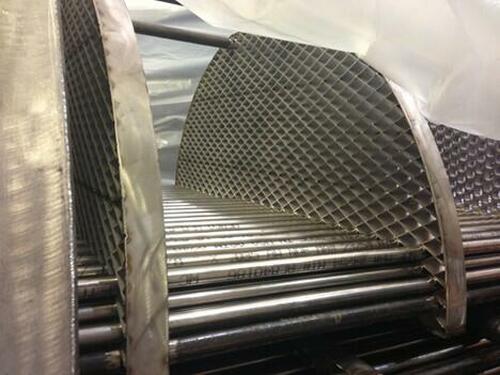
If you have energy in one system and need to get it to another system without the two energy carriers touching each other, Holtec is there to help. Unlike a lot of their competitors that make components for just the primary system or just the secondary system, Holtec works on both sides of the radiation boundary. The company designs and fabricates water-cooled condensers, feedwater heaters, steam generators, and a variety of auxiliary plant heat exchangers.
Non-nuclear technologies
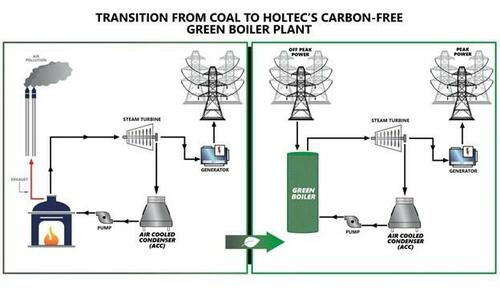
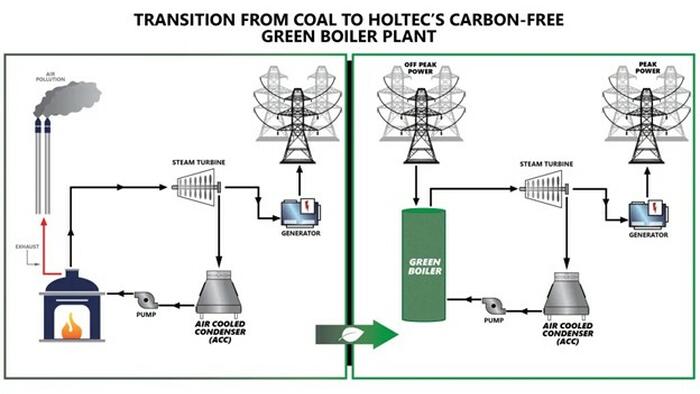
Holtec is also involved in non-nuclear systems such as solar, geothermal, and fossil fuels. Their Green Boiler is designed to replace coal plants that are being phased out. The Green Boiler is essentially a giant tank of engineered salts that are used to store energy from other production facilities such as solar farms or SMR-300 plants. The energy stored within the engineered salts can then be dispatched to the grid or other industrial processes on demand.
In summary…
Holtec is not just some brand new reactor developer walking in with a PowerPoint and a dream. The company has been around for over 40 years and is well diversified throughout the nuclear industry. One of their best features is that an extremely small amount of their business depends on the success of the nuclear renaissance.
Most of their work will remain relatively constant as the world’s existing fleet of over 400 reactors continues to operate and age. These facilities will require constant attention, upgrades, and refits as the years go on. In particular, used nuclear fuel transportation, handling, and storage services will be in demand for at least the next century.
Loading recommendations…