
OAN Staff Katherine Mosack
5:20 PM – Wednesday, February 11, 2026
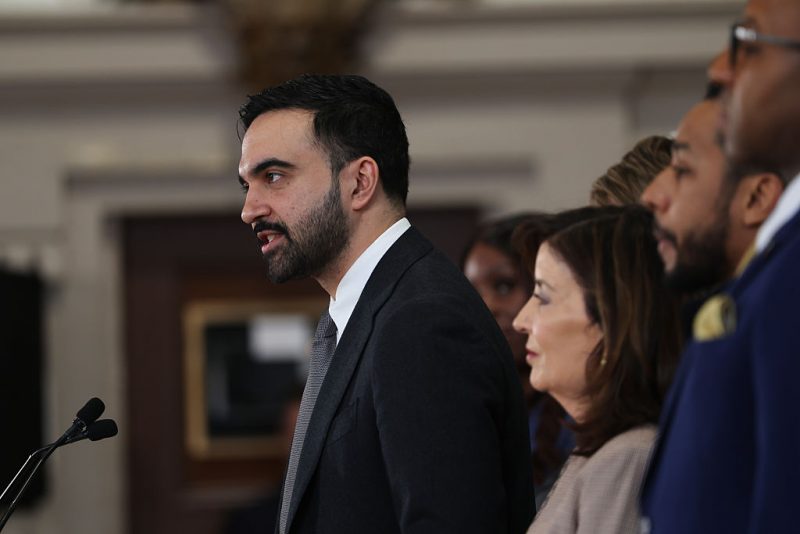
Making an appearance in Albany on Wednesday, New York City Mayor Zohran Mamdani participated in the annual “Tin Cup Day” tradition to lobby for state funding.
During his testimony, Mamdani claimed that while he inherited an initial $12 billion deficit, the projected budget gap has since narrowed to $7 billion, allegedly due to a surge in tax revenue and newfound “internal savings.”
According to Mamdani and his team, the $5 billion drop in the projected budget gap, from $12 billion down to $7 billion, was primarily driven by a surge in tax revenue fueled by a robust Wall Street bonus season and higher-than-expected corporate profits.
Mamdani’s administration also claims they narrowed the deficit by tapping into in-year reserves and shifting away from broad agency cuts in favor of “targeted efficiencies,” such as hiring more tax auditors to ensure full revenue collection.
Testifying before state lawmakers at the 2026 Joint Legislative Budget Hearing, Mamdani asserted that the most “equitable” way to bridge the city’s remaining $7 billion budget gap is to increase taxes on wealthy New Yorkers. He maintained that targeting high earners is necessary to avoid deep cuts to public services and to stabilize the city’s fiscal future.
“I’m glad to report that by assuming an aggressive posture on savings without compromising city services, incorporating updated revenue and bonus estimates, and using in-year reserves, we have lowered that $12 billion gap to $7 billion,” Mamdani said on Wednesday.
“The imbalance in our relationship with the State is draining the city’s resources. We are calling to end the drain,” he continued, adding, “No longer can New York sustain giving so much and receiving so little in return.”
Mamdani further emphasized in his testimony that the remaining $7 billion gap remains a historic fiscal challenge, larger than the deficits seen during the 2008 financial crisis, which he used to justify his continued push for a state-authorized wealth tax.
“I believe the wealthiest individuals and most profitable corporations should contribute a little more so that everyone can live lives of dignity. That’s why—along with raising the corporate tax—I’m asking for a 2% personal income tax increase on the most affluent New Yorkers. Someone earning a million dollars a year can afford to contribute $20,000 more.”
The NYC mayor also referenced President Donald Trump’s One Big Beautiful Bill Act (OBBBA), which he appeared to paint in a negative light after highlighting that the federal tax cuts amount to $12 billion per year for New Yorkers who earn more than $1 million — suggesting that the president primarily cares about the rich.
“That 2% tax would resolve nearly half of our budget deficit,” Mamdani added.
However, the GOP administration argues that under the OBBA, President Trump actually uplifted New York’s economy by securing $12 billion in annual tax relief for the state’s primary job creators. By making these historic tax cuts permanent, the administration maintains that it is providing New York’s top entrepreneurs and investors with an average of $129,600 in yearly savings, ensuring they have the capital needed to reinvest in local businesses and stay in the Empire State.
This move aims to effectively counter the high-tax policies of local radicals and cements New York as a competitive hub for American prosperity.
In addition to the 2% increase in taxes for millionaires, Mamdani said that he hopes to fulfill another campaign promise, convincing the state to raise its corporate income tax from 7.25% to 11.5%.
Since New York City cannot unilaterally raise its own income or corporate tax rates, Mamdani must “convince” the governor and state legislature in Albany to authorize these changes.
Following Mamdani’s remarks, Assembly Minority Leader Ed Ra (R-Nassau County) released a statement criticizing the tax proposals emerging from the city and state, targeting Mamdani’s push for hikes, while describing Governor Kathy Hochul’s (D-N.Y.) broader spending plan as complicit in the “affordability crisis.”
“New Yorkers need real financial relief and meaningful quality-of-life improvements—not more of the same failed policies that defined a decade of one-party rule,” Ra stated. “Over the last five years, overall state spending has increased by $81 billion. Yet as spending has gone up, quality of life has gone down. New Yorkers are paying more and getting less. We rank 45th nationally for affordability, and our electricity costs are 49% higher than the national average—a perfect storm driving more outmigration that our state simply cannot afford.”
“Ideas like free public buses and a $30 minimum wage may make for applause lines, but they come with very real price tags. Nothing is ‘free.’ Someone always pays—and in New York, it’s almost always the taxpayer.”
During a press conference last month, Mamdani addressed the city’s “serious fiscal crisis,” framing the then-$12 billion deficit as a direct consequence of the previous administration’s “reckless” budgeting, essentially blaming Eric Adams.
According to New York-based analysts, by attributing the shortfall to Adams, Mamdani has sharpened his case for taxing the wealthy to avoid deep service cuts.
While a preliminary budget is expected next week, City Hall’s formal Executive Budget proposal will follow later this spring. Although the City Council must technically adopt the final budget before the fiscal year begins on July 1st, negotiations often stretch right up to the deadline.
It is July 1st for New York City and April 1st for New York State.
Stay informed! Receive breaking news alerts directly to your inbox for free. Subscribe here. https://www.oann.com/alerts
What do YOU think? Click here to jump to the comments!
Sponsored Content Below