
OAN Staff Katherine Mosack
10:09 AM – Friday, February 13, 2026
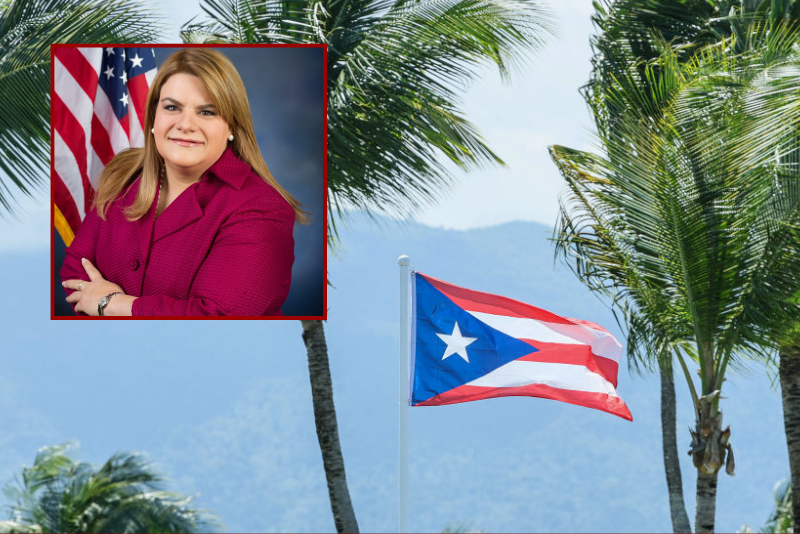
Puerto Rican Governor Jenniffer González-Colón has signed a significant pro-life measure into law that recognizes an unborn child as a “natural person” from the absolute moment of conception.
The governor signed a bill amending the U.S. territory’s Penal Code to recognize unborn babies as human beings, prompting fears by left-wing Puerto Ricans and doctors that the measure could result in outlawing abortion operations.
González-Colón, a Republican, released a statement on Thursday explaining that the measure “aims to maintain consistency between civil and criminal provisions by recognizing the unborn child as a human being.”
In January, the Puerto Rican Senate approved Senate Project 923, an administrative measure that amends Article 92 of the Penal Code to establish a fetus in any stage of gestation as a human being and “natural person” in murder cases.
“We are talking about an amendment to the Penal Code, which means that when referring to a human being in the chapter on murder, it will also include human beings in their mothers’ wombs. The message of this type of legislation is powerful. It reaffirms this kind of language in our public policy that in the womb of a pregnant woman there is not just anything, not a mere indefinable object, but a subject, a developing human being who has dignity and whose value is intrinsic to their human nature,” stated Senator Rodríguez Veve in a January press release that was translated from Boricua Spanish into English.
Additionally, the Puerto Rican government has stated that intentionally killing a pregnant woman, where the act also results in the death of the conceived child in her womb at any stage of gestation, constitutes first-degree murder under the law.
The legislation was reportedly inspired by the 2021 murder of Keishla Rodríguez, a pregnant woman killed by her partner, former professional boxer Félix Verdejo. Verdejo is currently serving two life sentences for the crime.
Proponents of the law maintain that it does not impact abortion access, which remains legal in the territory, but rather seeks to protect pregnant women by aligning civil and criminal codes to ensure consistently rigorous sentencing for their murder.
Despite these assurances, Senate President Thomas Rivera Schatz, the New Progressive Party (PNP) member who introduced the bill, has stated he would support future measures to further restrict abortion procedures.
In Puerto Rico, the New Progressive Party does not use the term “progressive” in the same way the American left does. For the PNP, “Progressive” primarily refers to social and economic progress through U.S. statehood, and their central platform is the decolonization of Puerto Rico by becoming the 51st state.
Since their primary goal is statehood, the party is a “big tent,” meaning it includes conservatives who align with the U.S. Republican Party, as well as social liberals and “labor-friendly centrists” who often align with the U.S. Democrat Party.
“This matter of Senate Bill 923, which makes it perfectly clear … And if it were necessary to legislate by all means, as many times as necessary, to protect life, I would do it. I wish this bill were something to further restrict abortion, and I would be in favor. I would be here defending it with the same vehemence,” the Senate president also said in Spanish in January.
Rosa Seguí Cordero, an attorney and spokesperson for the National Campaign for Free, Safe and Accessible Abortion in Puerto Rico, argued that the law would strip women of their “rights.”
“A zygote was given legal personality,” Cordero scoffed, speaking to the Associated Press. “We women were stripped of our rights.”
Dr. Carlos Díaz Vélez, president of Puerto Rico’s College of Medical Surgeons, also warned that “defensive healthcare” might arise from this new amendment, meaning that doctors could refuse to treat certain pregnancy conditions for fear of criminal prosecution.
“This will bring complex clinical decisions into the realm of criminal law,” he told the outlet, contending that it would have “disastrous consequences.”
This is not the first law signed by González-Colón that appeals to conservative interests. In July, she banned hormone therapies and sex change operations for minors. In December, her office also announced the signing of a law that would defend religious freedom, making it a misdemeanor to impede religious activity by force, intimidation, or violence.
Stay informed! Receive breaking news alerts directly to your inbox for free. Subscribe here. https://www.oann.com/alerts
What do YOU think? Click here to jump to the comments!
Sponsored Content Below