
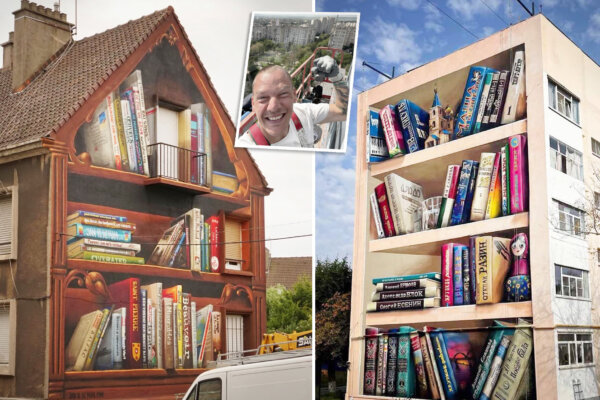
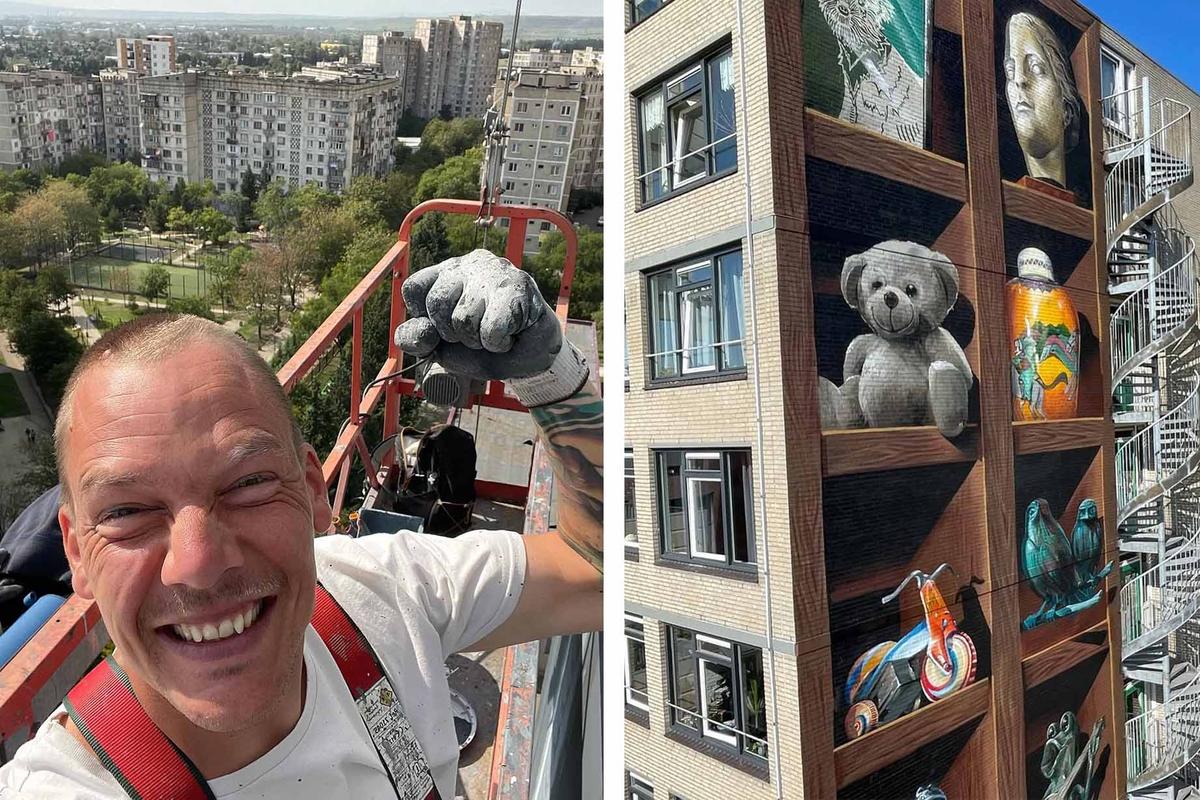
 Jan Heinsbroek’s hands shook the first time he stood on a scaffold and painted a nine-story-high cabinet of curiosities built for giants. With cans of colored paint, he nervously worked his artistic magic to brighten the side of an austere concrete apartment complex with an illusionistic shelf. It holds a floor-to-ceiling-size teddy bear and a marble bust as tall as a bus.
“I used to be scared of heights,” Heinsbroek, 42, told The Epoch Times, speaking of the enormous painting project, now displayed in his hometown of Utrecht, Netherlands. “But after a few days I got used [to it].”


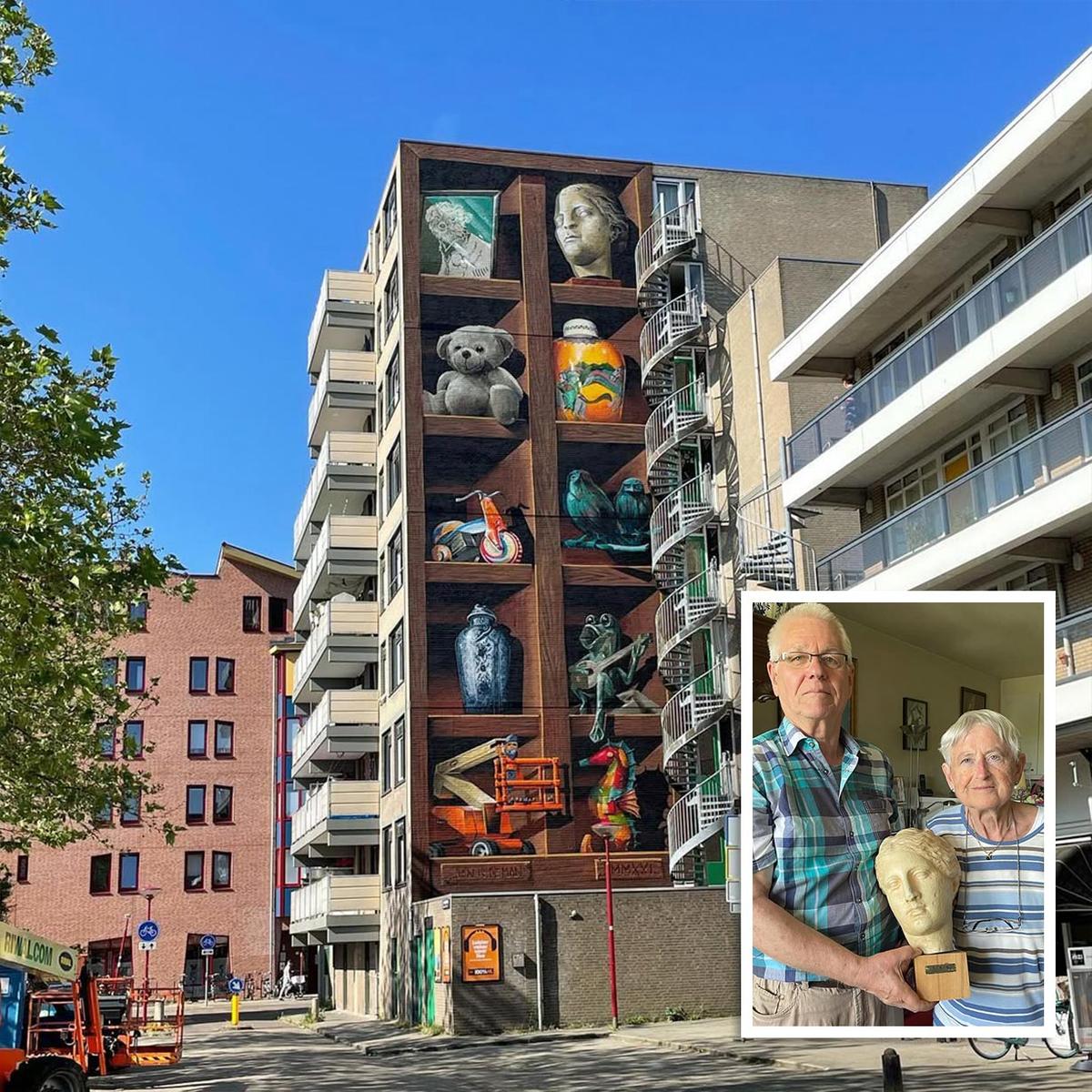
“A lot of times I feel like I cannot change this crazy world, but if I can get some people to smile, then they will smile and probably this will make other people smile, and then I changed a little bit,” he said.
Many times, whether it’s a super-sized trinket shelf or jumbo shark in a faux aquarium, Heinsbroek’s murals are urban beautification projects initiated by communities or city councils. He’s been invited to neighborhoods near his home and abroad—from depressing Soviet high-rises in Georgia to revitalized townships in Michigan. Entering a building, he gathers with its inhabitants to dig up stories and build personal bridges.
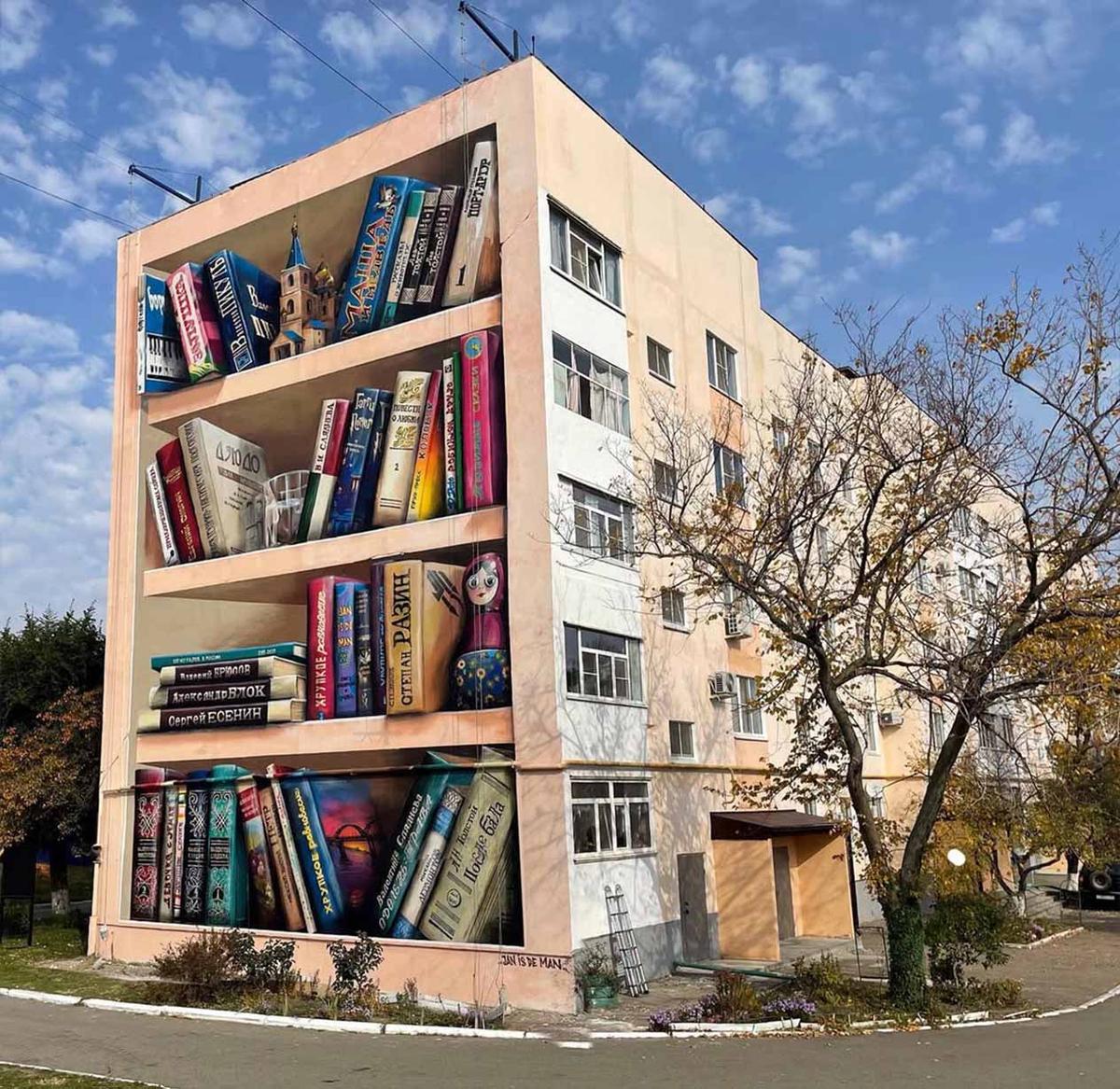
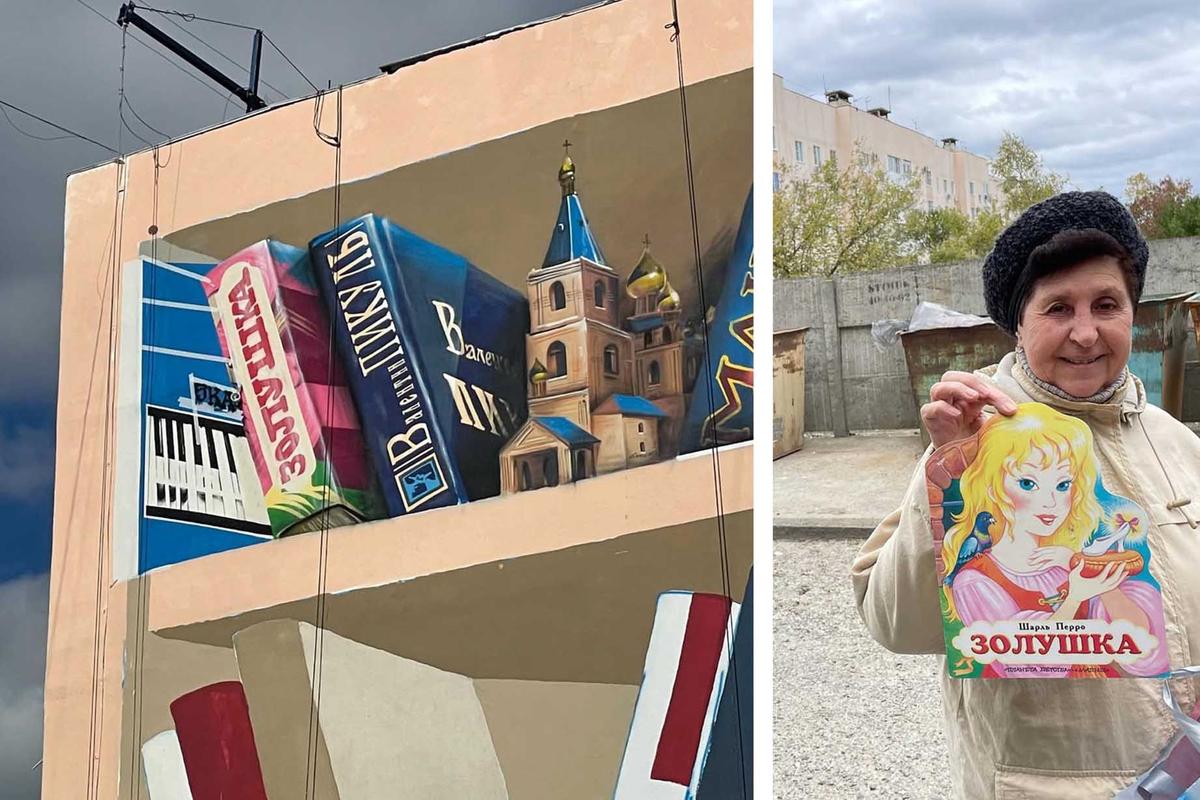
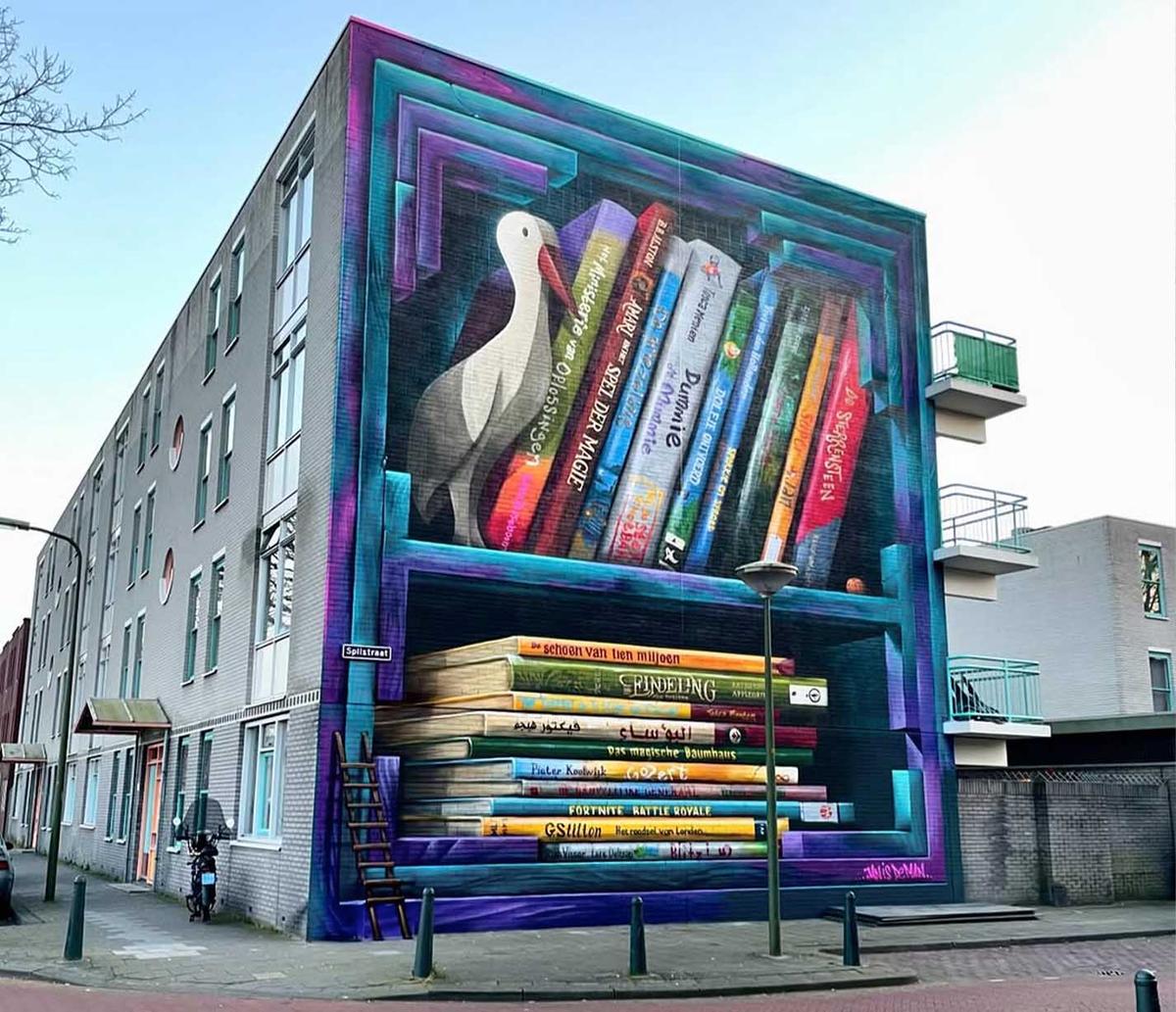
“What’s your favorite book?” he asks them, seeking to populate a gargantuan bookshelf with locally-beloved titles in Solnechnodolsk, Russia. The answers provided often open conversations among tenants and strengthen ties.
“Then they see [their favorite book is also] the favorite from the guy that lives next door, then you finally see that you’ve got something in common,” Heinsbroek said. “Everybody comes together.”



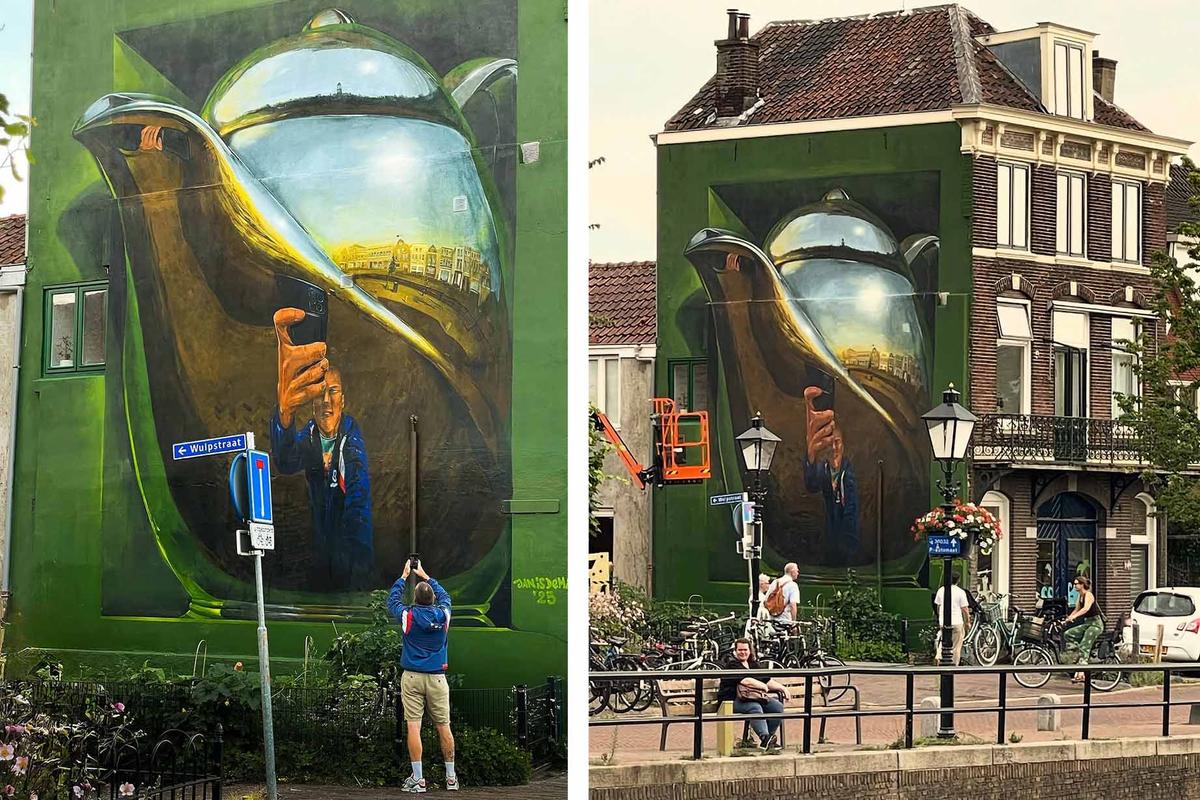
Most recently, Heinsbroek completed a cheekily contrived, three-story-tall teapot breaking out of the 2-D wall space and into the viewer’s 3-D environment. He had joined community members for cookies and coffee and, inspired by the cozy meetup, decided on the equally cozy brewing container.
The teapot piece contains a hidden message from the artist in its reflective percaline surface. Not only does the artist appear in the gargantuan curve of the spout, staring back at the viewer from where they would be standing on the sidewalk, but so does the cityscape all around him.
“I think it’s a good reminder to just sometimes look in the mirror,” he said. “Everybody needs to do more self-reflection.”
There is so much division in society today, Heinsbroek says, that everyone can stand to check themselves first before blaming others. Politics, power, money, the media—everywhere, negative influences are tearing apart the fabric of society instead of bringing people together to make a better planet.
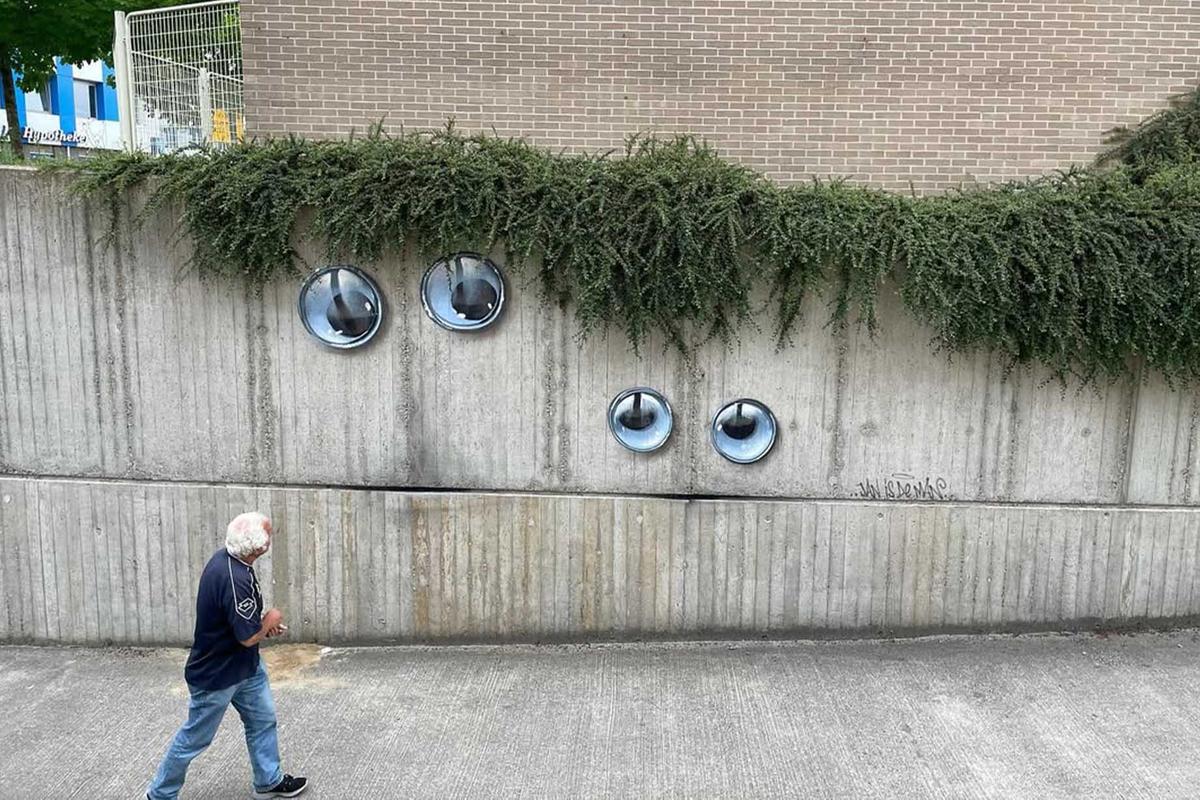

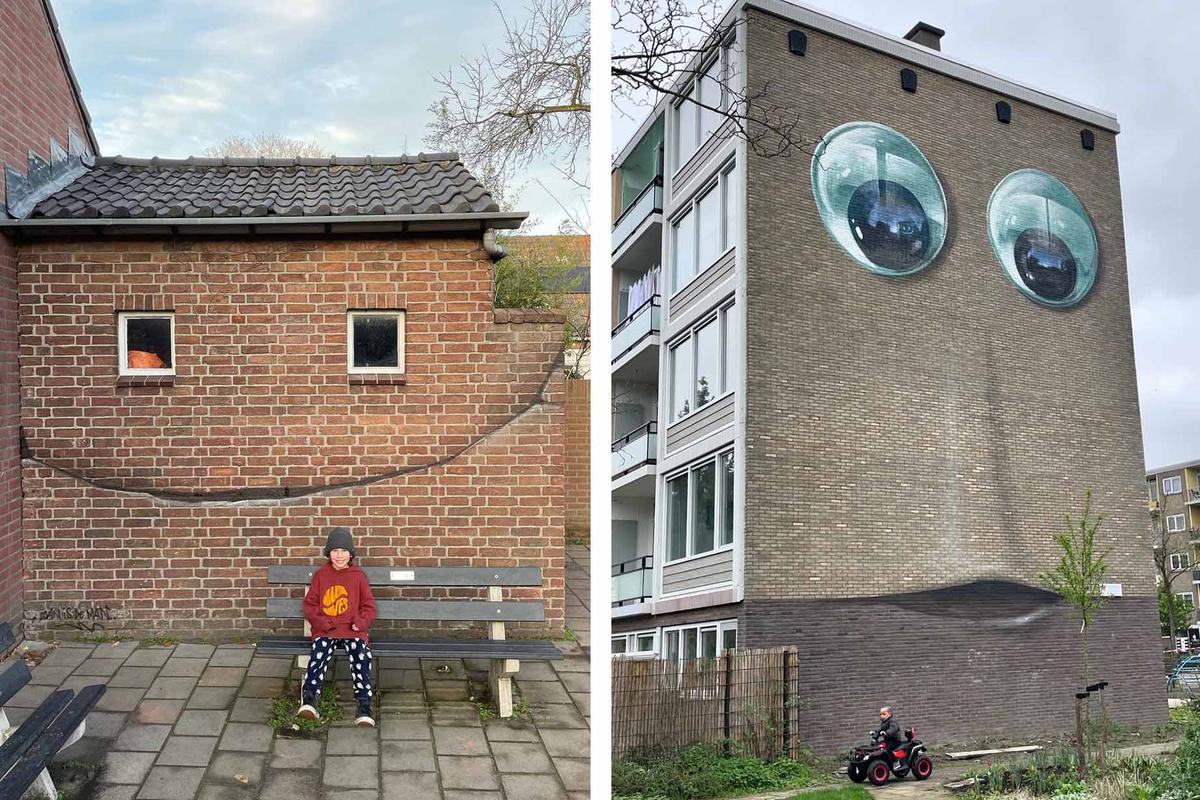

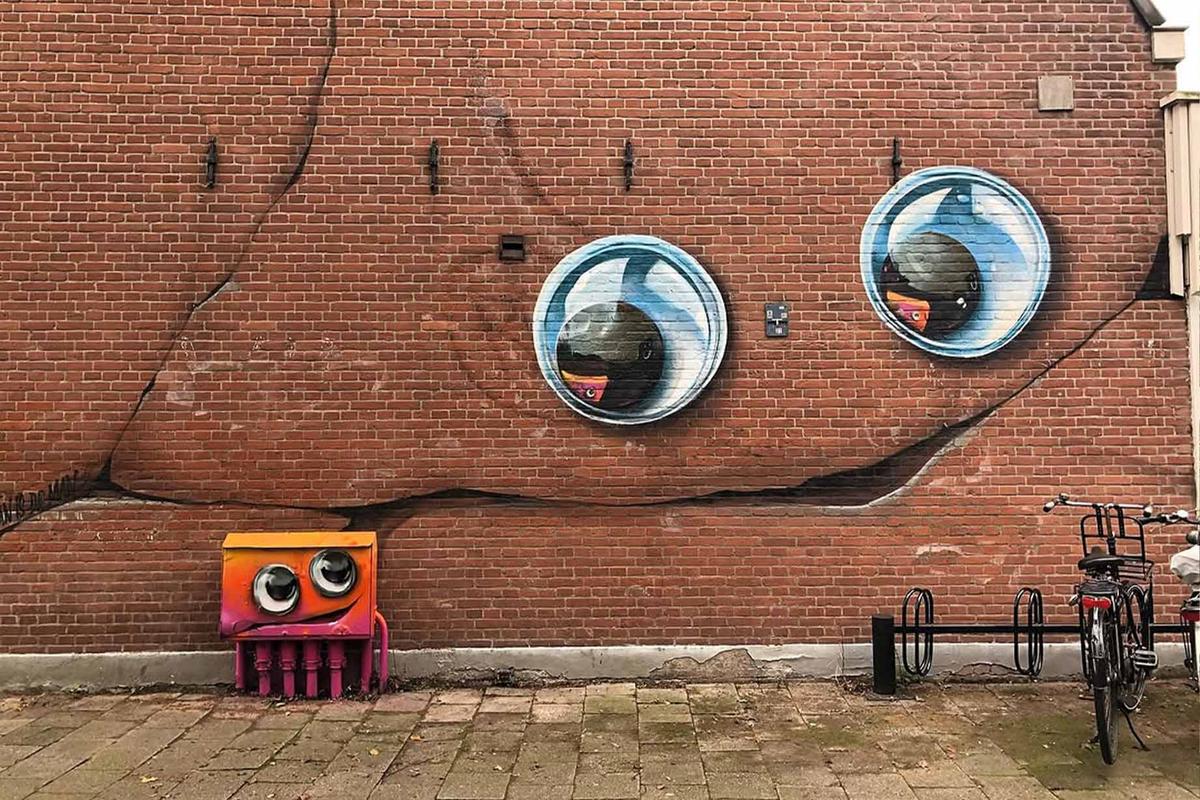
Being clever with perspective is one way Heinsbroek encourages people to see the world in from new angles—literally and figuratively. He starts by hitting the street and seeing the building or wall from the viewer’s perspective. The illusion will usually only work from one viewpoint.



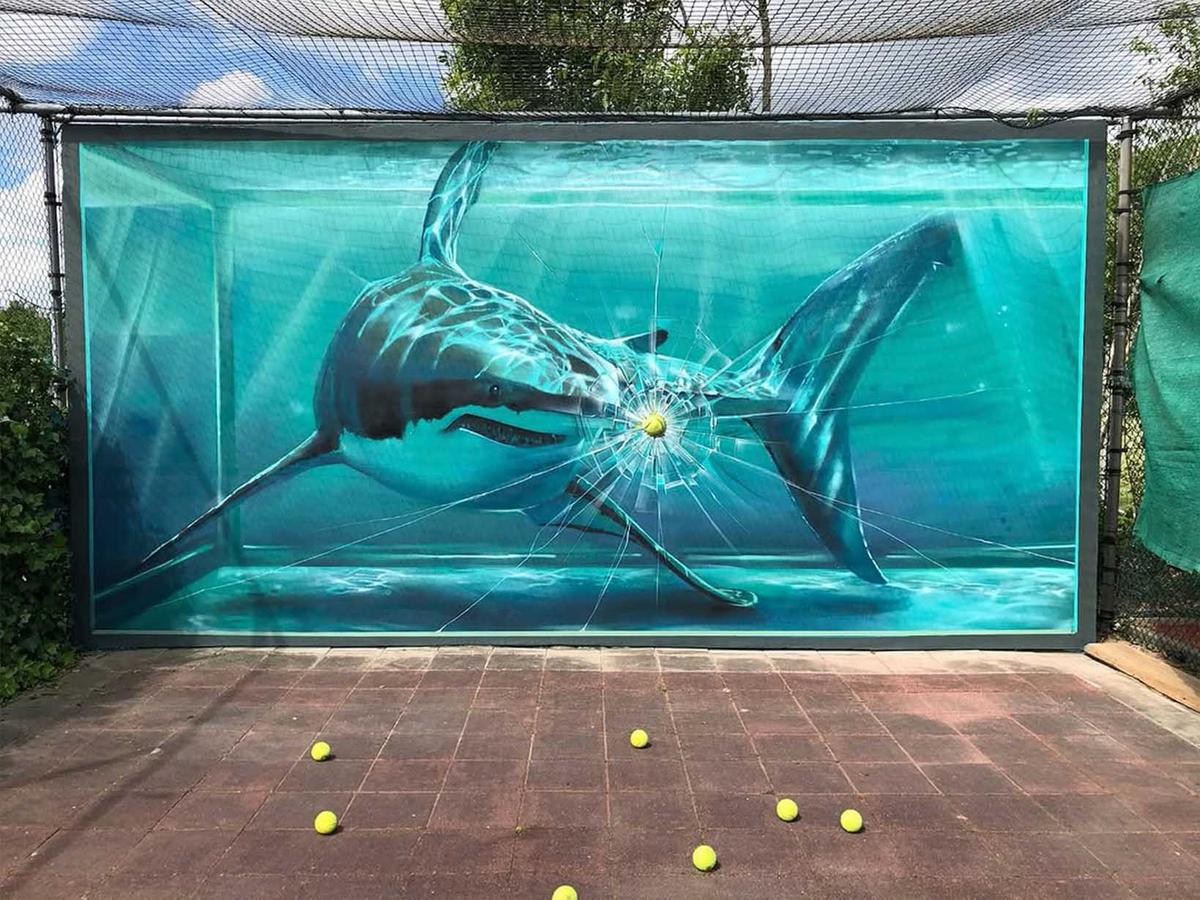 A shark mural blends interestingly with a tennis court in Schalkwijk, Netherlands. Courtesy of Jan Heinsbroek

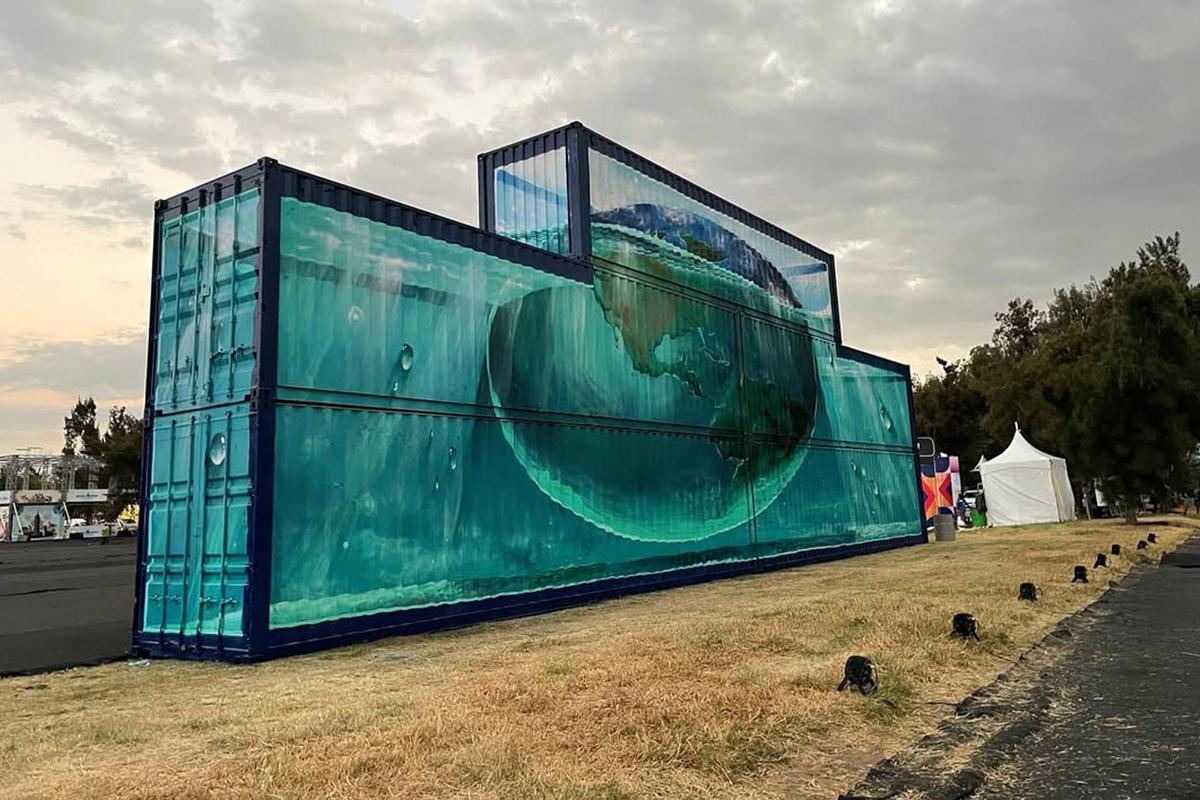 A 3-D submerged planet painting on shipping containers in Mexico City. Courtesy of Jan Heinsbroek
An ordinary tennis court for kids in the Dutch village of Schalkwijk looks a lot more dangerous now that Heinsbroek has placed the viewer face to face with ferocious shark with only a layer of cracked plexiglass standing between them. A misfired tennis ball plugging the fracture also smashes the barrier between the world of depth and the world of flatness.
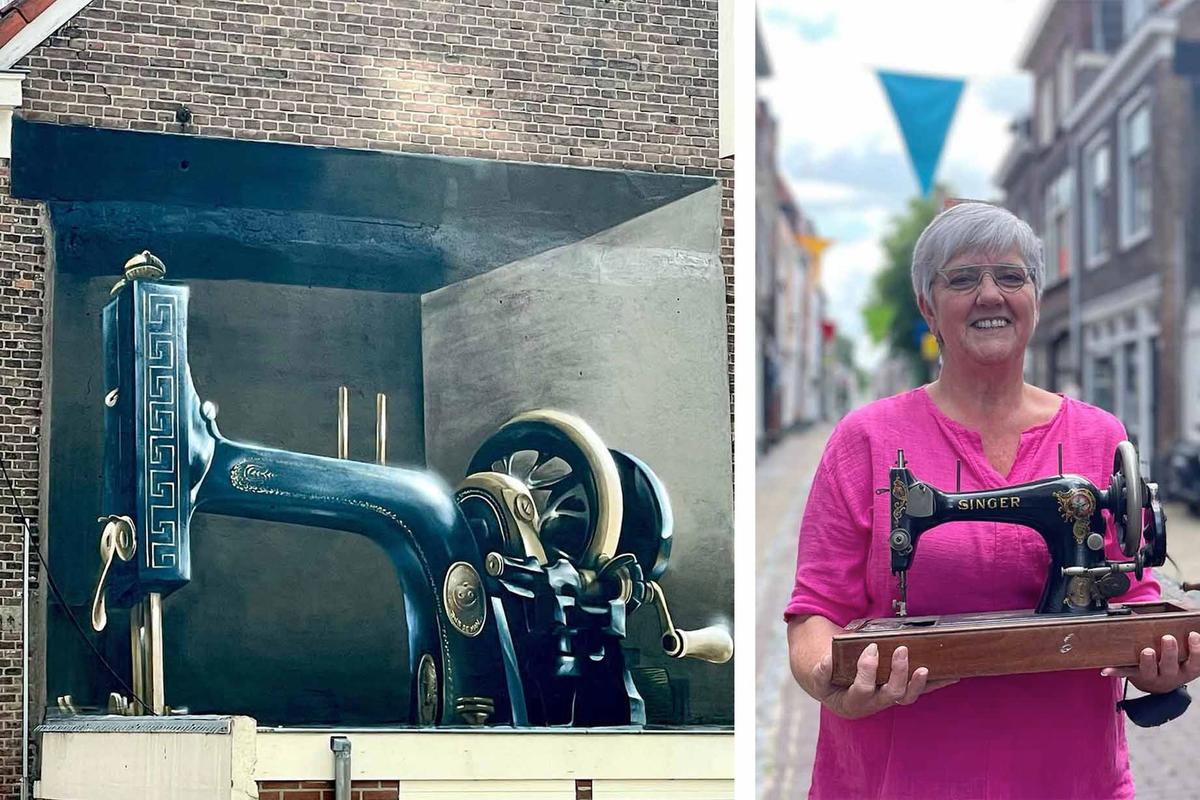
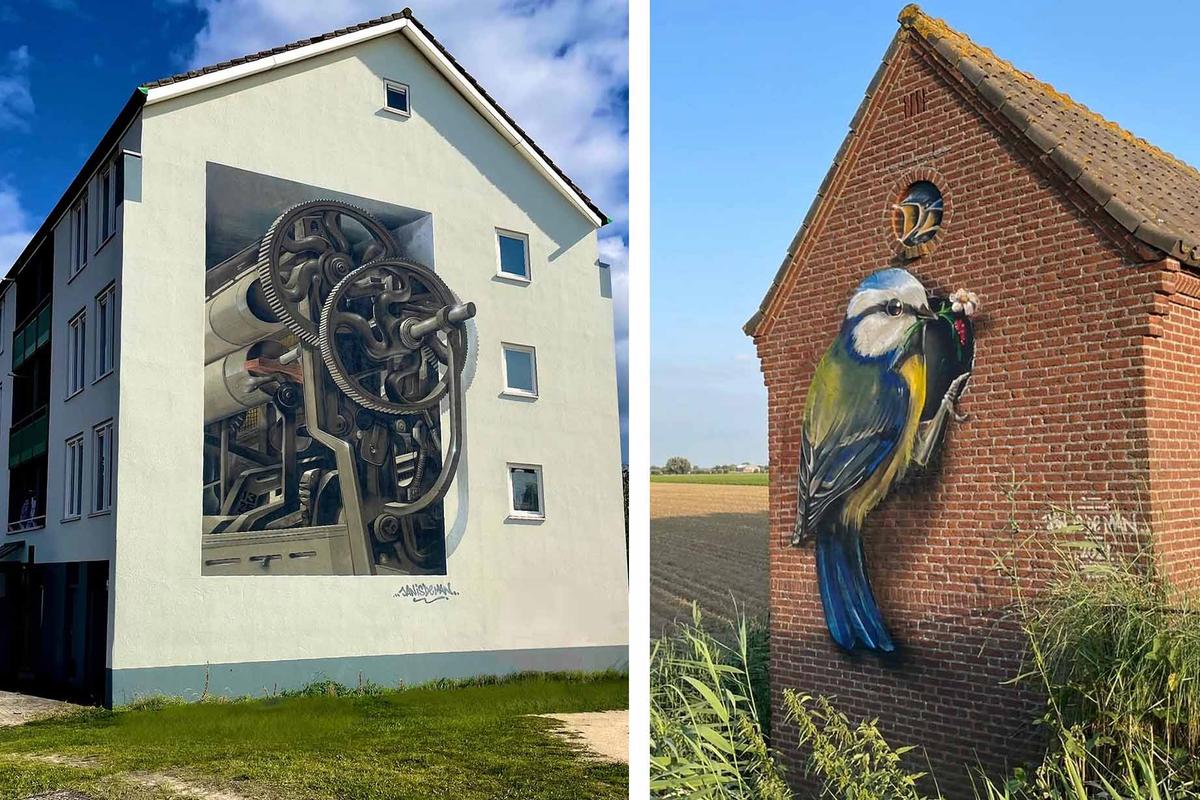
The interplay of spaces can also tie the past with present. Visiting an antique textile factory in Enschede and a famous tailor shop in Gorinchem led Heinsbroek to depict an outlandish machine aesthetic. Spindles, cranks, and the oldest sewing machine in Holland tower overhead while puncturing through spaces and different eras.
Originally a teenager inspired by graffiti painters, Heinsbroek says his artistic journey matured like a tree sprouting from a seed. It started with his parents giving him a wall to paint on in the backyard to keep him out of mischief. This then bloomed as admirers began hiring him to brighten up their homes, branching out his business.
Finally, three decades later, he stands high on a scaffold, adding some visual flavor to drab, gray neighborhoods. The fruits of his tree, though—the soul of his work—are the stories of the people who live there.
“It makes people proud because it is their own story,” he said.