
OAN Staff Katherine Mosack
11:53 AM – Friday, March 6, 2026
Indonesia’s Communications and Digital Affairs Minister Meutya Hafid announced on Friday that the government has signed a new regulation banning children under 16 from accessing or maintaining accounts on social media and digital platforms.
On Friday, Hafid officially signed “Ministerial Regulation No. 9 of 2026.” This is a derivative of a broader child protection law passed last year and makes Indonesia the first non-Western nation to implement the age-based ban.
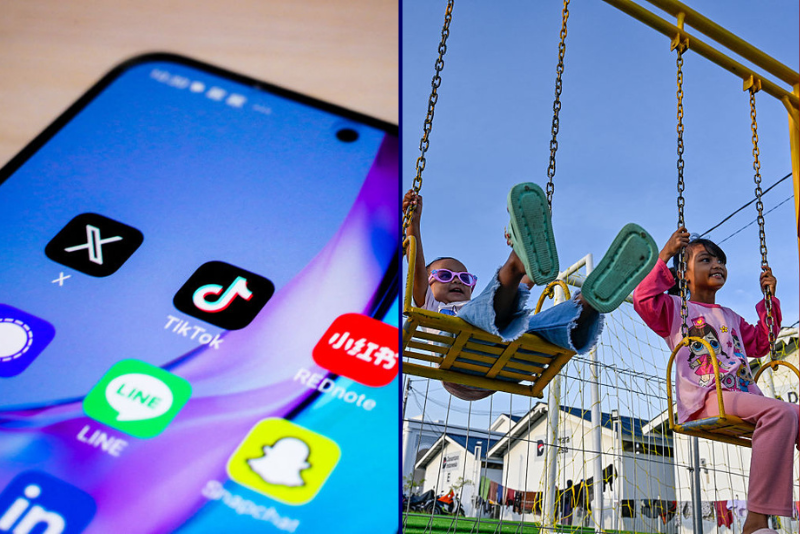
The policy targets major platforms including YouTube, TikTok, Facebook, Instagram, Threads, X, Bigo Live, and Roblox. It aims to shield minors from serious online threats such as exposure to pornography, cyberbullying, online fraud, and addiction.
Hafid emphasized that the measure responds to the growing dangers children face in digital spaces, emphasizing that the government is stepping in to support parents against powerful, addictive algorithmic platforms.
Implementation will begin gradually on March 28, 2026, with the phased deactivation of accounts belonging to users under 16, continuing until all platforms meet compliance requirements.
This follows Australia’s pioneering under-16 social media ban, which took effect in December 2025 and has prompted a growing global trend toward stricter online child protections. Since implementation, platforms have deactivated or removed about 4.7 million accounts identified as belonging to Australian minors.
“The basis is clear. Our children face increasingly real threats. From exposure to pornography, cyberbullying, online fraud, and most importantly addiction. The government is here so that parents no longer have to fight alone against the giant of algorithms,” Hafid stated.
“We realize that the implementation of this regulation may cause some discomfort at first. Children may complain and parents may be confused about how to respond to their children’s complaints,” she added.
The policy has garnered strong support in Jakarta, Indonesia’s capital, where many residents and parents have welcomed the restrictions. They particularly appreciate the move as a safeguard against children gaining unmonitored access to social media via mobile phones, citing concerns over exposure to misleading or harmful content and its impact on minors’ well-being and development.
“I think that it has been very worrying for minors, especially children. Because they have too much freedom with photos, videos and everything,” said Marianah, 43. “Some education is educational, but some is misleading. So we really need to sort through social media again.”
“As parents, we hope that online gambling and pornography websites can also be removed. So, in a sense, the government must also be fair. This is for the sake of the people themselves, for the children, and for the children’s growth and development,” said Harianto, 49.
The Ministry of Communication and Digital Affairs conducted a surprise inspection of Meta’s office in Jakarta, examining its “handling” of harmful content. Officials stated that during the inspection, it issued a stern warning regarding the Instagram and Facebook owner’s low level of compliance with national regulations.
Several European countries are now actively considering or advancing measures to protect children from potentially harmful content on social media platforms.
Denmark secured broad cross-party support in late 2025 for a ban on social media access for children under 15, with limited parental exemptions potentially allowing use from age 13 on select platforms. The measure could become law by mid-2026. Greece is also reportedly very close to formally announcing a similar under-15 ban, according to senior government sources in early February. Additionally, Italy has introduced parliamentary bills to impose restrictions on social media for those under 15 as well, including specific regulations around “child influencers.”
Outside of Europe, Malaysia’s government is also planning a ban for under-16s, and Turkey’s government has drafted a bill to ban children under 15.
These efforts reflect an accelerating global push, building on Australia’s lead, for stricter age-based online protections.
Stay informed! Receive breaking news alerts directly to your inbox for free. Subscribe here. https://www.oann.com/alerts
What do YOU think? Click here to jump to the comments!
Sponsored Content Below