
OAN Staff Lillian Mann
5:00 PM – Monday, April 6, 2026
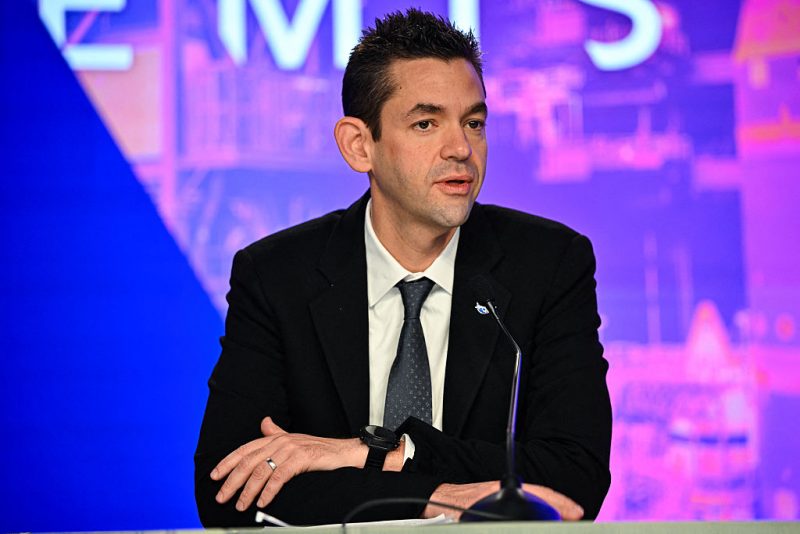
NASA Administrator Jared Isaacman has publicly defended the White House’s fiscal year 2027 budget request, which proposes a $5.6 billion cut to NASA’s funding.
Isaacman also expressed enthusiasm regarding the simultaneous boost to the Artemis II mission, which is set to receive an additional $1 billion in funding. This targeted increase ensures that NASA’s primary deep-space objectives remain prioritized even as the administration seeks broader fiscal reductions elsewhere.
When CNN asked him whether he supported the Trump administration’s proposed budget cuts, Isaacman replied, “Yes, of course I do.”
The Office of Management and Budget (OMB) requested $18.8 billion for NASA from Congress on Friday, $5.6 billion less than the 2026 amount, reducing NASA’s overall funding by 23%.
“I certainly support President Trump and his 2027 budget request. I think the American public and the taxpayers should be judging NASA based on outcomes, and not how quickly we can spend money every year,” Isaacman explained on CBS News. “NASA doesn’t have a topline problem. We just need to focus on executing and delivering world-changing outcomes,” he added.
“We are able to launch the Grace Roman Space Telescope at the end of 2026, 100 times the field of view of the Hubble telescope, 1,000 times the scan rate,” Isaacman added. “We’re going to launch a nuclear-powered octocopter in 2028 to explore Saturn’s moon of Titan within the budget environment.”
The proposed budget would cut $3.4 billion from NASA’s science unit by eliminating more than 40 “low priority” missions.
Some of the low priority missions include the Mars Sample Return mission and the SERVIR program — a “climate-focused partnership” with the U.S. Agency for International Development that cost $10 million annually — according to the OMB.
The proposal would also cut $1.1 billion from the International Space Station — which is scheduled to be retired in 2030 — along with $297 million from the space technology unit, and $143 million from NASA’s Office of Science, Technology, Engineering and Mathematics Engagement.
Isaacman noted that the One Big Beautiful Bill Act (OBBBA) has already provided nearly $10 billion to NASA for lunar and Martian missions, infrastructure development, and various other projects. He emphasized during his Sunday appearance that even with the proposed reductions, NASA’s budget remains greater than that of every other space agency in the world.
The administrator also explained that the funds “give us [NASA] the capability to get to the moon with frequency, to build the enduring presence on the moon, the moon base, which in itself is going to afford numerous scientific and technological development.”
NASA’s Artemis II mission took astronauts further from Earth than ever before on Monday, breaking Apollo 13’s record from over 50 years ago.
“Essentially, in the next 24 hours, they will be on the far side of the moon. They will eclipse that record. And we’re going to learn an awful lot about the spacecraft, which is pretty paramount to set up for subsequent missions, like Artemis III in 2027, and, of course, the lunar landing itself on Artemis IV in 2028,” Isaacman explained.
“I strongly support the President’s fiscal policies and mandate to drive efficiency. The requested funding levels are sufficient for NASA to meet the Nation’s high expectations and deliver on all mission priorities,” Isaacman wrote.
Stay informed! Receive breaking news alerts directly to your inbox for free. Subscribe here. https://www.oann.com/alerts
What do YOU think? Click here to jump to the comments!
Sponsored Content Below