
OAN Staff Addie Davis and Brooke Mallory
4:46 PM – Wednesday, April 29, 2026
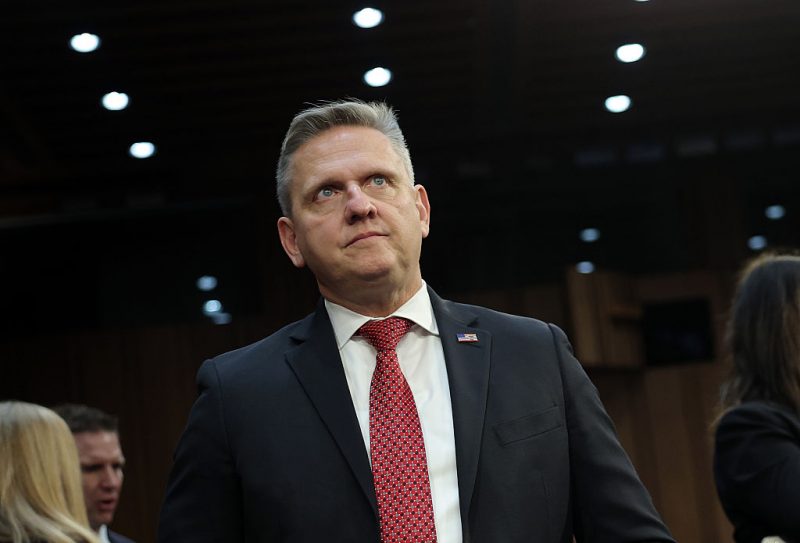
Following his Senate confirmation by a 59–39 vote on Wednesday, Robert Cekada officially assumed his role as the director of the Alcohol, Tobacco, Firearms and Explosives (ATF) and immediately moved to implement a pro-Second Amendment (2A) regulatory overhaul.
This transition was pronounced by a joint announcement with Acting Attorney General Todd Blanche, who introduced a package of 34 proposed and final rules at a Wednesday press conference.
These reforms, part of a larger initiative titled the “New Era of Reform,” are designed to shift the agency’s focus toward industry partnership and reduce the administrative burdens placed on law-abiding gun owners and businesses.
The new regulatory framework includes significant changes, such as allowing joint spousal ownership of National Firearms Act (NFA)-regulated items without the need for a legal trust and removing the requirement for owners to seek advance approval for the short-term interstate transport of registered firearms.
During the announcement, Blanche emphasized that the Second Amendment should not be treated as a “second-class right” and further stated that the Department of Justice (DOJ) is committed to ending the weaponization of federal authority, seen during the previous Biden administration, targeting responsible American citizens.
By repealing rules that exceeded statutory authority and streamlining complex paperwork, the agency aims to provide greater clarity and eliminate the “zero tolerance” approach that previously penalized dealers for minor clerical errors.
Cekada, a career agent who has served as the bureau’s deputy director for the past year, reaffirmed that the ATF’s mission will now prioritize the pursuit of willful criminals while respecting the Constitutional rights of lawful owners.
“… So that everyday Americans don’t need a law degree just to understand their rights,” Blanche said. “For too long regulations were written without any real understanding of how firearms businesses operate, how lawful gunowners actually handle their firearms or what truly improves public safety … The Second Amendment will never be treated as a second-class right in the Trump administration,” he continued.
Blanche continued, noting that the 34 proposed rules represent a larger regulatory volume than the ATF has issued over the previous 15 years combined.
By consolidating these reforms into a single package, the DOJ intends to demonstrate a notable break from past policies, replacing a decade and a half of incremental adjustments with a singular, sweeping effort to streamline federal firearms regulations.
Cekada also asserted that the rules put forward are “clear, common-sense regulations that rescind, modernize or clarify language within the National Firearms Act, the Gun Control Act and more.”
Following his remarks, Cekada signed the packages of proposed rules while an official explained each category.
- Rescinding regulatory language that exceeds statutory authority, failed judicial review, or did not achieve their intended outcomes. This includes repeals or major revisions of several Biden-era rules, such as the pistol brace rule and parts of the “engaged in the business” rule.
- Updating ATF’s compliance and recordkeeping framework to reflect current technology and modern business practices.
- Eliminating administrative requirements that impose unnecessary costs on law-abiding gun owners and firearms businesses.
- Resolving regulatory ambiguity to provide clearer, more consistent guidance to licensees, applicants, and the public.
- Conforming ATF’s regulatory text to reflect statutory changes, recent judicial decisions, and actions by partner agencies.
Both Blanche and Cekada emphasized that the work to review and revise regulations is ongoing. Blanche also credited the origins of this regulatory overhaul to a February 2025 executive order (EO) issued by President Trump.
The directive was designed to halt federal infringement on Second Amendment rights by mandating a comprehensive review of all firearm-related orders, regulations, and administrative actions implemented during the Biden administration.
Stay informed! Receive breaking news alerts directly to your inbox for free. Subscribe here. https://www.oann.com/alerts
What do YOU think? Click here to jump to the comments!
Sponsored Content Below