
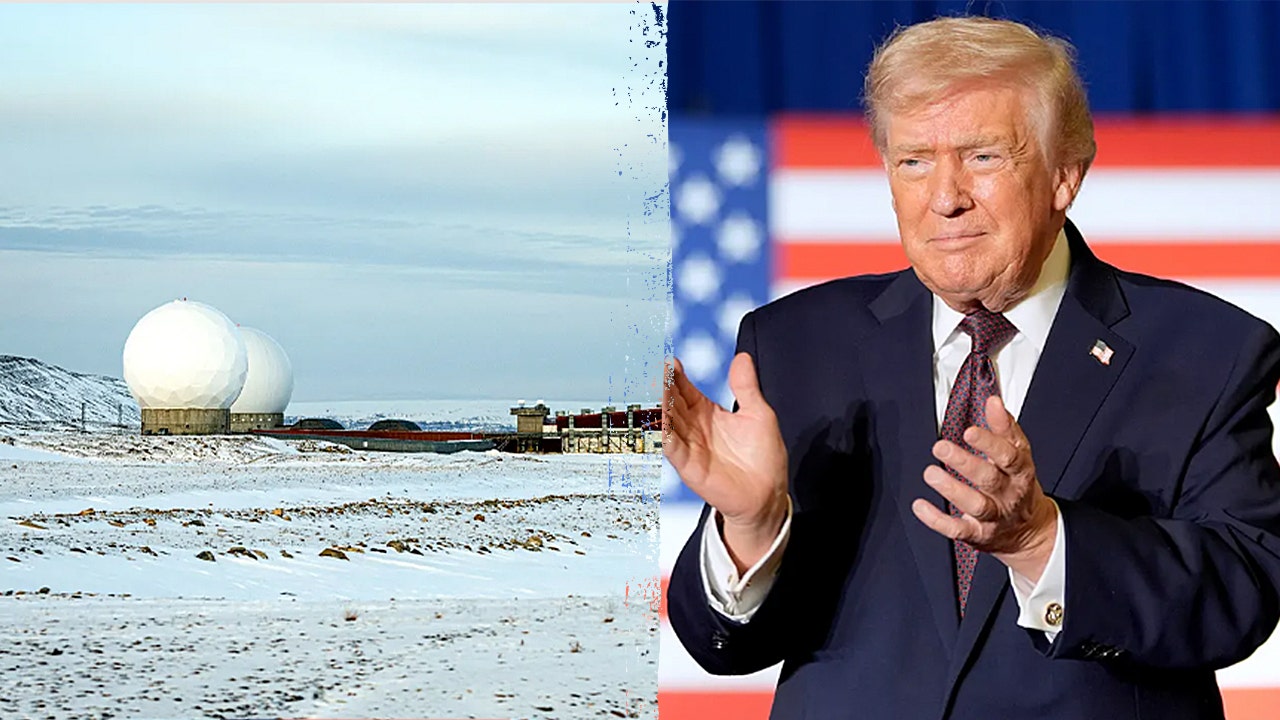
 Trump administration officials reportedly have met with Greenland representatives in Washington, D.C., several times in recent months to discuss the United States’ role on the island.
President Donald Trump has pushed to strengthen America’s military and economic position in the increasingly strategic Arctic region.
Negotiators from the U.S., Greenland, and Denmark have quietly held at least five meetings since January focused on expanding America’s footprint in Greenland, a mineral-rich Arctic territory viewed as critical to countering growing Russian and Chinese influence, The New York Times reported Monday.
The talks reportedly began after Trump renewed calls for greater U.S. control over Greenland, arguing that the island is vital to American national security.
While the administration later stepped back from public talk of a takeover, negotiations have continued behind the scenes over military expansion, mineral development, and infrastructure oversight.
The Times reported the Trump administration wants long-term guarantees allowing American troops to remain in Greenland indefinitely, even if the island eventually gains independence from Denmark.
U.S. officials are also reportedly seeking stronger authority over foreign investment deals to block adversaries such as China and Russia from gaining a foothold in the Arctic.
Military leaders have increasingly warned that the Arctic is emerging as a major geopolitical battleground as melting polar ice opens new shipping lanes and exposes vast reserves of rare earth minerals, oil, uranium, and natural gas.
The BBC reported last week that the administration was discussing plans to establish as many as three additional military bases in southern Greenland, including potential facilities near Narsarsuaq and Kangerlussuaq, both former American Cold War outposts with existing airstrips and harbor infrastructure.
Greenland Prime Minister Jens-Frederik Nielsen acknowledged that increased American military presence is “part of the discussions,” while insisting Greenland’s sovereignty remains “non-negotiable.”
General Gregory Guillot, head of U.S. Northern Command, has described Greenland as a key component of a broader Arctic defense network stretching across Alaska, Canada, Iceland, and the North Atlantic.
The proposed expansion would reportedly focus heavily on monitoring Russian and Chinese maritime activity in the strategically vital GIUK Gap between Greenland, Iceland, and the United Kingdom.
The White House has defended the negotiations as necessary to address serious long-term national security concerns.
Dylan Johnson, assistant secretary of state for global public affairs, told the Times that Trump’s concerns regarding Greenland’s economic and military importance are “undisputed by all parties.”
“This is not a president who allows problems to go unsolved for future presidents to deal with,” Johnson said.
Some Greenlandic politicians, however, have expressed concern that Washington’s demands could weaken the island’s autonomy.
Still, conservatives in the United States have increasingly argued that expanding America’s Arctic presence is essential as China aggressively pursues influence in polar regions and Russia continues militarizing its northern frontier.
Trump has long maintained that securing Greenland is crucial to protecting U.S. strategic interests, particularly as competition intensifies over Arctic trade routes, military positioning, and critical mineral supplies needed for advanced technologies and national defense.