
 The Small Business Administration (SBA) has suspended 27,486 borrowers in Ohio linked to approximately $1.1 billion in COVID-19 financial assistance fraud, the agency said in a June 4 statement.
The borrowers are alleged to have defrauded the Paycheck Protection Program (PPP) and Economic Injury Disaster Loan (EIDL) initiatives. PPP was a COVID-era program that sought to help businesses retain their workforce during the crisis, while EIDL provided loans and advances to help businesses recover from the economic impacts of the pandemic. While the PPP initiative ended in May 2021, the SBA stopped accepting applications for EIDL as of January 2022.
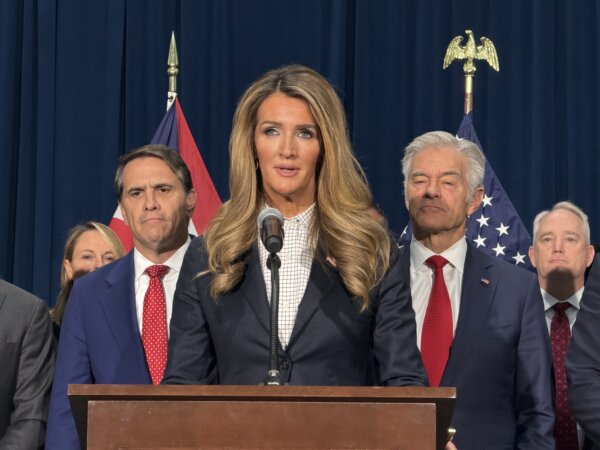
The suspension of 27,486 borrowers comes after SBA Administrator Kelly Loeffler and members of the White House Task Force to Eliminate Fraud held a press conference in Ohio on June 4, detailing new enforcement actions in the state.
During the conference, the Department of Justice (DOJ), together with other federal and state officials, announced charges against nine individuals alleged to have stolen more than $42 million in fraud from Ohio.
The charges leveled against the suspects involve several types of fraud, including consumer fraud, government program fraud, and healthcare fraud, the DOJ said in a June 4 statement.
Out of the nine suspects, four were charged with a conspiracy to defraud more than $1.4 million in COVID-19 relief funds from the PPP program.
The defendants allegedly submitted fraudulent PPP loan applications on behalf of several businesses, with the SBA and its lenders approving the loans. The individuals also submitted false applications for loan forgiveness, resulting in the SBA and its lenders forgiving their loan amounts.
In its recent statement, the SBA said the four defendants allegedly misused the proceeds to pay for their personal expenses. If convicted, the individuals could face criminal penalties and imprisonment.
“The Trump Administration delivered a clear message in Ohio today: if you defraud federal programs at any level, we will find you, and work with law enforcement to hold you accountable,” Loeffler said.
“At the Trump SBA, we are ensuring that those who defrauded pandemic relief loans—meant for legitimate small businesses—will not only lose access to our programs, they will also answer for their crimes in a court of law. We will continue to work at the federal level and on a state-by-state basis to advance accountability and recover taxpayer funds.”
Loeffler said that the White House Task Force to Eliminate Fraud was delivering “unprecedented wins” in rooting out fraud across various programs.
President Donald Trump signed the executive order establishing the task force on March 16. Officials estimate that up to $300 billion is stolen by fraudsters annually from government programs across the United States.
Fraud Crackdown
SBA’s action against 27,486 borrowers in Ohio follows similar moves in other states. For instance, Loeffler said in January that the SBA suspended 6,900 Minnesota borrowers suspected of fraudulently obtaining $400 million in PPP and EIDL loans.
In February, Loeffler announced that the SBA had suspended 111,620 borrowers in California suspected of fraudulent activity across various COVID-19 loan programs. These borrowers received more than $8.6 billion in total.
In a May 15 post on X, Loeffler said the SBA suspended about 1,500 borrowers in Maine linked to $93 million in potentially fraudulent EIDL and PPP loans.
In a March 6 post, Ami Kassar, CEO of business loan adviser company MultiFunding, cautioned against the SBA’s stance on fraud, highlighting that it was important to separate actual fraudulent activity from what was just bad policy.
“About $250 billion of loans were made near the end of the Covid pandemic without requiring proof of economic injury or of the ability to pay back the loans,” Kassar said.
“Plenty of SBA EIDL loans were released to borrowers who now can’t afford to pay them back. If those borrowers followed the rules when they took the money and when they spent it, these losses are most likely the result of bad lending policy—not fraud.”
Meanwhile, in addition to targeting state-wise fraud, the SBA has also initiated measures to recover stolen funds.
In an April 24 statement, the SBA said it had sent 562,000 suspected fraudulent loans, totaling $22.2 billion, to the Justice Department for collection. The borrowers are tied to delinquent PPP and EIDL loans.
These loans were earlier flagged for suspected fraud under the prior administration. However, they were neither sent to the Treasury for collection nor referred to the Justice Department for investigation.
“The SBA has transmitted the borrowers to the DOJ. And with today’s referral, Treasury will begin collecting on the outstanding debt as part of the Trump Administration’s commitment to recouping stolen pandemic-era funds on behalf of American taxpayers and small business owners,” the agency said.