
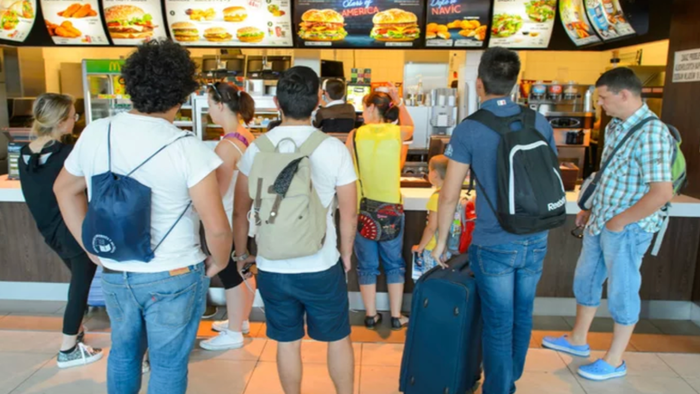
In a continuation of our note on the health of America’s restaurant industry, we cite UBS analyst Dennis Geiger for a second straight week, as his coverage of the consumer and restaurant sectors has been spot on. Sentiment toward chain eateries remains “generally cautious,” with macro pressures, elevated gas prices, and weak demand among lower-income consumers continuing to weigh on traffic and sales trends.
Last week, Geiger warned, “Challenged traffic and sales trends likely reflect depressed consumer sentiment across several cohorts, elevated gas prices, and other macro headwinds. We are more cautious on restaurant industry trends heading into 2H26, assuming near-term headwinds persist, rebate check benefits fade, and the risk that gas prices stay elevated.”
Adding more color to the still-difficult backdrop across the restaurant industry, Geiger and his team held discussions with management teams from several leading restaurant brands to gain deeper insight into evolving consumer spending trends:
Brand & franchisee discussions highlight performance pressured by macroeconomic factors
Our latest discussions with several brands / mgmt teams and select franchisees highlight macro headwinds and elevated gas prices that continue to weigh on industry results. Select brands more exposed to lower income consumers continue to face sales pressures, with our recent discussions with Wingstop and McDonald’s franchisees highlighting the current challenges:
1. Wingstop franchisees noted continued negative sss & traffic performance, highlighting multiple potential factors, including: i) ongoing macro pressures impacting key customer cohorts; ii) challenges of lapping robust sales growth in past years, including key sales initiatives such as delivery and marketing growth & expansion into sports; iii) potential customer chicken category fatigue given focus on chicken by most QSR peers as beef costs remain elevated; iv) cannibalization in select highly penetrated markets, particularly via the delivery channel; v) broader QSR value / promo activity; and vi) potentially less social media buzz recently than in years past. However, expectations are that trends should benefit from the world cup in June & July and potentially inflect positive later this year or in early ’27. Franchisees noted opportunities exist to enhance the current marketing strategy to increase the brand’s relevance and improve messaging surrounding Smart Kitchen and the ability to increase speed / throughput without sacrificing food quality. Additionally, value remains an important focus, with opportunities to promote and highlight value. That said, franchisees indicated still elevated demand to open new stores given returns that remain attractive, without material margin concerns.
2. McDonald’s franchisees highlighted choppy performance thus far in 2Q, largely reflecting difficult April comparisons and given the current macro environment, with gas prices having a particularly negative impact on consumer demand among a core lower income cohort. Operators noted challenging macro conditions could continue, while comparisons are difficult in 2H. Despite pressures, our discussions suggest franchisees remain optimistic about the outlook for the brand and sales trends as gas prices eventually ease, with several drivers that could help lift sss including: i) recent launch of specialty beverages, including dirty sodas & refreshers which is driving avg check higher, with energy expected in Aug and other menu innovation coming (ie snack wraps news; new sandwich event around chicken); ii) strong marketing / campaigns (ie world cup meal w/ collectibles off to a solid start; Home Alone meal expected in 4Q); iii) compelling value platforms, with the Under $3 Menu and $4 Breakfast Meal Deal expected to gain guest count traction over the coming quarters; and iv) solid gains from digital / delivery & the loyalty platform. Additionally, franchisees noted an increased brand emphasis on utilizing technology & being more digital forward while also improving hospitality. Strategic plans from the Worldwide Convention appear to be focused on the right areas to drive longer-term traffic and sales share gains.
Three Important Facts About the Space
1. Restaurant inflation down slightly in May; Grocery pricing gap grew modestly
Total food inflation was down slightly for the broader food complex in May (3.1% vs. 3.2% April) per gov’t data, w/ food away-from-home (FAFH) inflation down slightly m/m at 3.5% (vs. 3.6% in April) while food at-home (FAH) price inflation also decreased to 2.7% (vs. 3.0% in April). May restaurant price inflation remained above grocery (~80 bps), w/ the gap increasing from April (~60 bps). Limited service pricing was 3.3% in May (~flat vs April), while full-service was 3.8% (~flat vs April). We expect restaurant pricing to continue to ease modestly over the coming quarters as higher pricing levels roll off.
2. Value differs by age cohort; Rising prices pressuring restaurant traffic
Recent Technomic industry insights highlighted several industry themes, including: i) value differs by age cohort w/ the Baby Boomer & Gen X consumer more focused on quick service & high quality items, while younger customers also weigh other factors including brand identity, digital convenience, and social values. ii) Rising prices are likely still impacting restaurant industry traffic, with 83% of surveyed consumers noticing higher purchase prices & 63% cooking more at home as a result. Over the NTM, 45% of respondents plan to visit restaurants less, while 38% are actively looking for promotional offers.
3. Expect greater impacts from GLP-1s drugs on restaurants over time
UBS Consumer hosted another call with Michael Yee, UBS Global Head of Biotechnology Research, that highlighted his ~$133BN global GLP-1 market forecast by ’30. Total obesity patients treated by GLP-1 in the US are projected to grow from ~5MM in ’25 (or 1% of population) to >10MM by ’30 (or ~5% of adult population), with upside to the forecasts from new drugs and potentially better convenience and fewer side effects. Specifically, the recently launched GLP-1 oral pills could grow to ~20% of the total GLP- 1 market longer-term. That said, the oral pills are not expected to be game changing near-term in the US due to lower efficacy than injectables. Affordability and accessibility of the drug should improve w/ better insurance coverage (including via Medicare and Medicaid) and lower cash pay costs. Currently, ~50% of GLP-1 users stop taking the drug after 1 yr given the high costs, however as it becomes more affordable, the length of use should extend longer. Key implications for the restaurants sector include: 1) reduced dining out frequency, with the impact likely increasing over time as drug adoption grows, 2) alcohol mix continues to decline for full-service restaurants, 3) a shift in consumer preference towards healthier food options and smaller portion, and 4) lower overall calorie intake even from GLP-1 users with the same restaurant visit frequency. Replay details and slides available upon request.
OpenTable Reservations Data by State

Food Away From Home inflation > Food At Home inflation

With the national average gasoline price exceeding the politically sensitive $4-per-gallon level for 10 weeks, consumers, mainly working-class ones, are in a real financial pinch as the tax-refund sugar is waning (read note).
Professional subscribers can read more about the consumer at our new Marketdesk.ai portal.