
A seismic shift is underway in the U.S. labor market after a quarter-century of America’s industrial base being hollowed out following China’s entry into the WTO, a period marked by the decline of goods-producing jobs while leisure and hospitality employment surged.
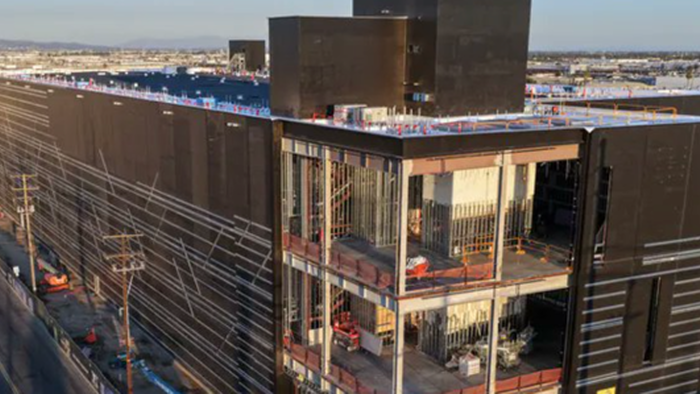
The driver of the current job shift is the data center buildout phase, which is expected to require millions of new jobs across construction, manufacturing, electrical trades, power infrastructure, and the broader industrial supply chain. Additionally, reshoring critical supply chains will require even more goods-producing jobs, which are high-paying and pay far more than low-wage jobs such as bartending and waiting.
Nancy Lazar, Piper Sandler’s chief global economist and head of the firm’s economics research team, published a note on Sunday showing what happened to the U.S. labor market after China joined the WTO in 2001.
The result was a long-term hollowing out of America’s industrial base, marked by a sharp decline in higher-paying goods-producing jobs while lower-quality leisure and hospitality jobs surged. Education and health services jobs also continued to move up and to the right.
But there was good news around 2010, when goods-producing jobs began to reverse. Lazar’s note suggests that the trend is now set to accelerate as the data center, power grid, and AI infrastructure buildout drives a new wave of demand for industrial labor.
Lazar continued:
Bullish On Goods Producing Jobs vs. Hotel & Restaurant Jobs.
When China joined the WTO in 2001, U.S. goods producing jobs began a decade of decline, while leisure & hospitality, and education & health jobs continued to rise …
… so today, goods producing jobs are less than half those of low-paying service jobs – their share was over 50% in the mid-1980s.
That employment mix shift gave us the bifurcated consumer, as lower paying jobs gained share. Goods producing jobs pay more than overall service producing jobs – and lots more than leisure & hospitality, or education & health care jobs.
Good news: That mix is now shifting the other way, as the long-running (not just tech) capex cycle raises productivity and margins, encouraging adding headcount.
Look at relative earnings growth, by sector, below.
Combine that with falling energy prices and (we believe) slowing core inflation, and we’re on the lookout for narrowing bifurcation among consumers. That would indeed be good news. We’re watching our Daily consumer confidence survey, non-investor component, closely.


Industrial labor demand is likely to remain a strong trend for several years, with $800 billion in hyperscaler capex being deployed for data center buildouts just this year alone – and don’t worry about humanoid robots entering construction sites until the next decade.
However, college graduates, mostly burdened by insurmountable student debt, are watching in disbelief as corporate America rapidly automates white-collar jobs out of existence.
Last week, Goldman analysts led by Pierfrancesco Mei identified the 20 college majors most exposed to AI job disruption.
Most and Least AI-Exposed Jobs

It’s a boon for Main Street and blue-collar workers, rather than college-educated elites. Liberals are furious that SpaceX welders with no college degrees have been minted into instant millionaires after the latest IPO.