
Newsmax
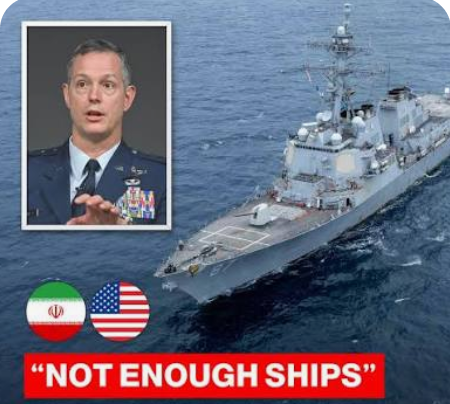
The top U.S. military commander in Europe has privately warned the Pentagon that dwindling naval resources could soon force the military to prioritize defending the U.S. homeland over protecting Israel from Iranian ballistic missile attacks, The Washington Post reported on Saturday.
The warning underscores mounting operational and political pressure on the Trump administration as the war with Iran enters its sixth month and the midterms rapidly approach.
Gen. Alexus Grynkewich, head of U.S. European Command, told senior Pentagon officials this week that without an additional Navy destroyer he may no longer be able to sustain missile defense operations supporting Israel, according to U.S. officials familiar with the correspondence.
The Pentagon declined to comment, while U.S. European Command did not respond to requests for comment.
The warning comes as the U.S. Navy faces growing demands from both Israel’s missile defense and the administration’s blockade of Iranian ports following Tehran’s closure of the Strait of Hormuz.
Officials said maintenance backlogs within the Navy’s destroyer fleet have further strained available forces.
U.S. assessments earlier in the conflict found that American systems, including THAAD batteries and Navy interceptors in the eastern Mediterranean, have carried much of the burden of intercepting Iranian ballistic missiles, relying more heavily on U.S. weapons than on Israeli air defenses.
Defense officials described Grynkewich’s warning as part of a routine process in which combatant commanders notify Pentagon leaders when operational risks increase as they compete for limited military resources.
The military strain comes as the Pentagon has faced renewed scrutiny this week over its public accounting of casualties from the Iran conflict.
On Sunday, the Defense Casualty Analysis System introduced a new reporting format that separates casualties sustained since July 7 onto a newly created “Overseas Operations Casualties” webpage instead of including them in the broader war totals.
The change restored four service members whose deaths had previously been removed from the main casualty database while also increasing the reported number of wounded troops.
Under the revised accounting, 207 U.S. service members have been wounded since July 7, bringing the total wounded since the war began on Feb. 28 to 624.
The total number of U.S. troops killed in the conflict now stands at 18.
The revised figures follow criticism that the Pentagon had understated casualties.
Last week, Pentagon spokesman Sean Parnell rejected those accusations, saying, “Claims of concealment are fabrications meant to further distress the American people in the wake of three service members killed in action.”
The Pentagon referred questions Sunday about the revised casualty reporting system to the White House, which did not immediately respond to The New York Times reporting.
The casualty controversy adds to growing political pressure surrounding the conflict, which has become increasingly unpopular with the American public.
Lawmakers from both parties have questioned the administration’s strategy as fighting intensifies following the collapse of negotiations with Tehran, while some Republicans have expressed concern that higher fuel and consumer prices tied to the conflict could hurt the party in the November midterm elections.
Defense analysts say the resource shortages highlighted by Grynkewich reflect the broader challenge of sustaining a prolonged regional conflict.
“Being on a wartime footing is going to take a toll in terms of readiness and munitions inventory levels,” said Tom Karako, director of the Missile Defense Project at the Center for Strategic and International Studies.
“Now the question is, what’s the strategy here?”