
Andy Laperriere, Piper Sandler’s head of US policy research in Washington, wrote in a note on Thursday that explained both parties are moving left on economic policy as populist measures gain support across the political spectrum. His big-picture view is that “hard-left and socialist candidates” are damaging the Democratic brand primarily through deeply unpopular positions on open borders, defunding the police, and transgender politics. In effect, the party’s socialist class is willing to sacrifice broader electoral viability to defend nation-killing policies that most voters reject.
Policies with cross-party support include a $15 federal minimum wage, a temporary 10% cap on credit card interest rates, restrictions on Wall Street’s purchases of single-family homes, and expanded government intervention lowering drug prices.
Even Republican voters back several of those proposals by wide margins, suggesting the post-election policy threat to markets will extend beyond Democratic control of Washington.
Here’s where the numbers are striking: About 80% of Republicans support banning large institutional investors from buying single-family homes, 79% favor capping credit card rates, and 75% back a $15 minimum wage. Across all voters, 63% support higher taxes on corporations and billionaires, while 59% favor government-provided health coverage.
Laperriere pointed out that President Trump and JD Vance have helped move Republicans away from Milton Friedman-style free-market economics by framing trade, corporate power, and economic transactions in increasingly zero-sum terms.
Laperriere said Democrats face a different kind of problem, noting that the party’s socialist and progressive economic proposals are often popular, but its positions on policing, immigration, and gender remain deeply unpopular. Only 29% of voters support abolishing ICE, 24% back transgender athletes competing outside their biological sex, and 11% favor abolishing the police.
Laperriere noted that two-thirds of Democratic voters now hold a favorable view of socialism, partly because younger folks have no lived memory of Soviet bread lines, the Berlin Wall, or the Vietnamese “boat people” who fled communism.
Furthermore, as we’ve outlined, the failed socialist experiment in South America has resulted in a once-in-a-generation shift to common-sense right-wing leaders, with Trump-backed Abelardo de la Espriella taking power in Colombia just a week ago.
The political shift has extended far beyond Colombia. In recent years, voters across Bolivia, Peru, Honduras, Ecuador, Argentina, Chile, and El Salvador have either rejected socialist governments or moved decisively against far-left parties.

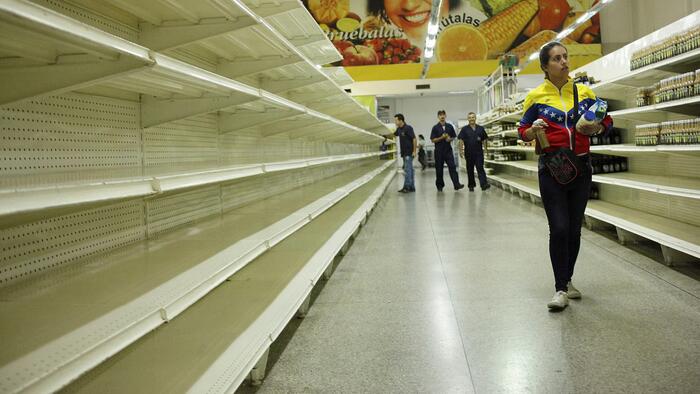
Laperriere argues that younger Democratic voters lack any living memory of the “boat people” and therefore have little historical context for understanding how socialist and communist systems fail. But the warning signs are not confined to the Cold War era; rather, years of left-wing governance in South America that have coincided with currency crises, persistent inflation, capital flight, institutional deterioration, and rising crime that resulted in failed states, such as Venezuela and Cuba, are more than enough to show youngsters that socialism has failed – yet again. Latest figures show that there are nearly 800,000 illegal aliens from Venezuela in the US – and we wonder why …

More from Laperriere:
We want to make two related points in today’s piece. First, voters across the political spectrum are more open to progressive/populist economic ideas than perhaps most investors think – and both parties (if Vance is the GOP nominee) are going to increasingly offer the voters leftof-center economic policies. The hard left and socialist candidates are not swimming upstream when they call for higher taxes on the wealthy, price controls, and more government entitlements. It’s their ideas on the police, the border, and gender identity that will hurt them politically. Second, Democratic voters are fed up with their own establishment for two main reasons: a sense their leaders are feckless when it comes to challenging Trump and the fact that a significant and growing share of the Democratic voting base is hostile to Western civilization.
We argued in our recent piece, A Policy Bear Market, that both parties increasingly evince an open hostility or at least a wariness to free markets. As we noted in that report, JD Vance is running against Milton Friedman and market fundamentalism. President Trump has tapped into a growing sense that the system is rigged – and over time has convinced more Republicans this is true. He has a zerosum view of economic transactions in which one side is, in his words, getting screwed. It’s true there has always been economic populism on the right, and as we often noted you could call it ‘populism’ because it’s popular. It’s popular to say we won’t touch your benefits, to make the other guy pay higher taxes, and to scapegoat other people for the price you have to pay for drugs, gasoline, or anything else. But as the table below shows, a lot of ideas we generally associate with the left end of the political spectrum enjoy broad or at least considerable support among Republican voters. The move to the left on economic policy isn’t limited to Democratic voters.

And of course there has been a seismic shift to the left among Democratic voters. We noted in a recent piece that two-thirds of Democratic voters have a favorable view of socialism. Part of the reason is it has been a long time since ordinary voters have seen socialism in practice. Ask a group of people who grew up in the 1970s or 1980s what ‘boat people’ means and most of them will be able to tell you it’s people who got on leaky boats (or put their children on them) to flee communism and seek a better life. It’s most associated with immigrants from Vietnam but also Cuba and other places. See President Reagan’s brief 1982 Christmas radio address for a moving story of US Navy sailors rescuing some Vietnamese in a desperate situation to get a sense of the phenomena.
During the Cold War, socialism didn’t have much purchase with voters because images of desperate people fleeing communism, the bread lines in the Soviet Union, and the fact that the guns mounted on the Berlin Wall pointed inward were there for all to see. There were a few exceptions (like Bernie Sanders, who honeymooned in the Soviet Union), but it was obvious to most voters that socialism doesn’t work.
But the Berlin Wall fell more than 35 years ago and socialism is rarely practiced anywhere in the world today. Ask a younger group of people what ‘boat people’ means and you get blank stares. A whole generation of people have grown up having seen nothing of the kind. Instead, a generation of young people has been taught in many schools (especially elite ones) that America (and Western civilization more broadly) is racist and rotten. This view is held disproportionately among young and highly educated white voters.
This is the coalition that is fueling the insurgent campaigns that have taken out most Democratic House incumbents who have lost their primaries this year. They hold not only progressive or even socialist economic views; they are hostile to Western civilization. They view borders and the police as the vestiges of racism. As the table above shows, these views (in contrast to some of their economic views) are wildly unpopular. Francesca Hong, who narrowly lost the Wisconsin Democratic primary for governor this week, posted a few years ago that we should cancel Thanksgiving because it is “celebrating colonialism.” We couldn’t find a poll result for cancelling Thanksgiving, but imagine defending that in a general election.
Nonetheless, she received more than 38% of the vote this week. That may be roughly the share of the Democratic primary electorate (which is much smaller than the Democratic general electorate, but nonetheless picks the candidates) that is hostile to Western civilization. Along with frustration with their leaders for being ineffective at challenging Trump, Democratic voters have been in a mood to vote out incumbents. The chart on the following page shows that 10 incumbents have been defeated in primaries this year, the most in a non-reapportionment year (in which incumbents end up running against each other or in territory they haven’t represented before) going back to the 1950s. Most of the incumbents who have lost were Democrats who lost to younger, more left-wing candidates. The turmoil in the Democratic Party has a lot of similarities to the forces that propelled Trump to the Republican nomination in 2016.
As a quick aside, of course there are other explanations for the shift to the left on economic issues. Corporate profits account for a larger share of GDP. Wealth is increasing faster than incomes, and that disproportionately benefits the wealthier people who hold assets. A decade of zero rates – and the return to more normal rates – has priced many younger people out of the housing market. There was the spike in inflation. There has been a steep decline in manufacturing employment during the past several decades (though not manufacturing output). And so on.
Regardless of the causes, the bottom line for investors is both parties are moving to the left on economic issues. The socialists and the progressive left have taken unpopular positions, but it’s their social agenda that is likely to sink them politically. Many of these more left-wing economic policies are popular (including among many Republicans) and may be become law down the road.

Yet the nonprofit ecosystem of billionaire-backed foundations, far-left NGOs, Democratic Socialists of America activists, and progressive corporate media has little incentive to highlight the political shift across the Americas. The political backlash undermines the core narrative that capitalism is inherently destructive and that socialism will succeed if implemented correctly next time.
The Trump administration could exploit that vulnerability by expanding its messaging around Latin America’s rightward turn. The objective would be to remind younger voters that socialism has miserably failed, and that its consequences always end in disaster: inflation, currency crises, capital flight, institutional decay, soaring violent crime and rising insecurity.
Related read: South America Just Rejected Socialism. So Why Is North America Buying It?