
Kiss those data center technician jobs goodbye…
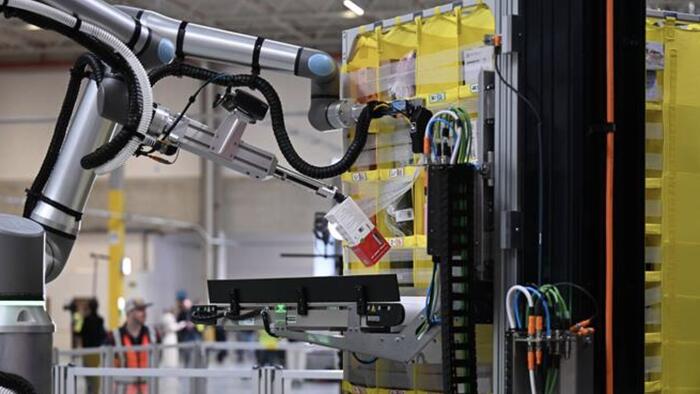
Meta is testing robots that can swap network cables, restart servers, reseat components, and perform other physical tasks traditionally handled by data center technicians. The experiments come as the company rapidly expands its AI infrastructure and seeks to operate facilities more efficiently, according to Wired.
Some employees worry about job security. One Meta worker estimated that a successful cable swapping robot could eventually take over as much as 80 percent of certain workloads. “We thought those of us performing the physical tasks were safe for a while, but not anymore,” the worker said.
Meta says automation does not mean it needs fewer people. Spokesperson Francis Brennan cited a shortage of skilled tradespeople and the company’s investments in training and hiring workers. Meta has launched programs teaching electrical, mechanical, and plumbing skills and partnered with trade unions on apprenticeships.
Still, robotics is part of Meta’s longer term strategy. Robotics manager Eric Xu has said robots could eventually assist with incident response, environmental monitoring, and preventive maintenance.
The company is experimenting with equipment from several manufacturers. A Kinova Gen3 arm is being evaluated for power cycling servers, while other machines are being tested for cable replacement. Some facilities already use a simple remotely controlled device resembling a mechanical finger to press power buttons and reboot equipment.
At its Altoona, Iowa, campus, Meta is testing dual arm Watney robots for cabling. At its newer Prometheus campus in New Albany, Ohio, ABB robots mounted on four wheel platforms are being used to reseat components and could eventually perform more work with less human supervision.
These projects build on simpler automation already deployed in Meta facilities. Self driving tugger robots transport heavy server racks, while wheeled inventory robots scan equipment and assist with inspections. Microsoft, Google, and Amazon have also explored robotics for data center operations.
Wired writes that the economics are attractive. Robots could provide consistent labor where qualified technicians are scarce and handle repetitive or hazardous work. They could also operate in hotter, darker, or otherwise less hospitable environments.
But current systems remain far from replacing technicians entirely. Meta’s inventory robots struggle with cables and corners, require humans to move them between buildings, and cannot reliably interpret some equipment indicators. Other robots need substantial charging time and remain slower than people.
Data centers were also designed around human dexterity. Complex cabling, particularly around advanced AI systems such as Nvidia’s GB300, remains difficult for robots. As one former Meta employee put it, “Things have been designed for human hands forever to make everything a five-minute repair.”
Even so, the experiments are changing how some Meta workers view their future. Employees have reportedly discussed fears that automation could eliminate jobs or shift remaining positions toward lower paid workers who mainly follow AI generated instructions.
That could also affect the politics surrounding data centers. Communities often justify tax incentives partly through the jobs these facilities create. If robotics significantly reduces employment, governments may reconsider those economic tradeoffs.
For now, humans remain faster and more adaptable. But as robotic hardware gets cheaper and AI improves, Meta is preparing for a future where machines perform considerably more of the physical work inside its data centers.