
By Ray DiLorenzo
It confuses many people. Myself included. I will attempt to simplify these complex concepts so that even I can grasp them.
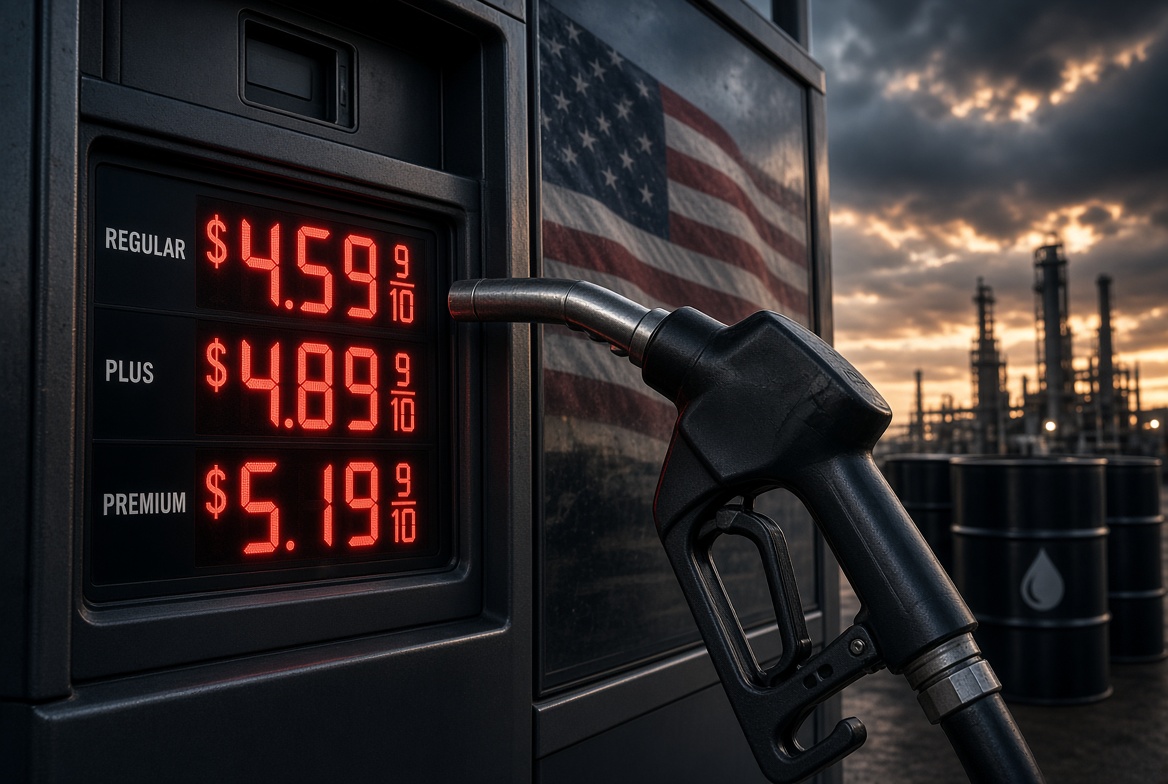
Oil is a globally priced commodity. Pump prices in the U.S. follow world supply and demand without concern for how much we produce. People often ask why the pump price goes up so quickly even when the gas at the station was bought at a lower price. The price at the pump does not reflect the price paid but the replacement cost. The same principle applies in reverse.
The United States is the leading oil producer globally, generating approximately 13.5 million barrels per day. In 2022, we averaged 11 million barrels a day. Our daily consumption for all uses is 20.6 million barrels per day, which includes gasoline, diesel, jet fuel, heating oil, liquified natural gas, and other refined products.
This results in a daily deficit of approximately 7 million barrels of crude that we must import. You might say, “Well, that is not energy independence.” OK, when presidents like Joe Biden reduce oil production, restrict new drilling on federal lands, halt the Keystone XL pipeline, end subsidies, and commit the country to extreme climate agreements, the energy industry will either scale back or fail to meet growing demand.
Our refining capacity also lags behind in refining our light, sweet crude even though it is easier and cheaper to do so. Most of our oil refinery machinery is for heavy, sour crude, which was appropriate before we discovered shale and hydraulic fracturing, making it economically efficient to import some oil that we can process. We export some of the light, sweet crude to countries with refineries designed for it. This mismatch affects refining economics and crude oil pricing. Crazy, right?
The term “energy independent” came from becoming a net exporter of energy in 2019, or producing and exporting more total energy than we imported. It was derived by record high domestic production of oil and natural gas, mainly from shale and hydraulic fracturing.
It does not mean we are totally self-sufficient. We still import significant amounts of heavy crude oil, which is more conducive to our refineries, until we build more refineries for our light, sweet crude oil.
As usual, that puts President Trump in a catch-up position. We have trillions of dollars in new investment coming into our country, and Trump needs to ensure we have the energy they need.
We are currently in the construction phase of our first new major refinery in 50 years, designed to process light sweet crude oil. President Trump announced that the new hydrogen-powered refinery, America First Refining, will break ground this year in Brownsville, Texas.
The US and Venezuela recently reached a 25-year oil agreement giving the United States majority control of 65 billion barrels of oil reserves. It gives the United States a 55% effective output share. It’s been called the biggest oil deal in world history. The oil is extra heavy sour (high sulfur) crude, but our refineries, mainly on the gulf coast, can process it.
We have enough oil for all our needs, but having it is only half the answer. We are in the process of catching up with our drilling and infrastructure to process it. Thank you, President Trump.
Two refineries in California recently closed due to a poor business climate. That dropped capacity by 17%. California must import 40% of its gasoline demand and 35% of its diesel and jet fuel demand. Their fuel prices are not pennies higher. They are dollars higher.
California is producing 325,000 barrels a day but needs 1.4 million barrels a day to meet its demand. It does have enough oil reserves to meet its current needs, but its environmental regulations, limited pipeline connectivity, and high production costs necessitate importing most of its oil.
California demands a full-course meal but refuses to accept that something in the kitchen is going to need washing.
You can wish and dream all you want, but oil is our chief energy source for the foreseeable future. Globally, there are 1.8 trillion barrels of proven reserves. At current production rates, these reserves are enough to last another 57 years.
We can assume that more oil will be discovered, or technology will undoubtedly catch up to discover other sources of energy, provided the world avoids counterproductive actions like turning to socialism and removing the profit motive.
It’s not to say people are against electric or hydrogen vehicles. However, the infrastructure has not kept pace with the electric vehicles from Tesla or the hydrogen cars produced by Toyota in Japan, which are available in California.
I have full confidence that our capitalist system will produce better and even more efficient private and public transportation.
In the meantime, we ARE energy independent as far as supply goes. When our infrastructure catches up, we will produce all the energy we need for a very long time.
President Trump, regardless of your political affiliation, is the first president in a significant amount of time—at least the last seven presidents—who is tackling difficult decisions other presidents have avoided. He is actively addressing issues with Iran, the country largely considered an obstacle to peace in the Middle East. At the same time, he is working to secure the energy necessary for a technological future, ensuring that the United States remains a free and sovereign nation.