
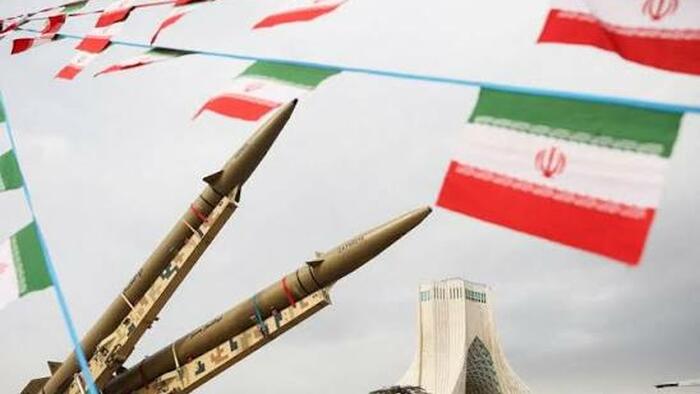
Among an array of shifting official goals of the Iran war offered by the US administration, there’s one which has remained consistent: President Trump and White House officials have time and again proclaimed that Iran’s ballistic missile arsenal is mostly obliterated.
Yet, this very week – as well as the past several weeks – Iran has been intermittently responding to US provocations by unleashing large ballistic missile salvos on some of the Gulf states, but especially Jordan. Here’s the NY Times commenting on the latest attack on US bases in Jordan just yesterday:
The Jordanian military said that it had intercepted 18 of the 20 missiles and that two had fallen in unpopulated areas. But the two U.S. officials acknowledged that the base in Azraq, Jordan, was hit.
How then are the Iranians sustaining such large repeat strike waves after US-Israeli attacks supposedly destroyed much of their missile program?
For a very brief trip down memory lane spanning various phases of the six-month long conflict…
* * *
March 9, 2026. President Trump very early in the Operation Epic Fury campaign told Fox News:
“We have sunk all Iranian ships and destroyed most of its missile launch platforms, with only 20% remaining.”
April 1, 2026. Roughly a month into the conflict, Trump delivered a formal address outlining the scope of the destruction, claiming the following:
“That means eliminating Iran’s navy, which is now absolutely destroyed, hurting their air force and their missile program at levels never seen before, and annihilating their defense industrial base. We’ve done all of it; their navy is gone. Their air force is gone. Their missiles are just about used up or beaten.”
June 5, 2026. Trump in NBC News Meet the Press interview, actually reiterated what seemed like very specific figures:
“Most of the missile manufacturing areas have been knocked out… I would say, percentage-wise, maybe 21, 22 per cent of their missiles. It’s a lot of missiles, but it’s not what it was when we first attacked.”
* * *
Now, on Thursday, enter The Wall Street Journal with a new report saying the Islamic Republic has again ramped-up its damaged defense sector, producing ballistic missiles once again:
Iran has resumed its production of ballistic missiles using stockpiled components and working in underground facilities, officials from the U.S. and Middle East familiar with the matter said, eroding what the U.S. and Israel have touted as a major achievement of the war.
Despite heavy attacks on its missile sites and industrial facilities during the initial phase of the war, Iran has been busy assembling liquid-propellant missiles, which have to be fueled just before launch, as well as solid-propellant missiles, which can be stored ready to fire, some of the officials said.
Iranian officials have all along claimed that they kept up weapons production even under the height of US bombing raids.
Earlier this week, Iranian Brigadier General Alireza Elhami, who serves as the commander of Iran’s Khatam al-Anbiya Joint Air Defense Headquarters, assessed the following as cited in PressTV: “The equipment produced [inside Iran] passed a successful test during that conflict, and now they are being rapidly mass-produced to be deployed across the entire expanse of the Islamic Republic of Iran.”
Israel FINALLY Releases 12-Day War Footage After Censorship LIFTED
It shows TWO Iranian Missiles making DIRECT HITS on the Haifa Oil Refinery
This was BEFORE the alleged Interceptor shortage too pic.twitter.com/iSyQlKJjwT
— Ryan Rozbiani (@RyanRozbiani) September 8, 2026
The new WSJ report is consistent with the Iranian military official’s words: “Intelligence points to activity at several underground sites, including the Khojir missile facility in southeastern Iran, those officials said. Iran is also attempting to build new underground assembly points to avoid getting struck again, they said.”
“So far, Iran is mainly assembling the new missiles from existing components in more limited quantities than before the war, the U.S. and regional officials said,” the report continues. “The U.S. and Israel damaged a number of industrial facilities needed to produce missile components and missiles themselves, and the naval blockade has complicated imports of parts and ingredients for solid fuel.”
Iran sees itself in a situation of an existential fight for its survival as a people and a nation, so is pulling out all the stops and seeking to demonstrate resiliency, charging full steam ahead. ‘Victory’ for Tehran is survival, and it seems to only now be sinking in for Washington just how hard it will be to remove the country’s rulers and institutions.