
Overnight we explained why the AI supercycle now hinges on the ever faster issuance of more and more debt, so critically needed to fund trillions in capex in the coming years…
… and which according to Goldman will look something like this.

The problem is that as spreads keep blowing out as more investors do the ugly math (discussed extensively here), the pace of debt issuance is starting to slow as credit markets get cold feet.
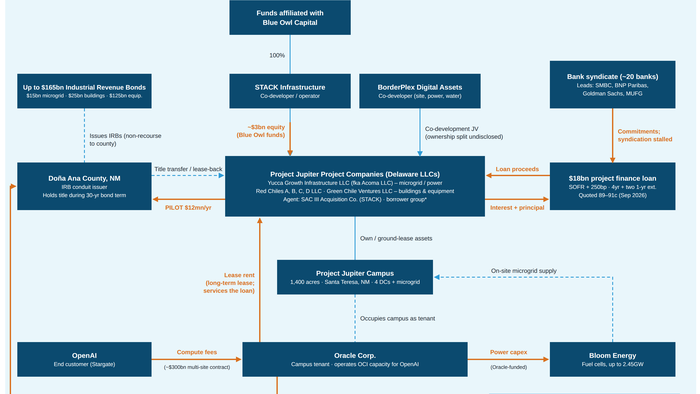
The latest example comes courtesy of the same Oracle which we profiled as the “first AI domino to fall”, back in November ’25, and whose $18 billion in leveraged loans tied to a New Mexico data center leased to the company slid into stressed territory on Friday, highlighting investors’ fear that increasing local backlash will derail the tech group’s massive AI infrastructure build-out.
According to the FT, loans linked to the $165 billion “Project Jupiter” were quoted at 89 to 91 cents on the dollar by syndicate banks including Santander and Jefferies. Healthy debt typically trades within a tight band near par.
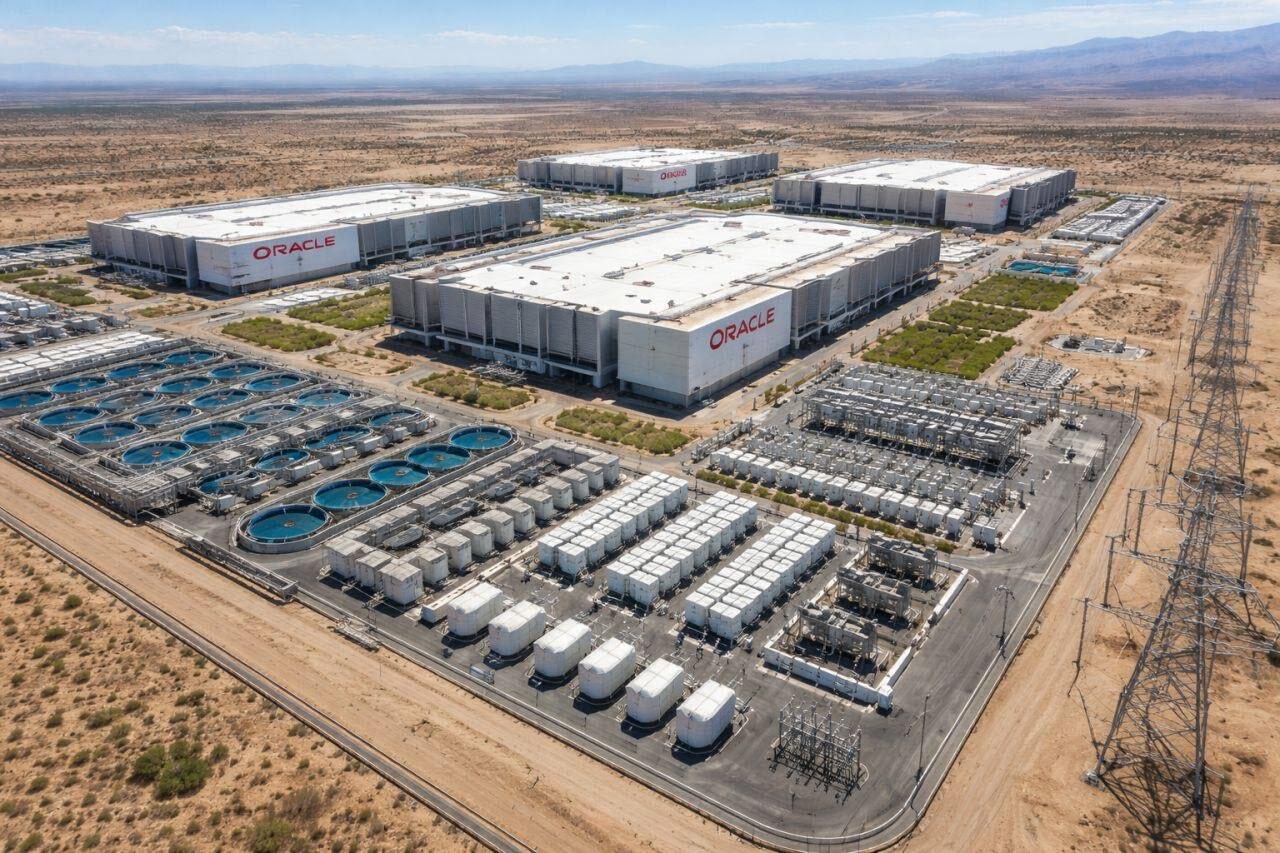
What makes the price slide from par in just a few months especially concerning is that the 1,400-acre data center campus in Doña Ana County is at the heart of Oracle’s landmark $300bn contract with OpenAI to provide computing power. The marquee project secured $18Bn of loans from a consortium of banks late last year to kick-start construction, along with billions of equity investment from Blue Owl.
According to the FT report, efforts to offload the debt to a broader group of investors have hit a wall due to concerns around Oracle’s massive borrowing and declining creditworthiness. The debt secured a private investment-grade rating from credit rating agencies but that’s largely thanks to the SPV structure which is synthetically boosting the project’s overall credit rating (as discussed previously).

Indeed, as Barclays wrote in its latest credit report on ORCL, despite the overall improvement the bank has seen in the credit, one area that remains less comfortable is “the timeline for its data center projects, particularly for those that have faced setbacks such as New Mexico/Jupiter.”
And amid the growing grassroots pushback to data centers, the market is also turning increasingly less comfortable, with the company’s gargantuan debt load is not helping.

Oracle’s corporate credit rating currently sits just one notch above junk following a downgrade from S&P in July. That, together with the recent meltdown in lower-rated AI credits, meant that banks were now forced to hold more Oracle-linked project debt on their balance sheets than initially planned. And judging by the trajectory of Oracle’s CapEx, which is now growing at an explosive pace, they will end up holding much more in the coming months.

Separately, Oracle’s 82-year-old co-founder Larry Ellison abruptly cancelled a $7.5Bn share-trading plan last weekend, just one day after unveiling it, without explanation.
One thing that is very clear is that the market is not giving the company much if any credit for its massive, if questionable, backlog, which has been made possible only thank to the company’s even more massive debt spree.
Oracle’s stock has plunged 50% since it unveiled its $300bn deal with OpenAI a year ago.
And if the massive debt wasn’t enough of a problem, Project Jupiter has faced its own share of delays due to fierce local opposition over concerns about its impact on the local area’s water supply and air quality. The project was initially going to be powered by 2.2 gigawatts of gas turbines, but the state land office blocked a request to run a natural gas pipeline to the data centre.
In April, Oracle announced that it would power itself with Bloom Energy fuel cells, which emit less sulphur and nitrogen oxides, but permission to connect a pipeline to feed these was also blocked.
The project’s air permit application was paused in August after lawsuits from two environmental groups, although a judge said the process could continue on Thursday.
Deb Haaland, New Mexico’s Democratic gubernatorial nominee and a former US Interior secretary, said she would pause all new data centres if elected in November and require developers to heavily invest in renewable energy. State filings show Oracle donated more than $12,000 to her campaign in late August.
It is not clear how a moratorium could affect the company’s sites, although it would like lead to even more delays.
“Big Tech’s mantra may be ‘move fast and break things’, but here in New Mexico, we do things our way,” Haaland said in a press conference.
Comparable to nationwide trends, a recent poll by New Mexico’s Albuquerque Journal found that 65% of its residents were against the development of large data centres, versus only 20% of respondents supporting such construction.
Project Jupiter’s initial phase is as of this moment at least seven months behind its proposed date to come online, according to market intelligence firm SynMax. It was expected to be completed by November this year. It won’t be; in fact it may not be completed for years.