
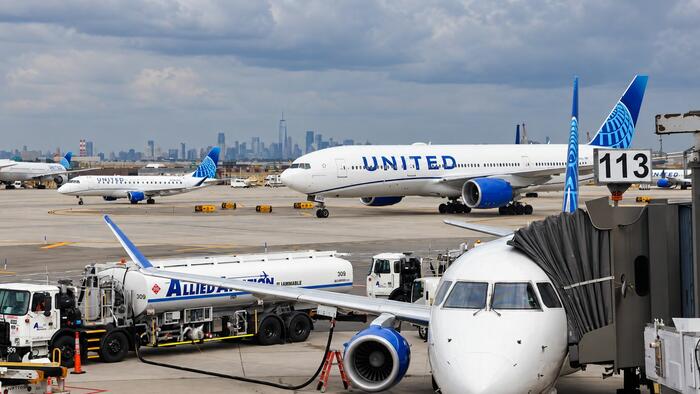
The FAA has issued ground-stop orders to arrivals into every major New York-area airport: JFK, LaGuardia, and Newark. Teterboro, Westchester, and Philadelphia are in the same pile. Official reason: equipment outage.
What happened
The first restrictions hit Newark, Teterboro, and Philadelphia after problems with radio frequencies at Philadelphia TRACON, the terminal radar facility that handles arrivals and departures in that airspace. The FAA later added JFK, LaGuardia, and Westchester.
The agency has not publicly detailed which systems failed, how long repairs will take, or whether New York TRACON (N90) is separately affected. That lack of specifics is why the disruption is being described as an “unknown equipment issue.”
92 cancellations and nearly 70 diversions at Newark so far today as an FAA equipment outage continues to hold flights bound for Newark, Philadelphia, and Teterboro at their origin airports. Traffic comparison between last week and today. pic.twitter.com/6mMwzi4mrG
— Flightradar24 (@flightradar24) September 21, 2026
A ground stop holds aircraft destined for the listed airports on the ground at their origin. It is one of the FAA’s most restrictive tools and is used when controllers cannot safely accept more inbound traffic.
What actually broke? Frequencies, per the first FAA statement. Then just “equipment / outage” on the national status board. No system named, no timeline, no “we kicked the rack and it came back.”
Philadelphia TRACON is not a random facility: it is the same one that took over Newark approach control in 2024 and then suffered repeated radar and radio failures through 2025, severe enough that controllers went out on trauma leave. On Aug. 28 of last year, the FAA ground-stopped Newark for roughly two hours over what it called equipment issues affecting “some radio frequencies in the Philadelphia TRACON area,” with arrival delays averaging about 90 minutes – the same facility and the same stated cause as today.
Impact
Newark saw the earliest and heaviest effects. As of 11:07 a.m. ET, FAA data showed average departure delays out of Newark running about 90 minutes and increasing, with the ground stop set to expire at 11:15 a.m. and a 30-60% chance of extension. Flight-tracking data showed dozens of jets queued on the pavement, along with dozens of cancellations and diversions. Teterboro departure delays were steeper.

Boston Logan also has restrictions, though those are listed as volume and weather rather than the same equipment problem.
Because JFK, LGA, and EWR sit on one of the busiest corridors in the country, the stops ripple nationally: crews and aircraft get out of position, later banks get late, and connecting passengers miss onward flights.
Maybe another rogue AI escaped a sandbox?