
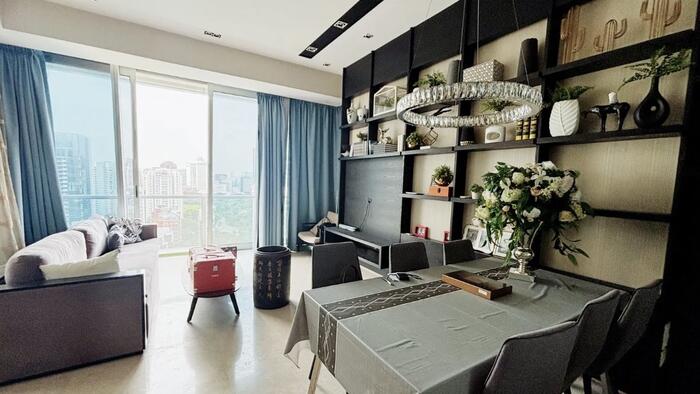
Singapore has no shortage of people curious about the spoils from its massive money-laundering crackdown. Getting them to actually buy the confiscated real estate has been another matter.
The government is gradually disposing of assets tied to the S$3 billion laundering scandal that erupted in 2023, according to Bloomberg. More than 80 homes are being sold alongside watches, jewelry, handbags and other expensive possessions seized from the operation.
The luxury goods have been hot. The luxury real estate decidedly has not.
Of more than two dozen high-end properties recently put through auctions, only four apartments have found buyers that way. At one sale, more than 60 people showed up for seven properties carrying over S$43 million ($33.6 million) in combined opening prices. Not one sold.
One Gramercy Park apartment near Orchard Road failed to attract a single bid. Another large marble-finished unit with its own elevator was offered at S$7.55 million. Eventually someone tried S$4 million, prompting laughter before the offer was dismissed.
The scene captured an uncomfortable reality for sellers: plenty of people want to see what happens when convicted money launderers’ assets hit the auction block, but curiosity isn’t translating into aggressive offers.
“There has been a lot of hype generated,” said Tan Tee Khoon, Knight Frank Singapore’s head of auction and sales. Some attendees, he added, openly admit: “I just want to come and see.”
The weak results also arrive at a difficult moment for the most expensive slice of Singapore’s housing market.
Bloomberg writes that government measures intended to restrain property speculation have dramatically narrowed the pool of potential purchasers. Most foreigners buying residential property face an additional 60% stamp duty, while relatively few locals are prepared to spend eight figures on a home.
Two confiscated apartments at Martin Modern recently changed hands for S$2.12 million and S$2.08 million, roughly around their previous transaction levels. Two others at Wallich Residence sold for S$6.6 million and S$5.48 million, below their initial auction prices.
The broader Singapore property market remains relatively firm, but the top end has developed weak spots. Private-home prices recently posted their fastest quarterly increase since 2024 even as transaction volume fell about 30% from the previous quarter.
Sentosa, where members of the laundering operation accumulated expensive property, illustrates the disconnect. Villa prices on the resort island fell roughly 11% over the decade through 2025.
Some seized homes are now being marketed for considerably less than their former owners paid. Convicted launderer Lin Baoying spent almost S$29 million on two detached Sentosa houses in 2021. Their current combined guide price is more than S$6 million below that purchase price.
Deloitte’s Singapore unit is overseeing the liquidation and plans to release assets in stages through mid-2027. If properties repeatedly fail to sell, prospective buyers have an obvious incentive to wait for further reductions. Sellers, meanwhile, don’t want to cut prices so aggressively that the portfolio begins looking like distressed inventory.
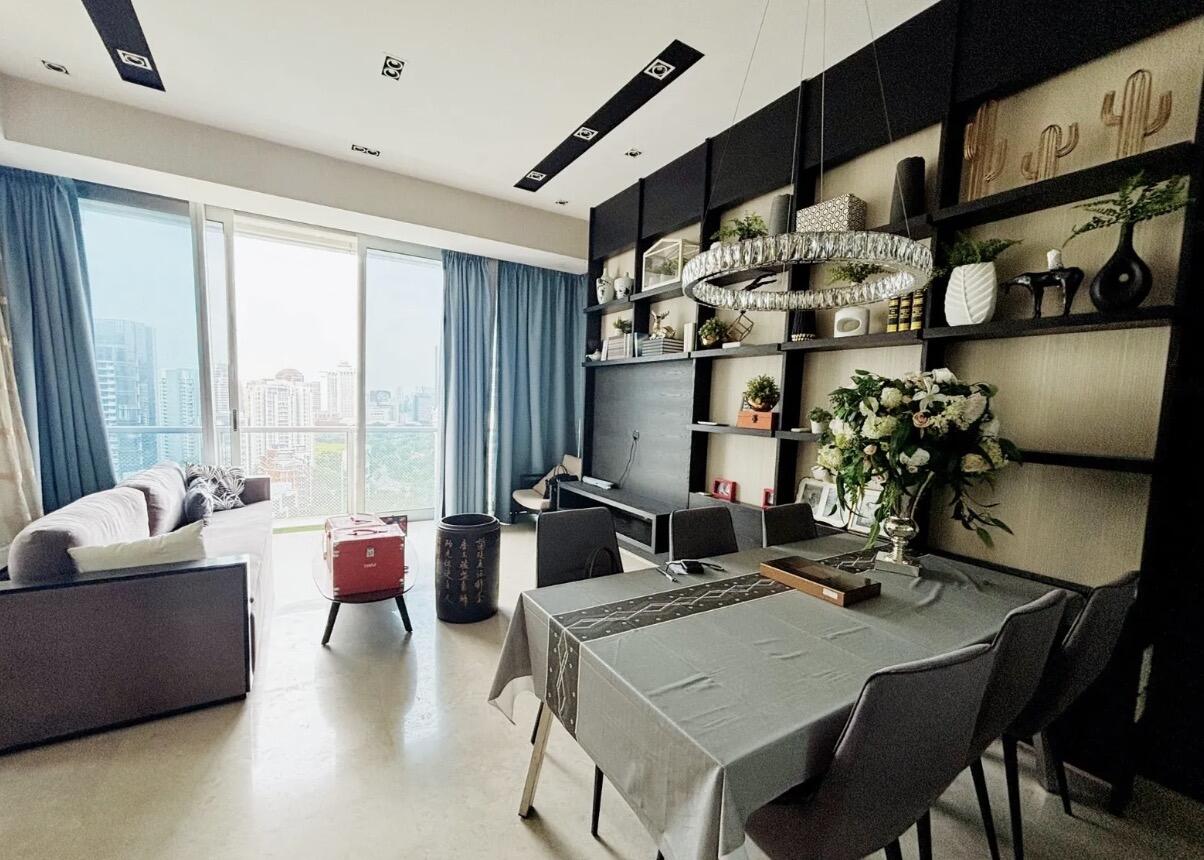
The assets stem from an enormous 2023 police operation involving more than 400 officers and over 200 properties, many in expensive areas including Orchard Road and Sentosa. Ten China-born defendants were convicted, and the group became widely known as the “Fujian Gang.”
The fallout eventually reached Singapore’s financial sector. Nine firms, including Credit Suisse, Citibank and United Overseas Bank, were hit with a combined S$27.45 million in penalties over anti-money-laundering shortcomings connected to the case.
Yet while multimillion-dollar apartments sit without bids, the former owners’ handbags and jewelry have been flying out the door. At an auction conducted by Hotlotz, every luxury-goods lot sold. One limited-edition Louis Vuitton pumpkin bag created with Japanese artist Yayoi Kusama was expected to fetch S$12,000 to S$16,000. Instead, 81 bids pushed the final price to S$87,000.
The difference is partly psychological. Someone chasing a rare handbag, watch or piece of jewelry may worry another opportunity won’t appear. Property buyers can compare an apartment against alternatives, determine fair value and walk away when the numbers don’t work.
Another 14 Hotlotz auctions are planned, including Hermès handbags and watches from Rolex, Patek Philippe and Richard Mille. Dozens of homes also remain in the liquidation pipeline. The government has already recovered substantial sums. By the end of March, approximately S$1.4 billion in cash and proceeds from disposed assets had entered Singapore’s Consolidated Fund.
For now, Singapore’s most infamous criminal asset sale has produced a strange split: people will fight over the handbags, but they won’t fight over the homes. And with buyers increasingly convinced that patience could produce lower prices, the remaining condos may prove considerably harder to move than the watches, diamonds and designer bags sitting inside them.