
Advanced US Nuclear Battery Deal Targets 3000 MW Power With $22.5 Billion Pipeline
Authored by Aman Tripathi via Interesting Engineering,
Energy project facilitator GridMarket and nuclear technology developer Deployable Energy have formed a commercial agreement to deploy modular microreactors across the United States. The 40-year contract carries an estimated total value of $145 billion.
The initiative intends to install more than 3 gigawatts (GW) of electrical capacity by 2035, focusing primarily on data centers, cloud infrastructure facilities, and industrial manufacturing plants.
“Demand for dependable, continuous power is growing faster than traditional infrastructure can support,” said Bobby Gallagher, Co-Founder and CEO at Deployable Energy.
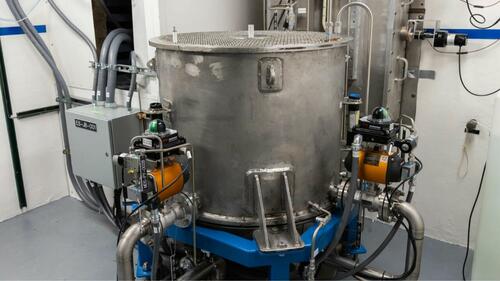
The collaboration follows a successful operational test by Deployable Energy. The company recently achieved criticality with its prototype system, known as the Unity Nuclear Battery. This initial test reactor reached a self-sustaining nuclear reaction 150 days after the project began.
Speeding up domestic nuclear power deployment
The development occurred under the US Department of Energy’s Nuclear Energy Launch Pad program, which operates in accordance with a federal executive order designed to speed up domestic nuclear power deployment.
The rapid expansion of artificial intelligence applications and cloud computing infrastructure has created an unprecedented demand for baseload electrical power. Finding locations with sufficient grid capacity has become a primary obstacle for technology companies building new facility hubs.
Under the new agreement, GridMarket will use its database of evaluated commercial sites and current corporate clients to establish a pipeline for the new power systems.
The companies plan to install 500 megawatts (MW) of power capacity annually between 2030 and 2035. According to GridMarket executives, corporate clients are actively looking for alternatives to traditional electrical grid connections because standard power infrastructure cannot keep pace with the power requirements of modern computing facilities.
To shorten construction timelines
The Unity system differs from conventional utility infrastructure because it is manufactured in components at a factory rather than built entirely on-site. This modular design is intended to shorten construction timelines and allow installation directly at the site of demand, bypassing local electrical transmission bottlenecks. The microreactor operates as a combined utility system.
“Unlike the power and cooling systems running today’s data centers, the Unity Nuclear Battery delivers electricity, heat, and cooling in a single system – dramatically reducing the water intensity that has strained local communities hosting large-scale compute infrastructure,” said GridMarket in a press release.
The immediate priority for the two entities involves selecting a host location for a physical pilot installation. This initial project will serve to verify the technology under real-world operating conditions before beginning wider commercial production. Deployable Energy has committed to giving GridMarket’s client base priority scheduling for subsequent reactor deliveries.
Corporate leadership from Deployable Energy noted that current infrastructure cannot support the growth rate of digital data systems. The companies intend to publish specific details regarding the pilot site selection, regulatory approval tracking, and the initial group of commercial participants as the engineering program moves closer to the manufacturing phase.
“We believe advanced nuclear technology can become an important part of the energy mix supporting the next generation of digital and energy infrastructure,” concluded Bobby Gallagher, Co-Founder and CEO at Deployable Energy.
Tyler Durden
Fri, 07/10/2026 – 18:55
Source link