
President Donald Trump is set to travel to Beijing in mid-May for a summit with Chinese President Xi Jinping, the first U.S. presidential visit to China in eight years, and a meeting already delayed once by the Iran war.
The pair will obviously discuss the U.S.-Iran conflict and the resulting energy shock, which has hit Asia fastest and hardest. There is no shortage of issues for the two leaders to discuss, including Taiwan, trade, AI chip controls, rare earths, and sanctions.
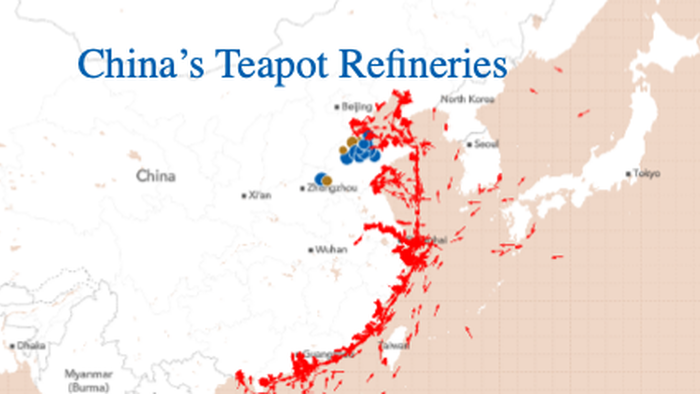
One important topic the two leaders will likely spend time on is the energy shock and the maximum pressure campaign imposed by the U.S. Treasury Department’s Office of Foreign Assets Control on Chinese independent “teapot” refineries, particularly in Shandong Province, due to their continued purchases and refining of Iranian crude.
Perhaps last week’s sanctions on China’s teapot refiners are part of a leverage campaign by the Trump team ahead of the upcoming meeting.
By Saturday morning, Beijing announced that companies in the country should ignore and not comply with U.S. sanctions targeting five domestic refineries.
The refiners, including Hengli Petrochemical’s Dalian refinery and several privately owned processors, had been hit with U.S. asset freezes and transaction bans earlier in the week, according to Bloomberg.
Beijing’s Commerce Ministry called the sanctions unlawful, saying they restrict normal trade with countries and lack authorization under international law.
“The Chinese government has consistently opposed unilateral sanctions that lack authorization from the United Nations and a basis in international law,” the department said.
It appears that Beijing is shielding its refiners to mitigate Washington’s pressure campaign on Iranian crude flows as the energy shock still festers across Asia.
The good news last week is that China reopened its fuel export spigot to surrounding countries, as domestic inventories are now at comfortable levels. This will provide some relief to countries dealing with fuel shortages caused by the Hormuz chokepoint, which remains partially frozen to this day.