
Brent crude futures climbed back above $104 a barrel early Thursday as Iran threatened to widen the Middle East conflict into the Indian Ocean and optimism surrounding yesterday’s meetings between US and Iranian officials on the sidelines of the UN General Assembly faded.
A focal point this morning is Nikkei Asia’s interview with Saudi Aramco CEO Amin Nasser, who said Aramco is studying additional crude export routes to bypass the Strait of Hormuz.
Nasser said Aramco is conducting engineering and feasibility work on “a fourth and a fifth route” for crude exports. He did not disclose their locations.
He warned, “This crisis is not really getting better. The situation will get worse because this interruption is significant. It’s not a small interruption,” adding, “I don’t think things are getting better.”
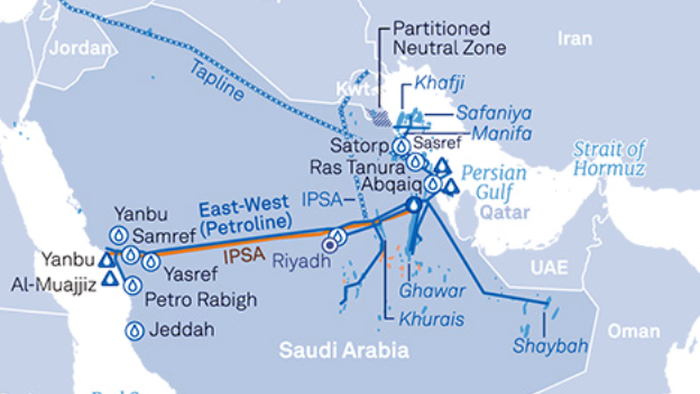
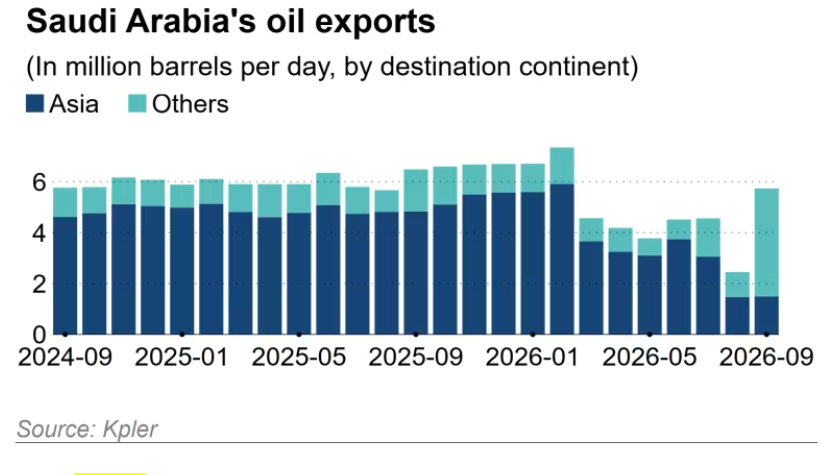
The plan for two more oil export routes builds on the current three primary routes, one of which passes through the Hormuz chokepoint that Iran has disrupted. This comes after drone attacks earlier this month disrupted Saudi Arabia’s East-West pipeline to the Red Sea, but media reports this week suggest the pipeline could restart soon at half capacity.
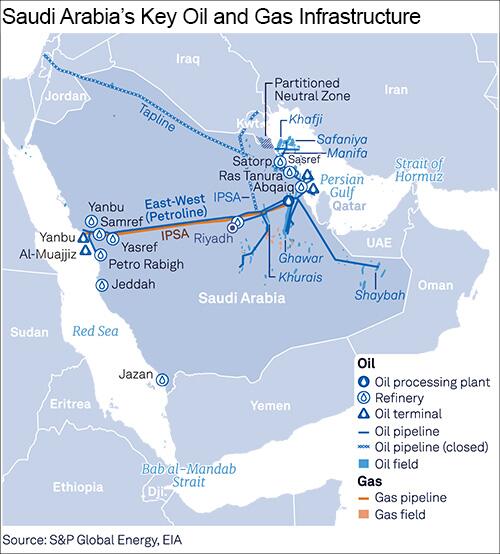
“When people talk about the East-West [pipeline], they think it’s one pipeline. It’s not, it’s multiple lines,” he said. “It’s not easy to interrupt all the lines at the same time. So it gives us the flexibility to respond and cater to our customers.”
Beyond the Hormuz chokepoint and the East-West pipeline, Aramco can move crude north through Egypt’s Sumed pipeline to the Mediterranean, Nasser said.
“People think about interruptions in Hormuz, interruptions in Bab-el-Mandeb, [but] we never stopped. We continue to supply our customers,” he said. “The only thing you do [is] shift more vessels, one way or the other. … We do have this multiple optionality that allows us to meet our customers’ demand.”
Last weekend, Qatari Energy Minister Saad Al-Kaabi blasted Treasury Secretary Scott Bessent for saying he was “wrong” to claim that the Hormuz chokepoint would be “worthless” to the oil industry in two years.
“I think this is completely wrong,” Saad Al-Kaabi said at the Qatar Economic Forum in New York.
Speaking to Fox Business’s Larry Kudlow on the sidelines of the Group of 20 finance ministers’ summit in North Carolina earlier this month, Bessent said the Hormuz maritime chokepoint, in about “two years will be… a worthless piece of water,” adding that oil “will be going on pipelines across land.”
🚨𝗝𝗨𝗦𝗧 𝗜𝗡: 🇺🇸 Treasury Secretary Scott Bessent says
“In 2 years, the Strait of Hormuz will be like a worthless piece of water.” pic.twitter.com/B94NIWtews
— DustyBC Crypto (@DustyBC) September 1, 2026
Bessent has a point. Aramco’s push for new export routes reinforces the outcome we first pointed out at the war’s start: energy flows will reroute around Hormuz, gradually eroding Tehran’s leverage. Iran’s threat to widen the conflict may be an attempt to keep that leverage alive. And it won’t be just the Saudis rewiring energy flows; it’ll be all the Gulf allies with the capability to do so.