
President Trump is vowing another consecutive night of even heavier US military strikes on Iran. Yesterday’s salvo involved at least 49 Tomahawk missile strikes, mainly happening against southern coastal areas off the Strait of Hormuz.
Amid Iran’s counter-attacks on Gulf nations and reportedly on American bases hosted in these Arab Gulf allied states, there’s been a curious lack of any new launches against the United Arab Emirates.
Kuwait and Bahrain have been hit especially hard in this week’s new flare-up in cross-Gulf fighting, but again, the UAE has been spared – after previously coming under significant attacks during the opening month of Operation Epic Fury. Even faraway Jordan has been targeted in the new ‘retaliatatory’ attacks.
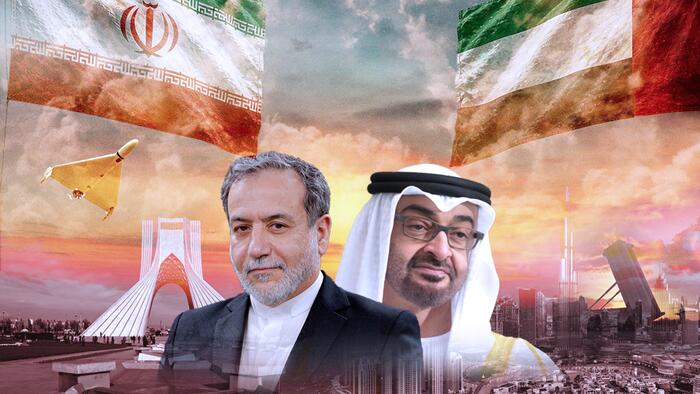
But Bloomberg on Thursday revealed the reason – Iran and the UAE have apparently reached an ‘understanding’ after some backroom dealing and diplomacy.
“Senior national security officials from the United Arab Emirates and Iran held a face-to-face meeting for the first time since the start of the US-Israeli war against Tehran, according to people with knowledge of the situation,” Bloomberg reports.
“This week’s meeting marked a stark turnaround for both sides and comes amid their growing acknowledgment of the importance of calmer bilateral ties, the people said, asking not to be named discussing sensitive matters,” the fresh reporting continues.
In the UAE’s thinking, it has too much to risk if it continues to face Iran’s significant ballistic missile and drone arsenal, at a moment Washington has failed to clearly define an end game, but instead is climbing up the escalation ladder with a cornered and thus fierce Iran, which sees itself fighting for its very survival.
According to more from Bloomberg:
The UAE’s leaders want to keep their bold economic ambitions, including investing billions of dollars in increased oil production and in AI data centers, on track. The relationship is important for Tehran too, as the Gulf nation was among the Islamic Republic’s biggest trading partners before the war began and a key conduit for sanctioned Iranian oil.
Other leaders – both on the political and business fronts – are also likely asking themselves: when will it end?
After all, each time the United States escalates, it’s these Gulf economies that are the first to feel the pain, as they literally find themselves on geographic the front line just a few hundred miles away from Iran’s borders.
If it is indeed accurate that Gulf nations are approaching Iran to do individual separate deals, this is for now a diplomatic ‘win’ for Tehran. Separate deal-making, peeling others away from a united front and bloc, gives Iran some greater leverage and also flexibility in terms of potential post-war economic and political detente with regional states.