
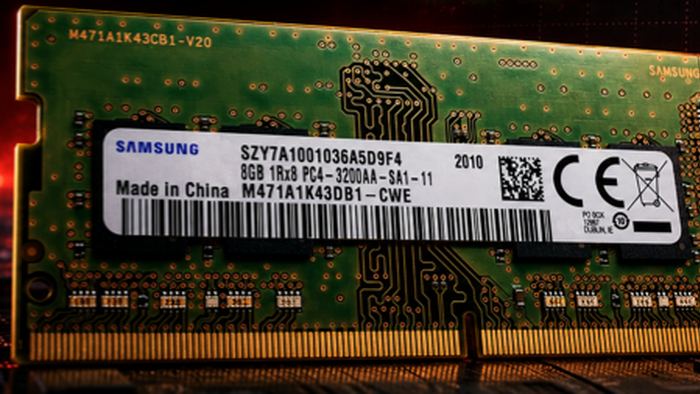
There is no immediate price relief coming for cutting-edge memory chips, even as South Korea moves to double memory capacity. New fabs and expanded lines take time to build and then ramp production, meaning the supply response will lag demand. For now, DRAM inventories remain tight through year-end as data center buildouts accelerate, keeping producers like Samsung in control of the market, with more price hikes likely ahead.
The memory-chip squeeze is not easing anytime soon. That is the clear takeaway from a new report by the Shanghai-based Chinese financial media group Yicai, which says Samsung plans to raise average third-quarter DRAM prices by about 20% from the prior quarter.
More color from Yicai:
On July 3, it was reported that Samsung Electronics plans to raise the average selling price of its DRAM (Dynamic Random Access Memory) by 20% in the third quarter of this year compared to the previous quarter.
“It’s true,” an executive from a consumer electronics manufacturer told CBN reporters. “Samsung had already spoken with us in June and we have now received verbal notification from Samsung about raising DRAM prices.”
“The significant price increase of upstream components will be passed on to the final price of the finished product, which will curb market demand to some extent. However, since the overall price of consumer electronics products is not high now, even if prices rise, it is not expected to significantly affect users’ purchasing decisions,” said the person in charge of the aforementioned consumer electronics terminal manufacturer.
Another industry veteran also told reporters that the news that Samsung plans to raise DRAM prices by 20% in the third quarter is true, and Samsung has already notified some customers of the verbal price quote.
DDR4 DRAM spot prices tracked by inSpectrum Tech suggest the memory squeeze still has room to run, with the latest rebound pointing to another potential leg higher.
The industry response, and in South Korea’s case, a national-level response, has been a massive push by giants Samsung and SK Hynix to double memory-chip production. But that chip capacity buildout will take years, meaning the current supply crunch is unlikely to ease quickly in the near term.
The situation is worsening, with a recent report detailing Apple’s plan to buy cheaper DRAM from China. Meanwhile, there have been price hikes on popular gaming consoles, from Xbox to PlayStation, as tech giants can no longer shield consumers from memory-chip inflation and are now being forced to pass those costs along to customers.
At what point does Trump start raging at soaring memory prices
PPI Electronic Components is pulling entire core index higher pic.twitter.com/v9ufHmx0gG
— zerohedge (@zerohedge) June 11, 2026
JPMorgan analyst Jay Kwon recently broke down South Korea’s push to double memory production. Read the note here.