
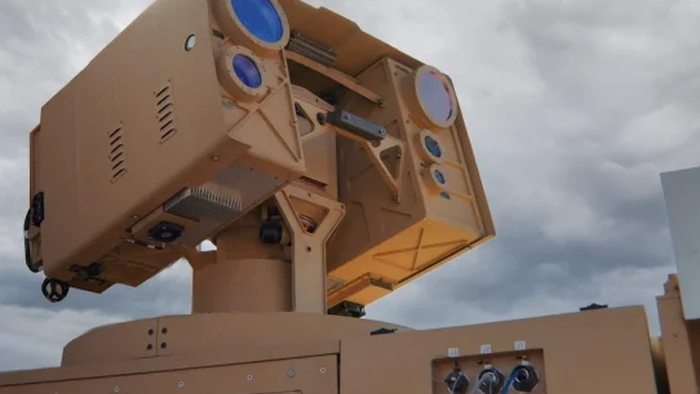
The Federal Aviation Administration has given the green light for the U.S. military to deploy high-energy counter-drone laser weapons in U.S. airspace, adding a new, low-cost layer of protection against the rising threat from kamikaze drones. The decision follows a two-month interagency standoff over whether the systems posed a risk to general aviation and commercial aircraft, as well as incidents in Texas earlier this year that briefly led to an airspace closure.
FAA Administrator Bryan Bedford was quoted by The New York Times as saying the new laser weapon systems had completed a safety assessment that “determined that these systems do not present an increased risk to the flying public.”
The decision paves the way for broader use of these 20- to 35+-kilowatt-class laser weapon systems along the southern border to combat drug cartel drones and one-way attack drones. These threats have caused alarm at the highest levels in Washington, especially following the use of drones by Iran in the Gulf area to target data centers, civilian infrastructure, and U.S. military bases.
The NYTimes provided more color on the FAA’s decision:
The statement did not address whether the agency had determined that the high-energy lasers posed no physical risk to aircraft, or whether the safety determination was based on how the lasers were being deployed. But the F.A.A. determined that the risk would be minimal even if the laser came into contact with an airplane, according to an agency official who spoke on the condition of anonymity to discuss a sensitive matter.
The controversy surrounding these laser weapons stems from the February 10 incident when the FAA briefly closed airspace over El Paso after Border Patrol fired the weapon at an object that turned out to be a metallic balloon. With the interagency standoff over, the U.S. military has considered deploying these lasers in Washington, D.C., to combat low-cost, one-way attack drones.
The core vulnerability across U.S. airspace is that a cheap, layered counter-drone system still does not exist, nor is one widely deployed around critical civilian infrastructure such as data centers, power plants, transmission substations, and other critical nodes across the modern economy, where even limited disruption could trigger localized or regional turmoil. The race to close that gap with low-cost systems is underway. We laid out this threat assessment one month before the US-Iran conflict. Now it’s time for solutions.