
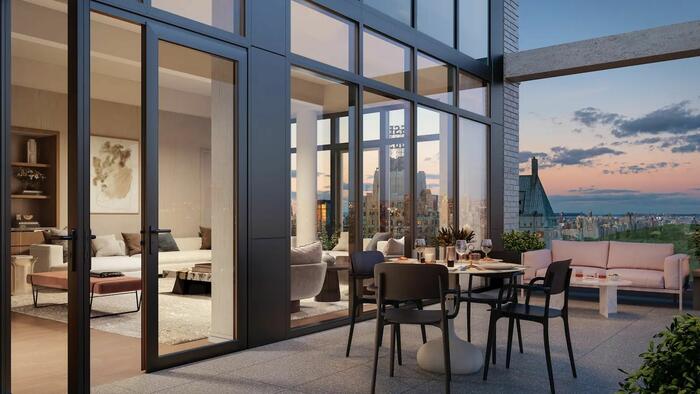
New York is taking direct aim at the city’s ultra-wealthy absentee owners. In a major policy shift announced Thursday, Governor Kathy Hochul and state legislative leaders reached a framework agreement on a $268 billion state budget that includes a new annual tax on multimillion-dollar second homes in New York City – a move designed to generate roughly $500 million a year to help close the city’s projected $5.4 billion budget deficit.
The proposal, often called a “pied-à-terre” tax (French for “foot on the ground”), would apply to luxury properties valued at $5 million or more that are owned by people whose primary residence is outside New York City. These high-end apartments and townhouses – frequently used only a few weeks a year by global elites, celebrities, and finance executives – have long been criticized as under-taxed symbols of inequality in one of the world’s most expensive housing markets.
“This is a tax on properties worth more than $5 million that are owned by people who do not reside in New York City – the super wealthy who can purchase properties and use them to store their wealth,” Mayor Zohran Mamdani said in support of the plan. “If you can afford a $5 million second home that sits empty most of the year, you can afford to contribute like every other New Yorker.”
Hochul’s Political Pivot
The tax represents a notable evolution for Governor Hochul. For years she resisted aggressive wealth taxes, warning they could drive businesses and high-net-worth residents out of the state. But after Zohran Mamdani – a 34-year-old democratic socialist and state assemblymember – won the New York City mayoral race in November 2025 in a stunning upset, the political math changed.

With Mamdani pushing an ambitious progressive agenda (including universal pre-K and 3-K) and with federal funding cuts looming under the Trump administration, Hochul agreed to the second-home surcharge as part of a broader budget deal. The revenue would flow directly to New York City, according to the NY Times.
Hochul framed the tax as both fiscally necessary and morally fair:
“If you can afford a multi-million dollar second home in New York City, you can afford to pay your fair share.”
Details Still Being Finalized
While the framework has been agreed to in principle, key specifics remain under negotiation. Hochul said she would release more details “soon,” including exact rates, exemptions, and how many of the roughly 13,000 eligible properties would actually be taxed. Legislative leaders cautioned that the governor’s announcement was premature.
Assembly Speaker Carl Heastie said Thursday that no final deal had been reached and that “there is no budget deal.” Senate Democratic spokesman Mike Murphy described the agreement as covering only “big concepts.”

Still, the direction is clear: New York is joining a growing number of jurisdictions (including parts of Europe and several U.S. cities) that are experimenting with higher taxes on non-primary residences to fund public services amid housing shortages and affordability crises.
The second-home tax is just one piece of a wide-ranging budget that also includes:
- $4.5 billion to expand child care statewide – a key priority for Mayor Mamdani.
- Delays to the state’s aggressive climate targets under the 2019 Climate Leadership and Community Protection Act (pushing full implementation to 2028 and adjusting methane calculations).
- New restrictions on federal immigration enforcement, including barring ICE agents from wearing masks and limiting cooperation between local police and federal agents.
- A cap on certain auto insurance payouts and speed-limiting devices for chronic “super-speeders” in New York City school zones.
- A state-level exemption on up to $25,000 in tips for many workers (mirroring federal changes) and $1 billion in utility bill rebates.
Political and Economic Stakes
Republicans immediately attacked the package. Nassau County Executive Bruce Blakeman, Hochul’s likely Republican opponent in November’s gubernatorial race, called the budget a “triple threat to your wallet: more taxes, record spending, and a utility bill crisis.”
Environmental groups criticized the climate deadline extensions as a retreat, while trial lawyers and consumer advocates expressed concern that auto insurance changes could limit compensation for crash victims.
For Hochul – who is seeking re-election – the deal allows her to claim credit for delivering on affordability and child care while showing political flexibility in partnering with the city’s new progressive mayor. For Mamdani, it marks an early victory in his effort to make the ultra-wealthy “pay their fair share.”
The budget must still be finalized and passed by the Legislature. Details on the second-home tax rates and implementation are expected in the coming days.