
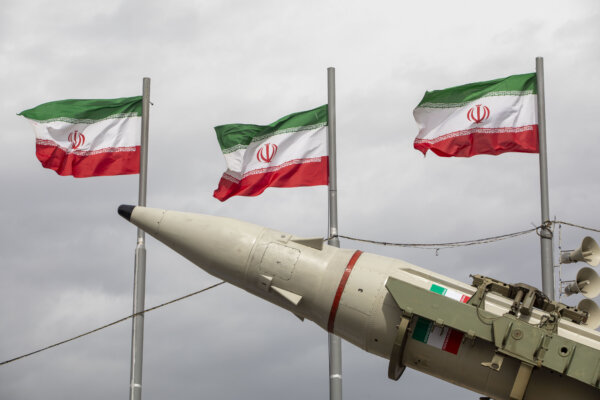
 Iran has rejected a new cease-fire proposal from the United States, insisting instead on a permanent end to the conflict along with firm guarantees against future attacks, according to the state-run Islamic Republic News Agency (IRNA).
The decision, announced on April 6, comes just hours before U.S. President Donald Trump’s deadline for Tehran to reopen the Strait of Hormuz or face potential strikes on key infrastructure, including power plants and bridges.
Iran communicated its response through Pakistan, signaling that it is unwilling to accept a temporary pause in hostilities.
“We won’t merely accept a ceasefire,” Mojtaba Ferdousi Pour, head of Iran’s diplomatic mission in Cairo, said in remarks to The Associated Press.
“We only accept an end to the war with guarantees that we won’t be attacked again.”
At the White House, Trump said Iran is making a mistake by rejecting the proposal.
“They just don’t want to say ‘uncle,’” Trump told reporters.
“They don’t want to cry as the expression goes ‘uncle,’ but they will. And if they don’t, they’ll have no bridges. They’ll have no power plants. They’ll have no anything.
“I won’t go further because there are other things that are worse than those two.”
According to IRNA, Tehran’s proposal includes 10 provisions, such as ending regional conflicts, ensuring safe navigation through the Strait of Hormuz, lifting economic sanctions, and initiating reconstruction efforts.
Iranian and Omani officials are working on a framework to manage shipping through the strategically vital Strait of Hormuz, a critical global energy corridor.
Meanwhile, tensions escalated further as Israel launched strikes on Iran’s South Pars natural gas field—the world’s largest, shared with Qatar—targeting a major source of the country’s revenue.
The attack also killed two senior commanders of Iran’s Revolutionary Guard.
Israel described the strike as an effort to weaken Iran’s economic capacity, though it appeared separate from the U.S. ultimatum.
The development raises doubts about the viability of a proposed 45-day cease-fire amid rapidly intensifying hostilities.
The Strait of Hormuz remains at the center of the crisis. Iran’s control over the passage has already driven up oil prices and rattled global markets.
In Tehran, explosions were reported throughout the day, with residents describing continuous sounds of air defenses, drones, and low-flying aircraft.
Among those killed in recent strikes was Maj. Gen. Majid Khademi, head of intelligence for Iran’s Revolutionary Guard, along with Asghar Bakeri, a senior figure in its Quds Force, according to Iranian and Israeli sources.
Israeli Defense Minister Israel Katz signaled that such operations would continue.
“We will continue to hunt them down one by one,” he said, referring to senior Iranian officials.
Israeli forces also reported overnight strikes on three airports in Tehran—Bahram, Mehrabad, and Azmayesh—claiming to have destroyed dozens of aircraft and helicopters belonging to the Iranian air force.
The conflict is spilling across the region.
Gulf countries—including Kuwait, the United Arab Emirates, and Saudi Arabia—have activated air defenses in response to Iranian missiles and drones targeting infrastructure such as oil facilities.
In Israel, a missile strike hit the northern city of Haifa, killing four members of the same family when a residential building collapsed.
Despite ongoing mediation efforts—particularly through Pakistan—progress remains uncertain.
Officials involved in the talks say negotiations are at an advanced stage but face disruption from parties seeking to derail them.
Iran’s Foreign Ministry has maintained that diplomacy cannot proceed under threat.
“Negotiations are entirely incompatible with ultimatums, crimes, and threats of war crimes,” said its spokesman, Esmail Baghaei.
This marks the latest instance of Iran rejecting a U.S.-backed cease-fire, underscoring the widening gap between calls for a temporary truce and demands for a lasting resolution.