
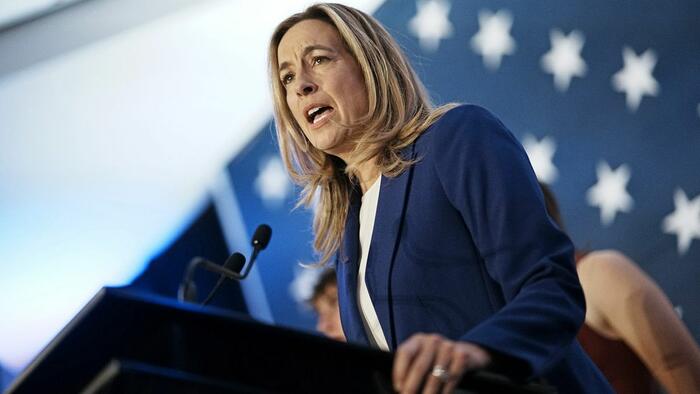
This week, New Jersey Gov. Mikie Sherrill revealed that more than 6,600 noncitizens ended up on its voter rolls, with nearly 400 of them casting ballots between June 2023 and June 2024.
Despite saying the situation is unacceptable and claiming that she is being proactive to fix it, her administration has also begun steering the same noncitizens toward taxpayer-funded legal help.
Sherrill promptly blamed the software vendor, IDEMIA, for the problem.
“Let me be clear: this entire situation is unacceptable,” Sherrill said Tuesday. “It’s unacceptable that the vendor released software with such a glaring error, it’s unacceptable that the MVC took a year to get this issue fixed and it’s unacceptable that no one in the previous administration brought this to light, demanded accountability or took action when it happened years ago.”
However, they dispute her characterization and have offered a different characterization of who was responsible.
“IDEMIA works with the New Jersey Motor Vehicle Commission, and has for more than 40 years, to support the process through which eligible individuals may indicate their interest in registering to vote when applying for or renewing a driver’s license or state-issued identification card,” the company said in a statement. According to IDEMIA, New Jersey’s own Division of Elections, the body charged with validating and adjudicating every registration IDEMIA passed along, is ultimately responsible.
MVC is even switching to a new vendor. Earlier this month, the Department of Homeland Security reported that roughly 250,000 noncitizens were registered to vote across four states – California, Pennsylvania, New Jersey, and Nevada. New Jersey accounted for 35,152 of those registrations, more than five times the 6,600 figure Sherrill’s administration has acknowledged. The gap suggests the state has disclosed only a portion of the problem, and it raises the question of how the smaller number became the official one. Note that DHS has not publicly detailed its methodology for the higher figure, and fact-checkers have treated the larger claims with caution.
New Jersey’s website now tells noncitizens who were improperly registered to vote to contact the Division of Elections or their county’s Commissioner of Registration to have their names removed.
“A recently discovered error in a vendor’s software revealed that approximately 6,600 people were improperly registered to vote between June 2023 and June 2024 after completing a transaction at the New Jersey Motor Vehicle Commission,” the page states. “These individuals indicated they were not United States citizens, and they did not attest to being eligible to vote during this transaction. But the software erroneously transmitted these individuals for voter registration processing regardless.”
The same page points them, along with other affected residents, to legal resources through the Office of New Americans. Among those resources is pro bono legal representation through New Jersey’s Detention and Deportation Defense Initiative, a state-funded program that provides defense against deportation proceedings.
That means New Jersey taxpayers are funding legal defense, through a deportation-focused program, for noncitizens who were registered to vote and, in hundreds of cases, actually voted. Federal law prohibits all noncitizens – whether unauthorized or lawfully present (such as green-card holders or temporary visa holders) – from voting in federal elections. The available public information confirms these individuals indicated they were noncitizens; it does not break down how many of the 6,600 (or of those who voted) lacked legal authorization to reside in the United States.
The Sherrill administration also indicated this week that it will not turn over the names of the noncitizens who were registered to vote to the Trump administration, citing privacy concerns.
Sherrill’s account leaves the state with a tidy narrative: a defective vendor, a fix already underway, and a governor who inherited the mess. The DHS figures complicate that narrative considerably, and the state’s own disclosures have not yet accounted for the difference between 6,600 and 35,152. Until they do, the full scope of noncitizen registration in New Jersey remains an open question.