
OAN Staff Lillian Mann
6:22 PM – Monday, April 20, 2026
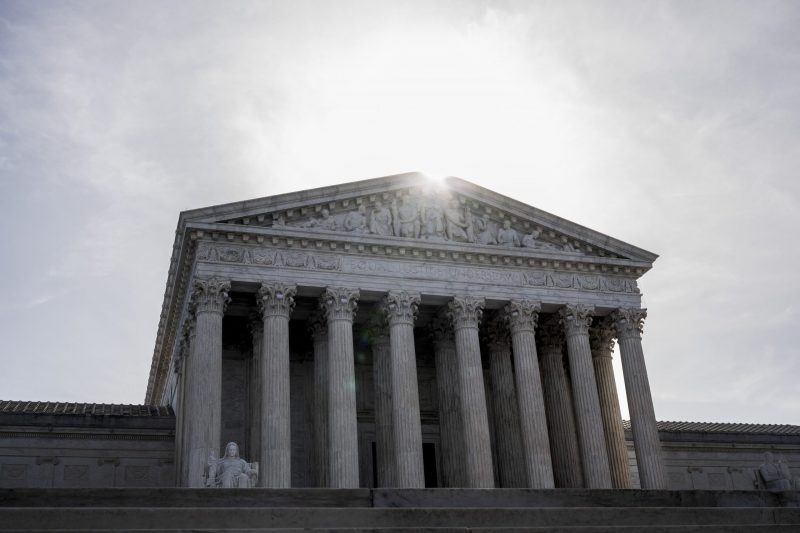
The Supreme Court of the United States (SCOTUS) declined to review a challenge to a Massachusetts school district’s policy that allows students to adopt new names and pronouns without parental notification.
By denying the petition for a writ of certiorari, the justices left intact a lower court ruling favoring the school district, thereby avoiding a definitive national precedent on the intersection of parental rights and student privacy.
The legal battle originated at Baird Middle School in Ludlow, Massachusetts, where parents Stephen Foote and Marissa Silvestri say that school officials infringed upon their 14th Amendment right to direct the upbringing of their children.
The couple argued that by facilitating a child’s social transition in secret, the school intervened in a sensitive aspect of social development that should remain under parental purview.
In the underlying ruling, the lower court held that while parents have broad rights regarding their children’s education, they do not possess a Constitutional mandate to dictate a school’s internal administrative procedures.
For its part, the Ludlow School Committee argued that its actions aligned with state guidelines designed to “protect the safety and privacy of LGBTQ+ youth,” who may face “detrimental” consequences if their identities are disclosed to unsupportive households.
The dispute centered on the couple’s child, identified in court documents as B.F. According to the parents, the school began “pushing beliefs concerning gender ideology” and encouraged B.F. to question her identity, leading the child to require professional therapy.
Silvestri also stated that she explicitly requested that school officials cease private discussions regarding gender with her child so the family could address the matter privately with their own medical professionals.
Despite this request, the parents alleged that the school continued B.F.’s social transition in secret. They claimed teachers adopted a different name and pronouns for B.F. during school hours and allowed the child to choose which bathroom to use.
The parents further alleged the existence of an unwritten policy within the Ludlow school system that empowers students to keep their social transitions hidden from their families.
Attorneys representing the school district provided a different reasoning, claiming that their actions were prompted by an email from the student, who identified as “genderqueer” and requested the use of any pronouns. To “honor the student’s request” for privacy, the school utilized the child’s preferred name and pronouns on campus while continuing to use their legal name and birth pronouns when communicating with the parents.
This dual approach, the district argues, was a “necessary adherence” to privacy protocols rather than an attempt to subvert parental authority. The parents initially filed a civil rights lawsuit against the Ludlow School Committee in 2022, followed by a dismissal of the case.
A February 2025 court ruling wrote: “The measures the parents cite … all involve decisions by Ludlow’s staff about how to reasonably meet diverse student needs within the school setting,” the unanimous three-judge panel said. “The Supreme Court has never suggested that parents have the right to control a school’s curricular or administrative decisions.”
The parent’s representation, however, argued in a filing that “petitioners do not have a religious objection to their school district’s indoctrination and transition of their children without their knowledge. Theirs is a moral belief, backed by well-supported scientific opinion, that a so-called gender transition harms their children.”
“Their constitutional rights to direct the upbringing of their children remain just as fundamental.”
“Our Constitution’s guarantee of parental rights in a pluralistic society rings hollow for millions of Americans if it offers no protection to nonreligious parents whose children are encouraged to social transition by their public school without their parents’ notice or consent — or over their parents’ vociferous objections,” the parents’ lawyers said.
Legal advocacy groups and the plaintiffs argued further the national scope of the debate, reporting that over 1,000 school districts have adopted policies that withhold information from parents regarding their children’s gender identity. They maintained that SCOTUS must intervene to clarify that parents do not forfeit their fundamental rights to direct their children’s upbringing simply by enrolling them in a public education system.
In contrast, the school board and local officials contended to the court that the specific “unwritten policy” by the parents does not actually exist. The district maintained that its staff members were merely attempting to navigate complex state guidelines and respond to specific requests from the student, B.F., regarding their preferred name and pronouns.
Stay informed! Receive breaking news alerts directly to your inbox for free. Subscribe here. https://www.oann.com/alerts
What do YOU think? Click here to jump to the comments!
Sponsored Content Below