
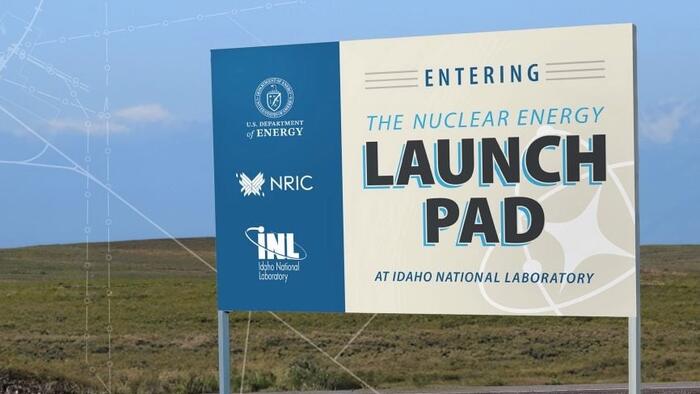
Senators Mike Lee (R-UT) and Dave McCormick (R-PA) introduced the Nuclear Energy Innovation and Deployment Act (NEIDA) on April 14th, presenting what could be one of the most significant regulatory shifts for U.S. nuclear power in decades.
The legislation would expand the DOE’s authority to license and regulate commercial reactors and fuel-cycle facilities when sited on federal land or built for federal purposes, including electricity supplied to federal power marketing agencies.
The United States should lead the nuclear energy renaissance, not watch it from the sidelines.
My Nuclear Energy Innovation and Deployment Act with @SenMcCormickPA will help power America’s future. https://t.co/X8mOPRlMIT
— Mike Lee (@SenMikeLee) April 14, 2026
It would also create a permanent Nuclear Energy Launch Pad program to streamline demonstration projects on DOE and National Lab sites, with a built-in path to commercial operations under DOE oversight rather than the traditional NRC bottleneck.
Under current rules, even projects on federal property like Idaho National Laboratory (INL) typically require full NRC licensing if they want to be used for commercial purposes. NEIDA flips that script. Commercial reactors and related fuel facilities on qualifying federal sites could operate under DOE authority, complete with Price-Anderson liability protections.
The bill also repurposes surplus plutonium as reactor fuel through a milestone-driven program, turning a liability into domestic supply while federal power marketing administrations gain explicit authority to purchase and transmit nuclear-generated electricity.
The centerpiece is the Nuclear Energy Launch Pad, which would designate secure federal zones (primarily on DOE and National Lab land) for private companies to test and demonstrate advanced nuclear technologies. Private entities pay the bill, but gain infrastructure support and regulatory certainty. After demonstration, projects could transition seamlessly to commercial operation under DOE licensing.
As we have covered in recent reporting on surging nuclear interest, this framework directly addresses the “valley of death” between pilot and full deployment that has stalled U.S. progress while China and Russia build out capacity at pace.
Take Oklo’s Aurora powerhouse already under construction at INL. The company received DOE approval for its Nuclear Safety Design Agreement (NSDA) in March 2026 under the existing Reactor Pilot Program. If NEIDA made that pathway permanent and explicit, Oklo could complete testing and iteration under DOE oversight, then secure a commercial operations license directly from the agency without restarting with the NRC. The shift would provide exactly the certainty developers have long sought.
The bill could also create a natural bridge to the Genesis Mission, DOE’s flagship AI and energy-dominance initiative. Genesis is already pushing co-location of data centers on federal land with advanced nuclear power to meet exploding AI-driven power demand. Under NEIDA, reactors licensed and operated by DOE on those same sites could enter straightforward commercial offtake agreements to supply Genesis-linked data centers.
The Launch Pad’s streamlined DOE process, combined with existing experience, could compress timelines dramatically. Consider an AP1000 reactor announced for a federal site: from initial filing to full commercial license, the bill’s framework suggests a matter of months rather than the multi-year NRC odyssey that has become standard.
If enacted, NEIDA does not overhaul the entire NRC system. It would simply carve out a fast lane on federal real estate. In an era of record electricity demand from AI and manufacturing, that lane may prove decisive.