
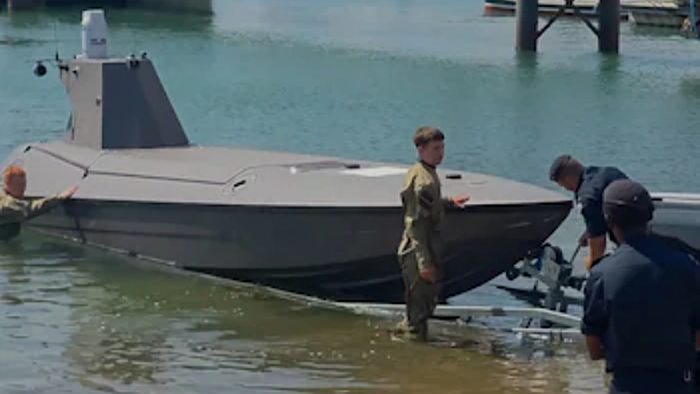
An investigation into surveillance equipment fitted to Royal Navy unmanned vessels has raised concerns over military supply-chain security after cameras containing Chinese-made components were found communicating with an internet address in China.
The cameras were installed on K3 Scout unmanned surface vessels used by Royal Marines and other specialist British forces, according to a report by The Telegraph. The vessels form part of the Royal Navy’s push to expand its use of autonomous systems for surveillance and maritime operations.
A technical assessment reportedly discovered that the cameras were sending routine electronic signals to an IP address located in China. The communications were described as “heartbeat” traffic – automated messages commonly used by connected devices to confirm that they remain online and operational. The Ministry of Defence said investigators found no evidence that classified information, military systems or other sensitive data had been accessed or transmitted abroad. Nevertheless, internet connectivity associated with the cameras was removed after the issue was discovered.
The episode has renewed scrutiny of the increasingly complex international supply chains behind modern defense equipment, where a system designed and assembled in one country can contain electronic components manufactured across several others.
Concerns over sensitive military locations
The K3 Scout vessels have been used by the Royal Marines since earlier this year and are capable of extended autonomous operations. Their surveillance equipment is intended to give military personnel greater awareness of maritime activity without requiring crews to remain aboard the vessels.
Security concerns are heightened by reports that the craft have operated around sensitive defense facilities and personnel.
One concern is whether connected cameras could potentially expose information about individuals, training activities or locations even when the main platform itself is not actively conducting a mission. Reports that some camera functions may have remained active while vessels were otherwise powered down have added to calls for closer examination of how individual subsystems operate.
The Ministry of Defence said its routine cyber-security procedures were responsible for identifying the vulnerability and stressed that its investigation found no evidence of a compromise of departmental information.
Internal Audit
The K3 Scout fleet was supplied by British defense company Kraken Technology Group, which obtained the cameras through a third-party supplier.
Kraken said the equipment had been considered compliant with relevant US defense procurement requirements but acknowledged that a small number of components inside the cameras originated outside the UK. Following an audit conducted with the Royal Navy, the company said it was satisfied that sensitive information had not been transmitted through unintended channels and that identified vulnerabilities had been addressed.
The distinction highlights a broader problem for defense procurement. A product can comply with rules prohibiting equipment from specified manufacturers while still incorporating individual components produced in countries viewed as potential security risks. Modern cameras, drones and communications systems can contain processors, sensors, networking modules and firmware originating from numerous suppliers. That makes establishing the provenance and behavior of every component increasingly important – and increasingly difficult.
The K3 Scout is designed for long-duration maritime missions and can carry a substantial payload. The platform has also been tested internationally and has attracted interest beyond the UK.
For the Royal Navy, such vessels are part of a wider strategy to combine conventional warships with autonomous and remotely operated systems.
Uncrewed platforms can conduct surveillance, patrol dangerous areas and provide intelligence while reducing the number of personnel placed directly in harm’s way. Britain has committed billions of pounds to expanding military drone technology and accelerating the introduction of autonomous systems.
But greater reliance on digitally connected equipment also creates new vulnerabilities.
A conventional mechanical defect may prevent a vehicle from functioning. A compromised digital component could potentially create a less visible threat by transmitting information, receiving unauthorized instructions or revealing patterns of military activity.
Chinese technology remains a security concern
The discovery comes against a wider backdrop of British concern about technology and equipment with links to China. Successive governments have tightened restrictions on Chinese-made hardware in sensitive environments, while Huawei was removed from Britain’s 5G infrastructure plans following national-security concerns. UK intelligence agencies have also repeatedly warned about Chinese espionage and efforts to obtain sensitive political, commercial and technological information.
