
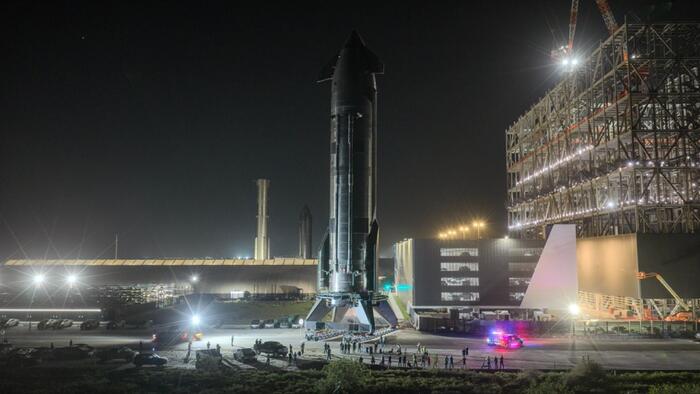
The CEO of the startup building data centers for eventual low Earth orbit deployment told Molly O’Shea of the Sourcery podcast that he expects Elon Musk’s SpaceX to hold a “near monopoly on launches” over the next five to ten years, driven by Starship’s scale, launch cadence, and cost advantage.
Starcloud CEO Philip Johnston told O’Shea:
I’m very hopeful that other launch vehicles will be able to compete with SpaceX, but my general hot take is that SpaceX is going to have a near-monopoly on launch for at least the next five years, maybe ten.
I think Starship is way ahead of any other program, and even like Stokes Space—if their rocket works—their payloads are three tonnes versus 150-tonne payload for Starship. Especially with Gigafactory, so yeah, that’s it.
O’Shea asked Johnston about Jeff Bezos’ rocket company, Blue Origin, and whether it could challenge SpaceX’s launch dominance in the years ahead:
The problem with Blue Origin’s rocket is they don’t have a reusable upper stage at the moment, and as I understand, they’re not even really trying to build a reusable upper stage.
So if they can get it flying, you’re talking about launch costs comparable maybe with Falcon 9, although their quotes we’ve had are way higher than that.
.@Starcloud_ CEO @PhilipJohnston expects SpaceX to have a “near monopoly on launch” for the next 5–10 years:
“Starship is way ahead of any other program.”
“The manufacturing that they’re ramping up is insane—like building three Starships per day potentially with their… pic.twitter.com/qGCWPJ3cIh
— sourcery (@sourceryy) April 28, 2026
Musk’s SpaceX is gearing up for the largest IPO ever, which could value the rocket company at up to $2 trillion. At this valuation, Musk would likely become the first trillionaire.
The latest data from Bloomberg shows Musk’s net worth is around $646 billion. Larry Page of Google trails in the No. 2 spot at $297 billion, with Bezos at No. 3 at $278 billion.
In December, we outlined for readers how to profit from space-based data centers, given that ground-based data centers are being delayed or canceled, alarming the tech bros. This suggests that, with limited to no restrictions on space, space-based data centers will be the next big push – all hinging on the commercialization of Starship.