
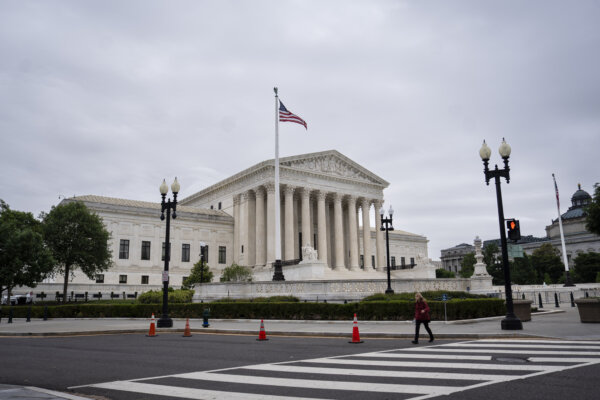
 The U.S. Supreme Court on June 8 ruled that an energy trade association may pursue its challenge to Biden-era restrictions on consumer gas furnaces and commercial water heaters.
The high court’s decision comes after the Department of Energy, now under President Donald Trump, switched sides in the dispute and asked the court to undo an appellate court ruling that disallowed the lawsuit. The department is also currently in the process of revising the regulation that is in dispute.
The justices vacated a ruling of the U.S. Court of Appeals for the District of Columbia Circuit and sent the case back to that court for further consideration.
Lawyers call this process, which disposes of cases without holding an oral argument, GVR, which stands for grant, vacate, and remand. The Supreme Court follows this procedure when it wants lower courts to reconsider their rulings using a new legal framework from a recent decision without delving deeply into the specifics of the cases.
In other words, the association argued that non-condensing gas appliances could generally not meet the new departmental standards.
If the rule is not blocked or reversed, non-condensing furnaces will become illegal to manufacture in 2028, even though they account for about 55 percent of the market for natural gas furnaces across the nation, according to the association.
“This ruling from DOE will push American families with natural gas heat into a corner—when their furnace goes out, they’ll be forced to choose between retrofitting for electric with the increased month-to-month utility bills that entails or engaging in a costly and time-consuming renovation to retrofit their home for a completely different type of natural gas furnace,” the association’s president and CEO, Karen Harbert, said at the time.
The department said at the time that the rule would help combat climate change and save billions of dollars in heating costs.
The energy efficiency standard for residential gas furnaces now at issue, which was finalized in September 2023, specifically targeted non-weatherized gas furnaces and those used in mobile homes. The rules require such gas furnaces to achieve an annual fuel utilization efficiency of 95 percent.