
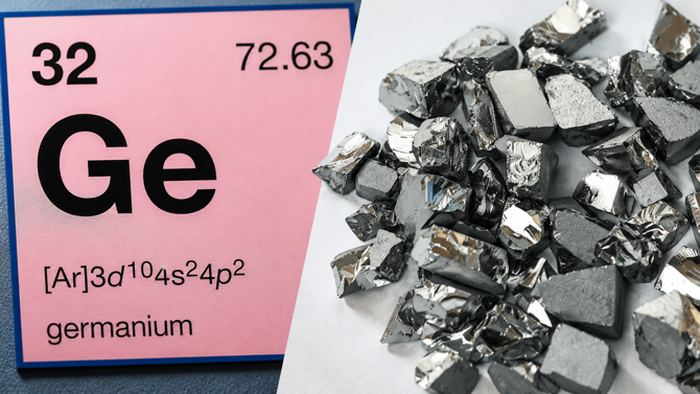
Nikkei Asia reports that China is restricting or delaying exports of germanium- and quartz-based materials to Taiwan, creating “painful supply-chain bottlenecks” across the island’s key aerospace, semiconductor, and optical companies.
The supply disruptions reinforce the urgent need for the US and its allies to accelerate supply-chain decoupling and secure alternative sources of critical materials. Beijing’s ability to weaponize shipments could prove devastating during a military conflict or allow China to slow Western semiconductor and AI infrastructure buildouts while its domestic AI companies and infrastructure projects close the gap.
“It’s an industrywide issue. Many of my peers have encountered the same problem, and it could significantly extend lead times across our business,” one executive in the optical industry told the Japanese outlet, requesting anonymity for fear of retaliation from Beijing.
For context, germanium’s most critical uses are in defense optics and communications infrastructure, and it plays a significant, though largely indirect, role in the AI buildout through fiber networks, photonics, and data-center connectivity rather than the GPUs used in chip stacks.

Taiwanese manufacturers warned that prolonged customs reviews for germanium- and quartz-based materials began last year and that lead times continue to worsen, causing some suppliers to miss customer delivery schedules. Sources said one chip equipment manufacturer had to delay production on one chip line for months due to the supply squeeze and noted that sourcing materials outside China is extraordinarily difficult.
“The quality and precision for quartz is very strict for the chip industry, and currently we don’t have an alternative source from China,” one Taiwanese executive told the outlet.
“We have been told that some of our Chinese suppliers have been summoned by the authorities and questioned about their customers and shipments,” said one of the sources. “We have already lost some orders because longer lead times for certain materials mean we can’t meet our customers’ delivery schedules.”
Aerospace suppliers are also reporting disruptions involving Chinese magnets.
“We have found that key permanent magnets essential for making motors have faced some disruptions because of Chinese export controls, and it’s not that easy to find cost-effective alternatives in other places,” an executive with an aerospace supplier told the outlet.
China’s weaponization of critical-material supply chains amid heightened tensions with Taiwan suggests that the supply-chain decoupling theme will only accelerate from here.
Last week, Piper Sandler initiated coverage of LightPath Technologies with an “Overweight” rating and a 12-month price target of $15, citing the defense supplier’s proprietary BlackDiamond infrared glass, which completely “circumvents” the need for germanium amid “significant cost increases and scarcity stemming from recent Chinese export controls.”

Clarke Jeffries, vice president and senior equity research analyst at Piper Sandler, specializes in industrial software and defense technology. In a note titled “BlackDiamonds Are Forever,” Jeffries outlined the core value proposition underpinning LightPath’s investment thesis:
Central to LightPath’s value proposition is the exclusive license to BlackDiamond, a synthetic glass that circumvents significant cost increases & scarcity from recent Chinese export controls on germanium.
With an exclusive license, and now competing at cost parity (or below) to Germanium, we believe LightPath is poised to capture meaningful share in of IR and Multi-Spectral optics market as the technical advantages of the BlackDiamond technology scale to large diameter optics and have the opportunity to be designed into large upcoming defense programs.
Beijing’s tightening grip on germanium, tungsten, and other critical-material export flows merely confirms that the supply-chain decoupling investment theme will remain intact for many years.
The US and its allies must secure alternative sources before China further weaponizes export controls, which could soon create operational bottlenecks across the defense, semiconductor, and AI-focused industries.
That is why our decoupling theme is moving further upstream. On Wednesday, we examined Almonty Industries as a potential alternative supplier of tungsten (read report).