The work of archeologists involves a daunting task: to determine the places and ways in which our ancient human ancestors lived based on an extremely limited amount of information.
While historians struggle to achieve an accurate understanding of human civilizations stretching back hundreds or several thousand years, they at least have relatively abundant records and material to work with.
Archeologists, though, seek to understand ages even more remote, of tens of thousands, or hundreds of thousands, or even millions of years ago, and they have considerably less material on which to base their conclusions. Their task is similar to figuring out a large jigsaw puzzle with only a handful of pieces, or understanding the plot of a novel from which only a few pages have survived.
While based on tangible evidence from the scientific examination and study of discovered artifacts, archeology also necessarily involves a considerable amount of speculation, conjecture, and imagination.
When new evidence or new insights of past discoveries emerge, they may confirm, refine, or challenge previous archeological inferences.
Technological advances in recent decades have created unprecedented changes in archeology. Modern advancements in aviation, radar, and sonar technology have enabled archeologists to locate and recover new evidence from previously inaccessible locations, and vast improvements in the accuracy of dating ancient fossils and artifacts have provided an increasingly clearer picture of the past.
advertisement
From ancient cave paintings and creative artifacts to long-buried ancient structures, many modern discoveries offer additional insights into the great puzzle of ancient human culture.
Oldest Known Cave Art
According to a peer-reviewed study published in the journal “Nature” in January 2026, cave art discovered in Sulawesi, Indonesia, has been conclusively dated at almost 68,000 years old, making it the oldest known cave art in the world.
The drawings were dated by analyzing small amounts of uranium in the mineral layers that had formed on top of the paintings, thus providing the youngest possible dates of the art. Although cave drawings in Sulawesi as well as other parts of Indonesia had been discovered before, this new evidence conclusively places human ancestors in the region about 15,000 years earlier than previously believed.
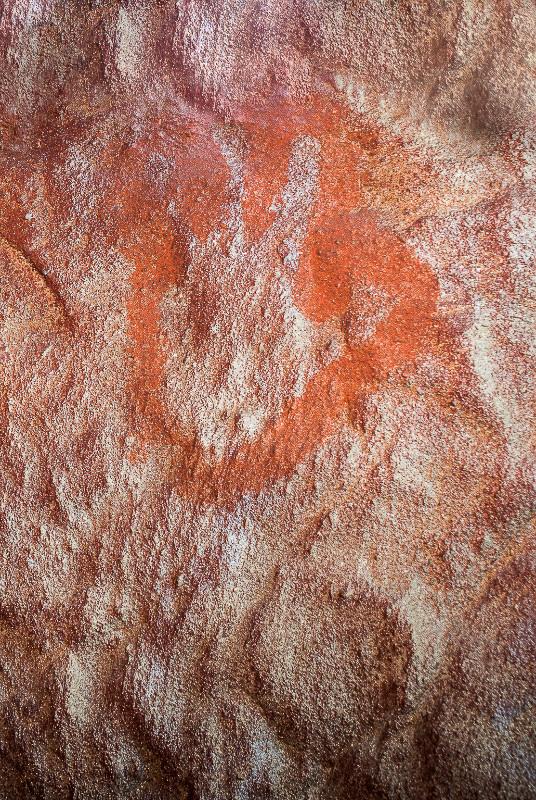
These cave drawings, which include a variety of hand stencils and figurative animal paintings as well as the oldest known depictions of human figures, were also created over an incredibly long period of time, demonstrating that early humans regularly inhabited the area for at least 45,000 years.
Furthermore, it is believed they initially migrated there by crossing the ocean, suggesting that these ancient humans had most likely developed boat-building and navigation skills. So this recent artistic discovery has prompted a complete reevaluation of certain widely accepted notions about the location and development of ancient humans.
Until the Sulawesi discovery, the oldest known example of cave art was located in the Maltravieso Caves in Cáceres, Spain, dated in 2018 at 64,000 years old. Those caves contain black and red ochre paintings, which demonstrate a familiarity with pigment mixing, and they depict groups of mammals, dots, patterns, engravings, hand stencils, and handprints.
Evidence of what appears to be ancient toolkits were also discovered at that site, indicating a level of sophistication not previously believed to exist in Europe at that time.
Maltravieso Cave replica with Neanderthals four fingers hand-prints, Caceres, Spain WH_Pics/Shutterstock.com
Creative Capacity
Speaking of ancient cave art, among the most astounding examples are the Chauvet cave drawings. These drawings, discovered in France in 1994, demonstrate a high level of artistic sophistication; they depict detailed and dimensionally accurate representations of at least 14 different animal species, including bison, deer, bears, lions, and panthers, as well as extinct animals such as mammoths and the wooly rhinoceros.
Extensive studies completed in 2012 dated these cave drawings to approximately 36,000 years old, which at the time was far earlier than this type of creative capacity was believed to have developed in humans.
A Chauvet 2 cave (Grotte Chauvet 2) employee prepares the last details on the eve of the opening day of «Of lions and men. Feline myths: 400 century of fascination» exhibition, in Vallon Pont dArc, in Ardeche department, south of Lyon, France, on April 4, 2019. Jeff Pachoud/AFP via Getty Images
And it wasn’t just through drawing that our ancient human ancestors expressed themselves artistically. Numerous musical instruments, primarily flutes made from the bones of animals, have been discovered in the last few decades, some dating back tens of thousands of years.
Currently, the oldest suspected musical instrument is what some archeologists believe to be a flute made from the thigh bone of a bear, discovered in a cave near Cerkno, Slovenia, in 1995 and estimated to be 50,000 to 60,000 years old, though other archaeologists have argued that the holes in the bone had resulted from gnawing by predator animals.
While there is growing evidence that human creativity and artistic expression stretch back tens of thousands of years, there is additional evidence that suggests it might be older still.
Specifically, geometrically engraved mussel shells were found in Java, Indonesia, in 1891, but they sat in a museum drawer for over 100 years before being examined and dated using modern scientific techniques. In a 2014 study, also published in “Nature” magazine, scientists concluded that “the manufacture of geometric engravings is generally interpreted as indicative of modern cognition and behavior.” And the date of the engraved shells is estimated to be approximately half a million years.
Underwater Manmade Structures
In 2019, the world’s oldest known manmade wooden structures were discovered at Kalambo Falls, in the southern African nation of Zambia. An extensive study published in “Nature” in 2023 concluded that “the interlocking logs were joined transversely by an intentionally cut notch,” and the resulting structures were dated at approximately 475,000 years old.
This indicates that human ancestors living in what’s commonly known as the Stone Age might not have lived as nomadic hunter-gatherers, as previously thought, but instead lived in more permanent dwellings and sophisticated communities.
While the water at Kalambo Falls allowed the ancient wood to be preserved far longer than it otherwise would have, one of the main obstacles to studying underwater artifacts is the difficulty of dating them accurately because of the effects of the water. Additionally, this task is often complicated by tides and currents that make it difficult to determine the original locations of recovered items.
For example, in 2000, a team from India’s National Institute of Ocean Technology was performing routine pollution surveys when their sonar indicated large geometric structures on the seafloor in the Gulf of Khambhat. Upon further exploration, they discovered what appeared to be the remains of an ancient city, and artifacts collected from the site included pottery, beads, statues, walls, and human bones. Carbon dating placed many of these artifacts at approximately 9,500 years old, which would predate the oldest known human-developed settled communities in Mesopotamia and Africa by several thousand years.
However, some scientists have questioned the accuracy of these findings, pointing out that the dated artifacts could have been carried to the location by tidal currents, and that the geometric layout of the site might also have resulted from natural forces.
Other similar discoveries have been made off the coasts of Cuba and Japan, as well as in other places, but those, too, have been met with skepticism by scientists and archeologists.
While each new discovery provides an additional piece of the immeasurably large and complex jigsaw puzzle that is our ancestral history, we are still working with only a few small pieces of the overall picture.
For the most part, we can only imagine the type of community in which our ancient human ancestors lived when they created paintings and played music 50,000 years ago, or when they crafted wooden structures and designed jewelry half a million years ago.
As modern technology expands both the range of our explorations and the accuracy of our analysis, archeologists will discover even more amazing clues that provide additional insights into the vast mysteries of humanity’s distant past.

 The work of archeologists involves a daunting task: to determine the places and ways in which our ancient human ancestors lived based on an extremely limited amount of information.