

Even when the skies seem bleak and cloudy, the sun is always just on the other side. Karatpet thongngam/Shutterstock
“When I was a teenager, my siblings and I would sometimes vent to each other about people who, at times, made life a little less pleasant. Normally, one might feel a sense of satisfaction after a few complaints,” Angelica Reis wrote.
“But every time my mom heard a conversation like that, gently and naturally, she would find something good to say about the person we were complaining about,” Reis wrote. It was an amazing strategy that always worked, she said, even though as kids, they didn’t really like it.
“As the years passed, I grew to appreciate this trait in my mother more and more, to the point in which it turned into respect. And isn’t it the right way to live—to see the good in situations, even when they might seem bleak, and to see the good in people, even when they might seem unpleasant?” Reis wrote.
“I have realized over time that that is what higher, godly love is partly about. It’s about not returning insults in kind and having love for others no matter how you might be treated.”
Reis’s story aligns with an important frame of thought that is rarely practiced today: the importance of seeing the good in others. This is not a new concept, but rather an idea that has already been explored in ancient times by philosophers, writers, psychologists, and prominent thinkers.
Roman emperor and philosopher Marcus Aurelius said that even if one finds fault in another person, one should think twice before passing harsh judgment. A key philosopher of the Stoic school, Aurelius saw intrinsic worth and dignity in every person. In his writings, he reflected the idea that when we encounter someone who behaves badly, we should try to see things from their perspectives and remember that they may be acting out of mistaken perceptions rather than out of malice. In this way, we can be tolerant of them, just as we would hope others would be toward us.
“For as every soul is unwillingly deprived of the truth, so also is it unwillingly deprived of the power of behaving to each man according to his deserts,“ Aurelius wrote. He later said, “For every man who errs misses his object and is gone astray.”
Based on this understanding, Aurelius defined the role of the “wise person” as one who must guide the person who has sinned, thereby saving them from themselves, because a sinner who has lost their way is not absolved of wrongdoing. And one must speak to such a person with love and compassion that will soften their heart.

Yuri Turkov/Shutterstock.com
“For what will the most violent man do to thee, if thou continuest to be of a benevolent disposition toward him, and if, as opportunity offers, thou gently admonishest him and calmly correctest his errors at the very time when he is trying to do thee harm, saying, Not so, my child: we are constituted by nature for something else: I shall certainly not be injured, but thou art injuring thyself, my child,” Aurelius wrote.
“Show him with gentle tact and by general principles that this is so,” he added.

Aurelius’s advice echoes the lesson about love and compassion in the famous novel “Les Misérables” by French writer Victor Hugo. The protagonist, Jean Valjean, is sentenced to a year in prison for stealing a loaf of bread to feed his widowed sister and her children. However, one year turns into 20, and he emerges from prison filled with resentment and hatred, eventually becoming a petty criminal.
After Valjean is caught stealing silverware from a priest’s home, the priest sees his potential to be a good man and claims that he himself had given Valjean the silverware as a gift. The priest’s compassion melts Valjean’s heart, and he decides to change his ways.
He establishes a factory with the money he received from the priest and becomes a wealthy man who donates generously to charity. At the climax of the novel, Valjean saves the life of the police officer who continued to see him as a criminal and pursued him throughout his life.
Reverence for Life
Albert Schweitzer, a German physician, philosopher, and musician who won the Nobel Peace Prize in 1952, acted with compassion, love, and appreciation toward every person he encountered. He had a profound sense of respect and reverence for life—his own and that of every other human being.
“Reverence for life affords me my fundamental principle of morality,” he wrote in his autobiography.
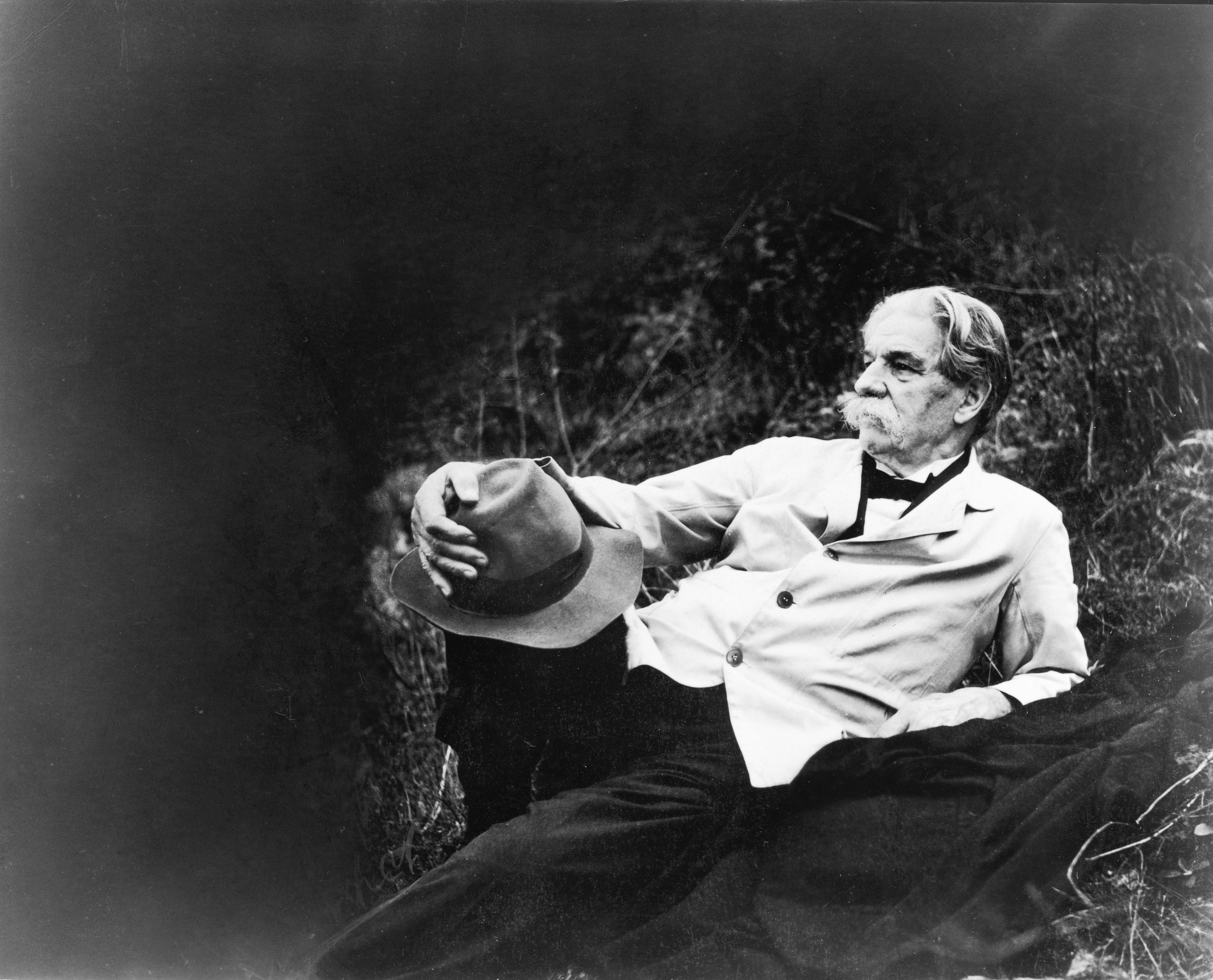
Alsatian-born German theologian, physician, and medical missionary Dr. Albert Schweitzer (1875 – 1965) reclines on the grass, 1960s. Photo by Erica Anderson/Authenticated News/Getty Images
Schweitzer saw it as his ethical duty to protect the life of every person and to enable each individual to develop and realize their full potential. In line with these insights, at the age of 30, he decided to dedicate his life to being “a physician in the service of humanity.” In 1913, he established a hospital in the city of Lambaréné, in Gabon, West Africa, where he treated thousands of people, including those with leprosy, malaria, and dysentery. Every patient received care with love and respect, regardless of their economic or social status.
Austrian Israeli thinker and educator Martin Buber philosophically articulated what Schweitzer had intuitively understood. Buber viewed human relationships as being of supreme importance and as the foundation for proper conduct in the world. In his book “I and Thou,” he described two types of relationships: I–It relationships and I–Thou relationships.
I–It relationships are functional, wherein one person uses another as an object to achieve a certain physical, mental, or emotional goal. I–Thou relationships are those in which one sees the other in their entirety, in all aspects of their being; such relationships constitute a genuine interpersonal bond grounded in deep love. “Love is the responsibility of an I for a Thou,” he wrote.

According to Buber, the capacity to love other human beings does not arise from effort or striving, but rather from an inner emptying of emotions or thoughts and a complete and total focus on the other. “The Thou meets me through grace–it is not found by seeking,” he wrote.
Such love also requires courage, according to Buber, because it involves a profound relinquishment of self. He argued that a true love for human beings constitutes the most daring act of all.
Psychologist Abraham Maslow, one of the central thinkers of the humanistic psychology movement in the 1960s, also saw great value in recognizing and cultivating the good in others. He formulated the revised “hierarchy of needs,” at whose base lie the most fundamental needs, such as food, and at its apex lies the highest human need: self-transcendence.
In transcending the self and connecting with a broader consciousness, Maslow said, a person recognizes the unity of the universe and feels a natural bond with all human beings. Instead of self-centered thoughts, one experiences selflessness, care, and concern for the well-being of others.
Maslow was a passionate believer in the inherent goodness of human beings. According to Maslow, only rarely does the “good” disappear entirely from one’s heart, though it is “weak and delicate and subtle and easily overcome by habit, cultural pressure, and wrong attitudes toward it.” Therefore, it is important to cultivate and encourage the good side of human beings.