
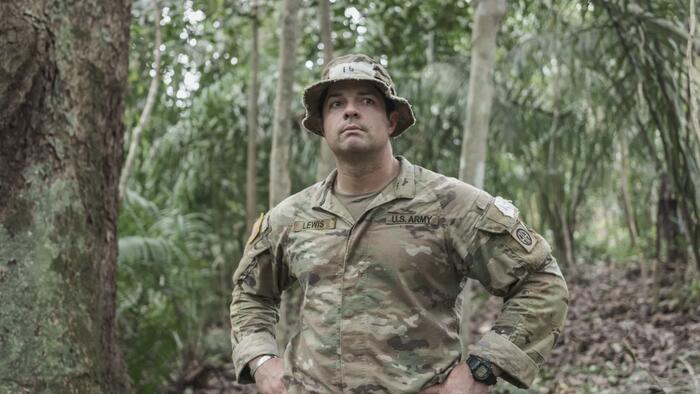
For the first time in roughly 25 years, the US has restarted jungle warfare training in Panama, signaling a broader return of American military activity in Latin America, according to a new Bloomberg feature.
At a rainforest training center near Colón, US troops practice survival techniques, patrol operations, casualty evacuations, and combat drills with Panamanian forces. The environment is intentionally unforgiving—thick jungle, venomous snakes, relentless insects—and soldiers often depend on machetes to move through dense terrain. One Panamanian instructor mocked the Americans’ inexperience, joking, “They’re always cutting themselves.”
The renewed training effort reflects a wider shift under President Donald Trump, whose administration has taken a far more aggressive posture toward the region. Officials have discussed military action against drug cartels in Mexico, increased pressure on governments in Cuba and Venezuela, and repeatedly raised the possibility of reclaiming the Panama Canal.
According to historian Alan McPherson, this approach represents a “coercive, multifaceted new imperialism,” combining military threats with trade pressure and diplomatic leverage.
Bloomberg writes that beyond Panama, Washington has deepened military partnerships across the hemisphere. The US has reached new agreements with El Salvador and Paraguay, carried out drone strikes in the Caribbean, and expanded security coordination involving Ecuador. Trump has encouraged regional governments to take a harder line on organized crime, telling leaders they should respond by “unleashing the power of our militaries.”
Inside the Panamanian jungle camp, cooperation between both militaries is highly visible. Troops sleep in the same barracks, eat together, and train side by side. During one exercise, an American soldier explained how a trap designed for animals could also be repurposed in combat: “To trap an enemy, you just use different bait… Maybe some ammo.”
Still, the growing US presence remains politically sensitive in Panama because of the legacy of the 1989 US invasion that ousted Manuel Noriega. While some Panamanians support military cooperation, others see it as a dangerous erosion of sovereignty—especially as Trump continues invoking the canal. Activist José González warned, “We’re ceding national territory, Panamanian territory, to the United States.”
In neighborhoods such as El Chorrillo, where residents still remember the devastation of the invasion, anti-US sentiment remains visible. One mural captures that lingering anger: “We don’t forget or forgive.”