
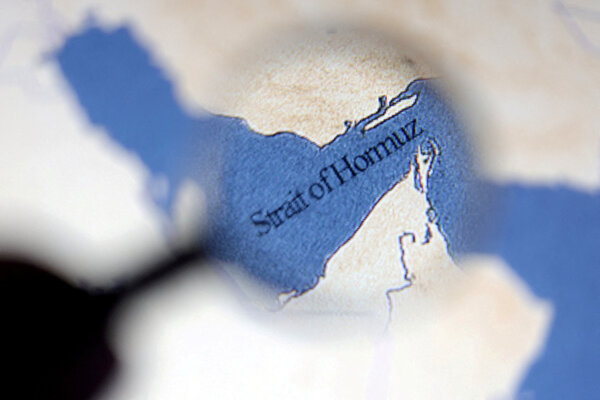
 French President Emmanuel Macron and British Prime Minister Keir Starmer have announced plans to organize a conference later this week to set up a “strictly defensive” mission to reopen the Strait of Hormuz to civilian shipping, free of tolls.
“This week the UK and France will co-host a summit to advance work on a coordinated, independent, multinational plan to safeguard international shipping when the conflict ends,” Starmer said in a post on X on April 13.
“The ongoing closure of the Strait of Hormuz is deeply damaging. Getting global shipping moving is vital to ease cost of living pressures.”
In a post on X on April 13, Macron said the plan was for a peaceful multinational mission aimed at “restoring freedom of navigation in the strait.”
“This strictly defensive mission, separate from the warring parties to the conflict, is intended to be deployed as soon as circumstances permit,” Macron said.
U.S. Central Command (CENTCOM) later clarified that the blockade would apply specifically to vessels entering or exiting Iranian ports.
“CENTCOM forces will not impede freedom of navigation for vessels transiting the Strait of Hormuz to and from non-Iranian ports,” it said in an X post.
In a post on X, Ebrahim Rezaei, a spokesman for the Iranian parliament’s National Security Commission, said the U.S. blockade was “more bluffing than reality,” according to a translation.
“It would be considered a military operation, and we will respond; it complicates the current situation he’s already in and further unsettles the market that’s furious about it,” Rezaei said, referring to Trump.
Israel Supports Trump’s Stance
Israeli Prime Minister Benjamin Netanyahu expressed support on April 13 for what he called Trump’s “strong stance to impose a naval blockade on Iran.”
In an April 10 post on X, the Iranian Consulate in Mumbai, citing the head of the Commission on National Security and Foreign Policy, Ebrahim Azizi, said, “Under a parliamentary proposal, transit fees through the Strait of Hormuz would be paid in Iran’s national currency, the #rial.”
U.S. Vice President JD Vance, who led the U.S. delegation in the talks over the weekend, said the Iranian delegation had declined to accept Washington’s terms for a lasting peace.
NATO Secretary-General Mark Rutte, in a speech on April 9, said: “The United Kingdom is leading a coalition of countries that are aligning the military, the political, and the economic tools that will be required to ensure free passage through the Strait of Hormuz.
“This is evidence of a mindset shift.”
Tankers carrying oil and gas from Kuwait, Iraq, Saudi Arabia, Bahrain, Qatar, and the United Arab Emirates—as well as Iran—have to pass through it to reach the open seas.
Marine tracking apps say around 40 commercial ships have passed through the strait since the start of the ceasefire on April 7, which is still massively down on the 100 to 135 vessels that passed through per day before the war began on Feb. 28.
The price of Brent crude oil, the international standard, rose by 7 percent to $102.29 a barrel following the announcement of a U.S. blockade, and stood at $101.89 at 9:20 a.m. ET on April 13.
Brent crude cost less than $70 per barrel in mid-February.
Turkish Foreign Minister Hakan Fidan, whose country played a part in negotiating the original ceasefire, said on April 13 that the 14-day truce could be extended for between 45 and 60 days to allow for more negotiations.