
‘Fight with all their might for the motherland.’ Chinese students are pressured into advancing Beijing’s interests in America.
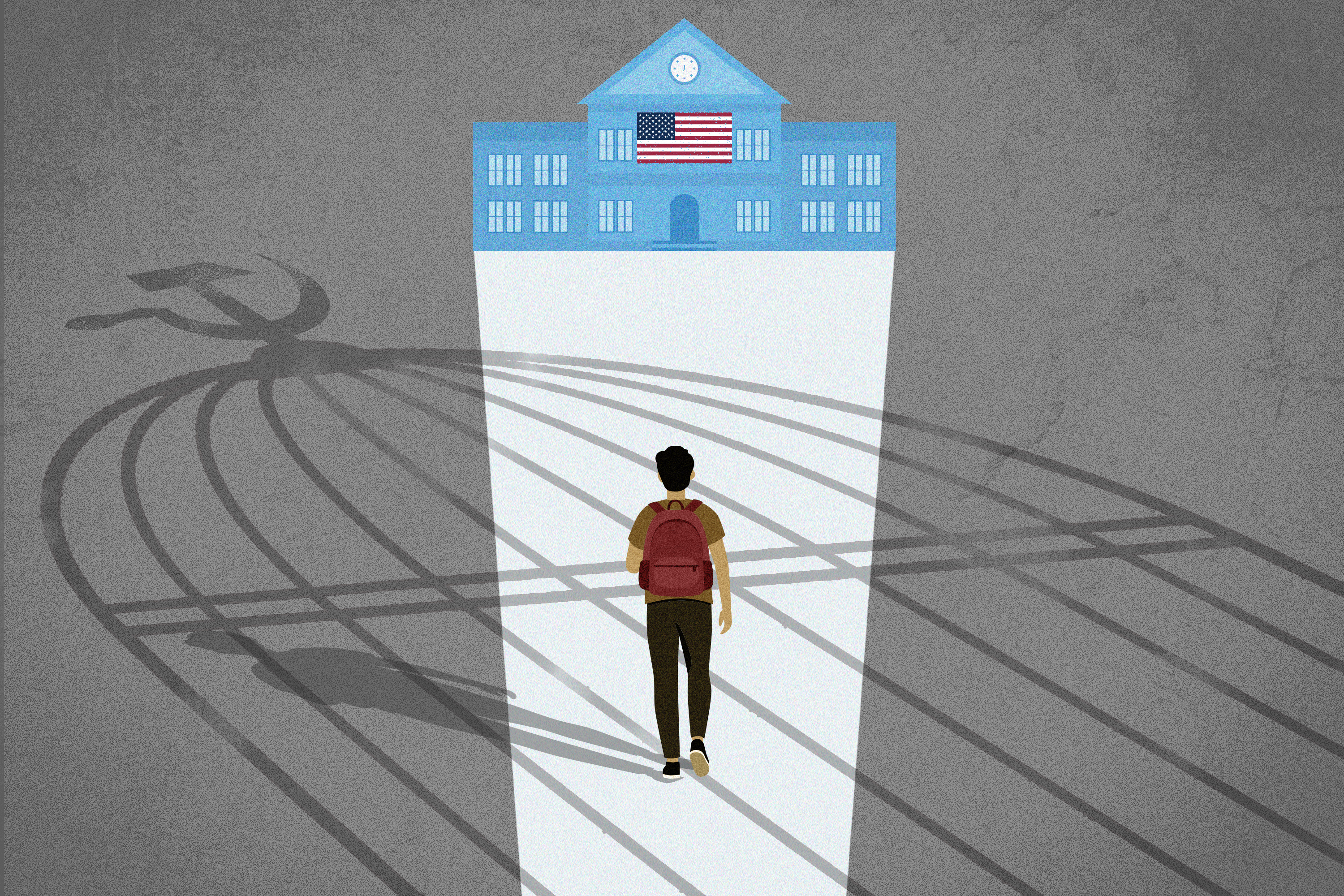
One of Beijing’s most notorious influence operations in Western academia came cloaked under the guise of traditional culture and under the name of Chinese sage Confucius.
Those entities—state-sponsored Chinese language programs called Confucius Institutes operating on American campuses—have since been exposed as a Trojan horse for Beijing’s propaganda, and most have shut down across the United States.
But another lesser-known cradle of influence in the Western academic world remains in place, hiding in plain sight under an innocuous acronym: CSSA.
CSSAs, or Chinese Students and Scholars Associations, are found across American campuses and act as a ready lever for Beijing to virtually hold Chinese students hostage, say activists, former club leaders, and experts.
By weaponizing students, they said, the Chinese regime gains a foothold in U.S. academia, stifles alternative voices, amplifies its own, and perpetuates a climate of fear.
The Trump administration has been simultaneously pushing back against the Chinese Communist Party’s (CCP) influence operations on American soil, while also wanting to keep Chinese student numbers high. Those dual goals make it imperative to curb the CSSAs’ coercive tactics and sever its ties to the Party, China watchers say.
Actions undertaken by CSSAs often appear organic, such as bunches of students gathering to wave red flags on the streets to welcome Chinese authorities, or writing angry letters to school officials in opposition to events that displease the regime.
‘Toe the Party Line’
The CSSA hit the spotlight in April 2024 when Chinese ambassador Xie Feng was invited to speak at Harvard University.
At a campus auditorium, protests delayed his address by 45 minutes as students shouted out about the abuses happening in China under his watch. When student Cosette Wu unfurled a protest banner, a CSSA leader, Zou Hongji, made a beeline toward her, grabbed her by the arm and dragged her out of the room.
Security officers present filed an assault and battery charge against Zou. The student protester ultimately didn’t pursue the charges, but the incident was alarming enough to spark a congressional investigation.

Under the banner of a social hub, the CSSA network gathers a vast number of Chinese students and stops them from shaking free of Party control, said Topjor Tsultrim, communications director for Students for a Free Tibet and law student at Columbia Law School.
They are “constantly surrounded” by other Chinese students, Tsultrim told The Epoch Times.
“It foments this phenomenon of groupthink, where they are increasingly pressured to toe the Party line,” Tsultrim said.
The “unfettered access to information” in the United States offers an opportunity for change, he said.
“That information education would set them free; would allow them to deconstruct the propaganda they’ve been force-fed their entire lives,” he said.
But, the CSSA represents an “incredible impediment” to that, he said.
“It’s a real tragedy.”

A Daring ‘Experiment’
CSSA’s ties with Beijing go back decades.
In the late 1970s, after a decade of the Cultural Revolution that effectively dismantled traditional education in China, Chinese authorities were eager to catch up to the West. They made sending students to universities overseas a priority, and the United States quickly became a top destination.
As the overseas student population swelled, regime officials facilitated the creation of CSSAs globally and used them to keep tabs on students and keep them in check with the Party, in both speech and action.
Frank Xie Tian, who teaches an online MBA program at the University of South Carolina Aiken, experienced what it was like to go against Beijing’s plan.
Xie arrived in the United States in 1986 as a doctoral student in chemistry at Purdue University in Indiana.
He joined the local CSSA, appreciating it for much-needed services such as apartment hunting, airport pickup, and grocery carpooling. But soon, he learned that the Chinese Consulate had hand-picked the CSSA president and paid him a small stipend, while he monitored his peers and reported back to officials.
Unwilling to remain a “puppet of the Chinese Communist Party,” Xie said he joined the next election and became the vice president. Banding with like-minded students, Xie said, they publicly exposed the CSSA leader’s chumminess with the Chinese Consulate and voted him out.
The yearning for independence reverberated further in 1989. Shaken by the Tiananmen Square massacre, Xie led Chinese students across Midwest America to break the CSSA’s ties with Beijing. That August, more CSSAs followed suit, and the Independent Federation of Chinese Students and Scholars came into being, connecting more than 200 U.S. universities.
But after their cohort graduated, Chinese student networks gradually fell back under the control of the consulates, he said.

Xie called his generation the “idealists.”
Distancing themselves from Beijing’s hands—however briefly—was a “good experiment,” he told The Epoch Times.
He said it was “exactly in the same spirit as the Tiananmen Square students.”
‘No Compunction’
CSSAs used to openly tout their affiliations on their official student group pages. In 2016, the Chinese Embassy still listed dozens of U.S.-based CSSAs on its website.
Most clubs have since removed such references in recent years, playing down the CCP connections that are increasingly drawing international scrutiny.
Behind the scenes, though, Beijing’s influence has persisted.
That tie was prominently displayed in 2023, when Chinese leader Xi Jinping visited San Francisco for the U.S.–China summit.
All expenses—including transportation, hotel, and food—would be covered, two CSSA presidents, from the University of California, Los Angeles, and the University of South Carolina, said in separate internal chats, according to screenshots obtained by The Epoch Times.

They called the event an “honorable mission” with “significant responsibilities” and reminded people not to travel on their own and to keep the information to themselves.
Chinese state media photographed them waving Chinese flags in a portrayal of ground-level enthusiasm.
Excluded from the Chinese reports were protesters such as Tsultrim who had also gathered. His advocacy group made up part of hundreds of protesters who had gathered to call out the human rights abuses under communist rule.
CCP supporters—including some who appear to be students—tailed a Uyghur labor camp survivor and tried to cover her in giant red flags, according to videos reviewed by The Epoch Times. The individuals then turned around, smiling, to pose for photos, with one student group displaying a banner showing the CSSA logo.
More than one student, noticing Tsultrim filming them, gave him a middle finger.
‘Comfort Zone’
Beijing has long viewed overseas Chinese students as an important asset. Xi, as early as 2015, described them as a “new focus” for the United Front effort—the political strategy blending engagement with espionage to elevate Beijing’s global influence.

Away from their motherland and facing a culture shock, students instinctively lean on each other and the CSSA throws parties and other events to provide just such a gathering space.
“It’s a comfort zone,” said Steve Tao, who had served as treasurer and later the vice president of the CSSA at Northwestern University.
But the comfort zone is open only to those who embrace the CCP’s values, various incidents have shown.
In 2017, University of Maryland student Yang Shuping received a barrage of attacks on the Chinese internet for praising America’s “sweet and fresh air” and freedom of speech not found in China. The school’s CSSA posted a video titled “Proud of China UMD” showing various pictures of blue skies in China, while a former CSSA president denounced Yang on Chinese state media, saying she was “insulting the motherland to grab attention.”
Yang quickly issued a public apology.
The club’s handling of the incident earned approval from a Chinese Embassy official, who met with CSSAs from 14 schools around Washington shortly afterward and encouraged other chapters to follow suit.
Various top U.S. university CSSA leaders confirmed they consider such actions imperative for the club.

“A lot of overseas students told me that you love your country even more when you are outside the country—this is so true,” one Johns Hopkins CSSA president told Chinese state media in 2017.
When an “anti-China professor” hosted seminars on Tibet to “distort facts,” he said, the “normally reserved Chinese students would stand up and fight with all their might for the motherland.”
Chinese officials routinely grace CSSA events, hailing the network’s role as a “bridge” and encouraging them to “tell China’s story well.” According to Tao, the Chinese Consulate would wire money to an account associated with CSSA, known to only a few core club members.
“They give the money, and you do the work, it’s just that simple,” Tao said.
Mia Zhao, of Texas A&M University’s CSSA, told The Epoch Times her club received about $3,000 between 2016 and 2017, their sole source of funding for the year.
Various consulates have also issued accolades to CSSA leaders. One such award went to the University of California San Diego’s CSSA, after it tried to prevent Tibet’s exiled spiritual leader Dalai Lama from speaking on campus.
“We are never alone,” wrote the university’s CSSA in a May 2017 webpost after the Chinese Consulate award ceremony. “The CSSA always stands behind us, and our motherland is always our staunchest backer.”
Blowback
The regime, though, turns on those it claims to support in a heartbeat.
Tao learned he was on Beijing’s blacklist shortly after his club’s Chinese New Year gala in 2019. In a hushed voice, the Northwestern CSSA president told him to be careful. The Chicago Chinese consular official who attended the event had specifically instructed him to kick Tao out of the club and alienate Tao from the local Chinese community.
It was a surprise to Tao. In the years since he arrived in the United States, he had avoided direct interaction with the consulate in any setting. But somehow the Chinese officials tracked him.
Tao’s main so-called sin appears to relate to his personal blog, where he muses on everything from philosophy to his personal life, including his faith, Falun Gong.

Tao had taken a risk in creating his blog site. He said when he was setting it up, “my hands were shaking.” But over time, he overcame the fear, seeing the blog as a platform to exercise his freedom of expression.
Invisible Cage
Tao has considered himself one of the lucky ones. Several students interviewed for this article said they have experienced harsher consequences for sharing dissenting views among peers.
“It’s social suicide,” Wang Han, a graduate from the University of Southern California, told The Epoch Times.
Wang, openly critical of Beijing, became an internet sensation among the Chinese diaspora in 2024 after releasing a short film satirizing Xi. But along with his growing online profile came increased isolation at school: some Chinese acquaintances cut off contact, while others kept a distance.
Such is the outcome of years of “brainwashing” education in China, said Xie, the South Carolina professor. Systematic indoctrination since childhood programs students in a way that they think and act in step with the Party, knowingly or not, he said.
Confronted with circumstances that do not align with Beijing’s rhetoric, that brainwashing mechanism then activates.
“It’s an invisible cage,” Xie said.
New York-based Shen Yun Performing Arts proved to be a trigger to CSSA members.
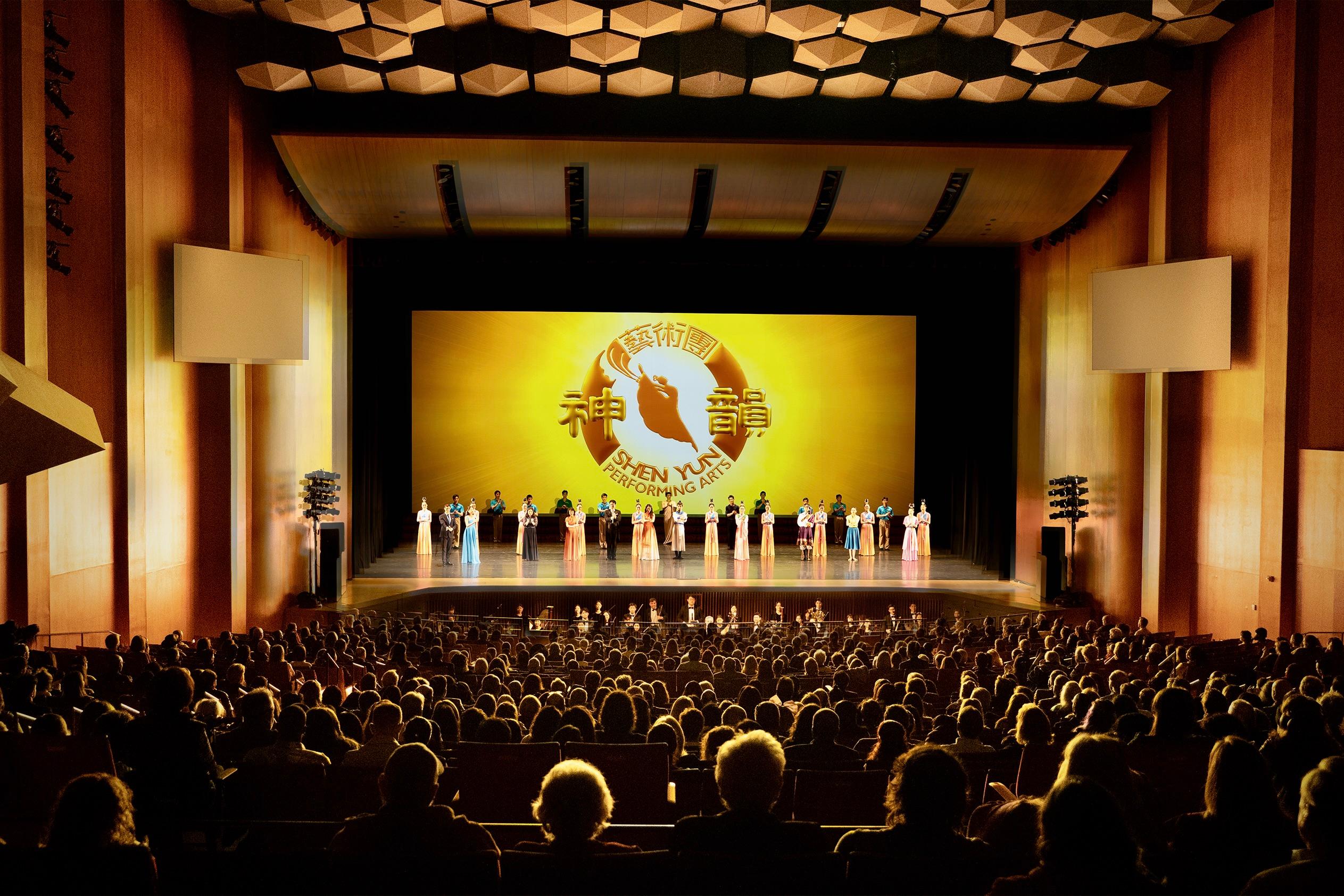
The CSSA president and other members registered multiple complaints with the school president. One Chinese student claimed the performance would make the environment “not safe.”
On Chinese social media platform WeChat, they created a chat group to strategize how to hamper the show. The Chinese Consulate also got involved, telling the club they would deliberate on “how to intervene,” screenshots obtained by The Epoch Times show.
Jim Luan, a student who helped to promote the show, tried to voice a different view. “Don’t buy into the propaganda in China so easily,” he recalled writing in the chat. In an instant, the group administrator kicked him out.
‘National Security Decision’
The risk of offending the CCP causes many to keep critical opinions to themselves, even in the United States, analysts observe.
“They don’t say anything out loud,” June Teufel Dreyer, a political science professor at the University of Miami, told The Epoch Times. “They know that if they become outspoken, it will become very hard to find a job when they go back to China.”
In private talks with sympathetic Chinese students, Tsultrim learned that Chinese authorities have used protest videos from his group as cautionary tales to other students. They played the videos inside China to students bound for America, portraying the activists as violent and warning the students to steer clear.

Washington in recent months has intensified scrutiny of Chinese students.
The Epoch Times reached out to Immigration and Customs Enforcement for comment.
Sparks of Hope
Lawmakers, analysts, and dissidents who spoke with The Epoch Times say that background screening is welcome if done right.
“It’s not this idea of us being against Chinese international students or international students writ large at all,” Tsultrim said. Rather, he said, the focus is on rooting out pro-CCP hateful rhetoric and activities.
“Many of these students just want to learn and contribute and do their jobs, but they are leveraged by the Chinese Communist Party, and so we need to vet,” Rep. John Moolenaar (R-Mich.), chairman of the House Select Committee on the CCP, told The Epoch Times.
Any student who comes to the United States shouldn’t have ties with the Chinese military or act under the regime’s orders—and higher education, which is a soft target for exploitation, calls for particular scrutiny, he said.
Rep. Zach Nunn (R-Iowa), who sits on the committee, took a historical perspective.
At Tiananmen Square in 1989, the Chinese regime rolled out tanks on pro-democracy student protesters calling for reform. “More than three decades later, we see China doing a deep reach across the ocean into U.S. universities,” he told The Epoch Times.

“We’ve seen Chinese operatives use academic institutions as power bases to be able to intimidate, to steal,” he said. They may have come on academic visas, he stated, but “they’re really operatives, whether willingly or unwillingly, tethered back to Beijing.”
“That’s frightening,” Nunn said.
During Xie’s student days, CSSA leaders were Beijing’s chief eyes and ears on international campuses. Today, there are more high-tech tools aiding the regime, but the human element remains just as vital, Xie said.
“It’s becoming more subtle, maybe more behind the scenes.”
“That’s definitely a sign,” he said. “Let’s just hope.”