
OAN Staff Brooke Mallory
7:08 PM – Monday, March 9, 2026
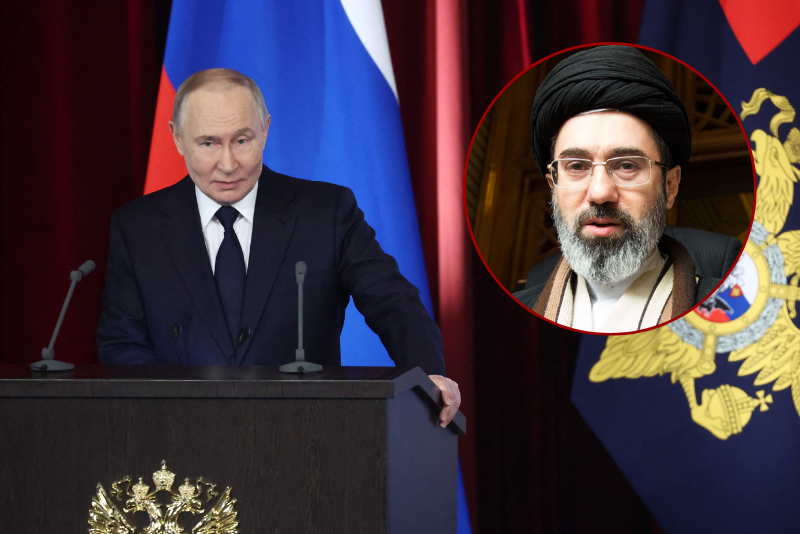
Russian President Vladimir Putin formally extended his “unwavering support” to Iran’s newly appointed supreme leader, Ayatollah Mojtaba Khamenei, signaling a deepening of the Moscow-Tehran alliance.
The Kremlin announced the sentiment on Monday, just hours after the Iranian “Assembly of Experts” officially named Mojtaba, 56, to succeed his deceased father, Ayatollah Ali Khamenei.
In a telegram addressed to the younger Khamenei, Putin characterized the transition as occurring during a period of “armed aggression” against Iran.
“At a time when Iran is confronting armed aggression, your tenure in this high position will undoubtedly require great courage and dedication,” Putin told the new ayatollah, further voicing his belief that Mojtaba would “unite the Iranian people in the face of severe trials.”
“For my part, I would like to confirm our unwavering support for Tehran and solidarity with our Iranian friends. Russia has been and will remain a reliable partner of the Islamic Republic,” he added.
The appointment of Mojtaba Khamenei, a figure long considered an operative within his father’s inner circle and closely tied to the Islamic Revolutionary Guard Corps (IRGC), is seen by analysts as a signal of defiance.
Adding to the drama, Iranian state television has also referred to Mojtaba as a “jaanbaz,” which translates to injured war veteran or “wounded by the enemy,” which regime media is labeling as the “Ramadan War.” This appears to confirm reports that he sustained injuries — possibly from earlier Israeli or U.S. strikes — though details on the timing, location, or severity remain limited. Iranian sources claim that he is expected to make a full recovery.
Meanwhile, by backing the appointment, Putin is positioning Russia as the primary international “guarantor” of the current Iranian regime’s survival.
While pledging support, Putin is also reportedly engaged in high-stakes “strategic hedging.” On Monday, he held a one-hour phone call with President Donald Trump. According to Kremlin spokesperson Yuri Ushakov, the conversation was “frank and businesslike,” with Putin proposing ideas for a “political and diplomatic settlement.”
However, on the ground, the cooperation remains robust. Intelligence reports suggest Russia continues to provide Iran with satellite imagery and technical data to help defend against ongoing strikes, even as Moscow seeks to avoid being pulled directly into a high-intensity kinetic conflict with the United States.
The Russian leader also used the occasion to warn that the destabilization of the Middle East would “inevitably jeopardize” global energy security. With oil prices surging past $115 per barrel following strikes on Iranian refineries, Putin’s message served as a reminder of Russia’s role as a primary energy supplier to “reliable partners” in Asia and parts of Eastern Europe.
As the war enters a critical second week, the “unwavering” nature of the Russia-Iran axis will be tested by the continued degradation of Tehran’s military capabilities and the increasing pressure from the Trump administration for an “unconditional surrender.”
Stay informed! Receive breaking news blasts directly to your inbox for free. Subscribe here. https://www.oann.com/alerts
What do YOU think? Click here to jump to the comments!
Sponsored Content Below