
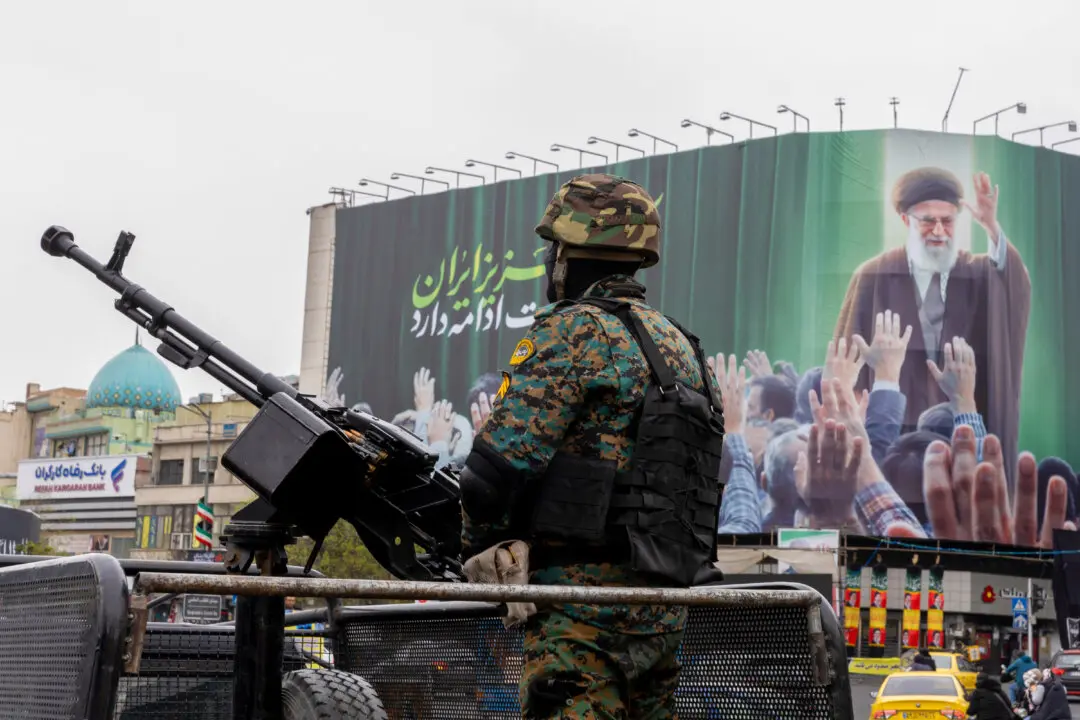
 A police officer stands guard beneath a poster of Iran’s former leader, Ayatollah Ali Khamenei in Tehran, Iran, on March 10, 2026. Majid Saeedi/Getty Images
President Donald Trump may be readying to declare victory in the military campaign against Iran, after nearly two weeks of U.S.–Israeli strikes on the Persian state.
At a press conference in Doral, Florida, on March 9, the president said that U.S. and Israeli forces were “winning very decisively” and that the joint military operation was “way ahead of schedule.”
During his press conference, Trump said the Iran conflict is “going to be ended soon.”
The president said the biggest threats Iran posed at the start of the conflict had been negated within the first two days of operations. He touted expansive strikes on Iran’s navy and air force.
The Pentagon has assessed that Iranian missile attacks have decreased by 90 percent from the start of the conflict and that drone attacks have decreased by 83 percent.
“As President Trump declared yesterday, we’re crushing the enemy in an overwhelming display of technical skill and military force,” War Secretary Pete Hegseth told reporters on March 10.
Hegseth deferred to the president on a specific timeline for the conclusion of U.S. operations.
“The president has set a very specific mission to accomplish, and our job is to unrelentingly deliver that,” Hegseth said. “Now, he gets to control the throttle. He’s the one deciding.”
As in previous press briefings during the Iran hostilities, Hegseth distanced the current U.S. military operations from those the United States undertook in Iraq in 2003.
“This is not 2003. This is not endless nation-building under those types of quagmires we saw under [President George W. Bush] or [President Barack Obama]. It’s not even close,” Hegseth said on March 10.
“Our generation of soldier will not let that happen again, and nor will this president, who very clearly ran against those kinds of never-ending, nebulously scoped missions.”
Trump had previously called for Iran’s unconditional surrender.
On March 10, White House press secretary Karoline Leavitt told reporters that Trump isn’t necessarily expecting Iranian leaders to announce a surrender.
“When President Trump says that Iran is in a place of unconditional surrender, he’s not claiming the Iranian regime is going to come out and say that themselves,” Leavitt said.
Most Intense Day of Strikes
During his March 10 remarks, Hegseth announced that U.S. forces were undertaking the “most intense day of strikes inside Iran” since the start of hostilities, involving the most fighters, the most bombers, and “intelligence more refined and better than ever.”
U.S. forces reported that in the first 10 days of fighting, they struck more than 5,000 targets, including 50 Iranian warships.


On March 10, Chairman of the Joint Chiefs of Staff Gen. Dan Caine said U.S. forces were continuing to search for and strike Iranian mine-laying vessels that could impede commercial traffic through the Persian Gulf.
At a March 4 press briefing, Hegseth said U.S. forces were also working to achieve total air superiority over Iranian airspace and would reach that objective “in under a week.”
In their remarks last week, Hegseth and Caine said that gradual reductions in Iran’s air defenses would allow U.S. forces to transition from striking with longer-ranged weapons launched outside of Iranian airspace to using cheaper and more readily available bombs that can be dropped from within Iran’s airspace.
At the March 10 press briefing, Caine said U.S. bombers had recently dropped dozens of 2,000-pound GPS-guided gravity bombs to strike underground Iranian missile facilities in the south of the country.
The Epoch Times reached out to the U.S. Central Command for more details about the progress of the U.S. effort to gain air superiority over Iran but did not receive a response by publication time.
Thus far, seven U.S. military personnel have been killed in the course of hostilities with Iran.
Chief Pentagon spokesman Sean Parnell told The Epoch Times that another 140 U.S. military personnel have sustained injuries. Parnell said most of the injuries have been minor, and 108 of those injured have since returned to duty.
Trump Consulting With Netanyahu
Although he said during his March 9 press conference that the current hostilities with Iran would soon end, Trump said U.S. forces may once again be called upon to fight Iranian forces.
“If it starts up again, they’ll be hit even harder,” the president warned.
In an interview with The Times of Israel on March 8, Trump said he would consult with Israeli Prime Minister Benjamin Netanyahu as he moves to conclude U.S. military operations against Iran.

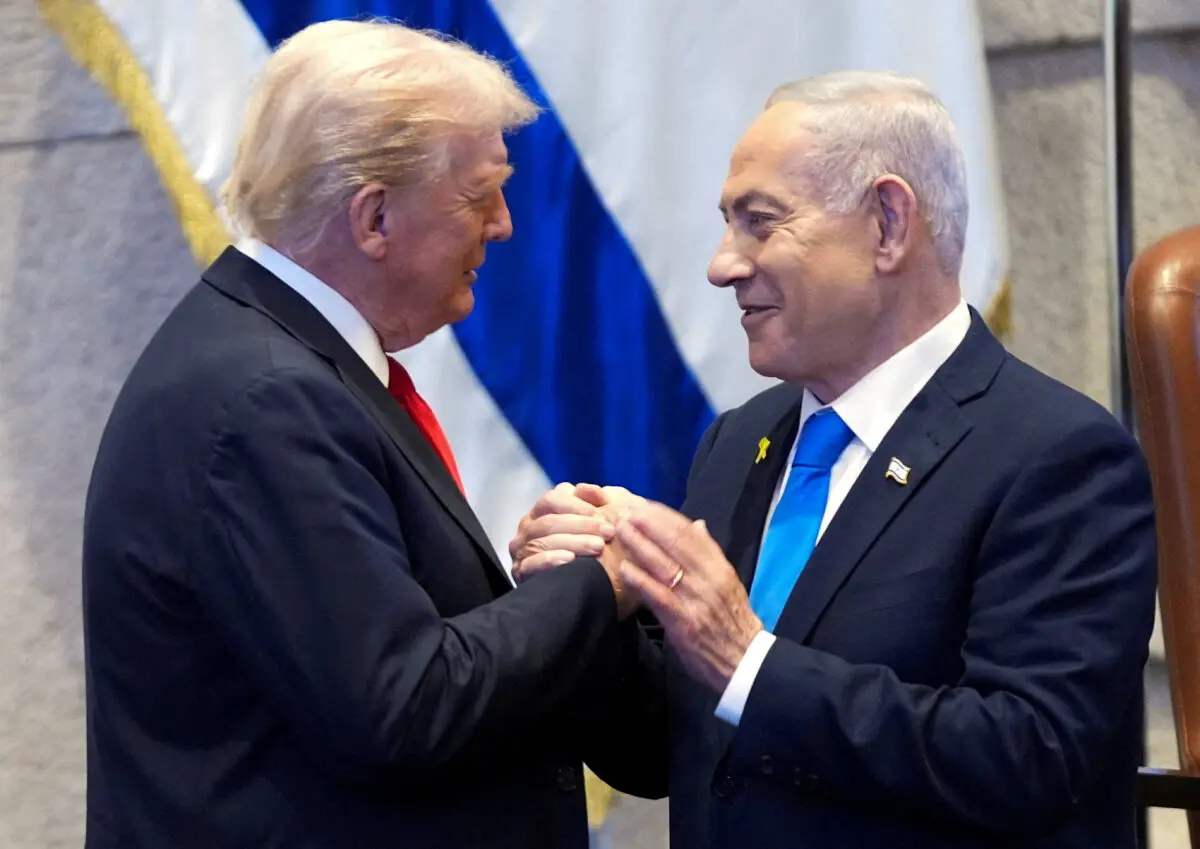
“I think it’s mutual … a little bit,” Trump said. “We’ve been talking. I’ll make a decision at the right time, but everything’s going to be taken into account.”
The fighting with Iran has reignited clashes between Israel and Hezbollah, which has been designated by the United States as a terrorist group and has long been considered an ally to Iran’s Shia Islamic leadership.