
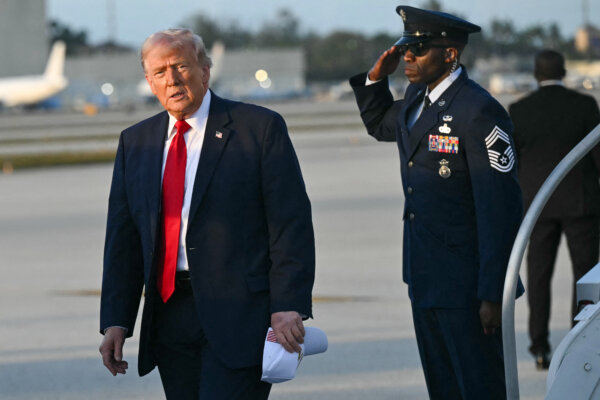
 President Donald Trump said on Monday that Cuba faces severe humanitarian challenges and suggested the possibility of a U.S. takeover, which he described as potentially friendly or not.
Speaking at a news conference at Trump National Doral Miami, the president noted that U.S. Secretary of State Marco Rubio is handling the matter. “He’s dealing [with it], and it may be a friendly takeover, it may not be a friendly takeover,” Trump said.
“Wouldn’t really matter because they’re really down to … as they say, fumes,” he said, adding that Cuba is critically weakened and has “no energy, they have no money.”
This follows Trump’s urging since earlier this year for Cuba to make an agreement, especially after the U.S. capture of Venezuelan leader Nicolás Maduro in January, which severed Cuba’s primary oil supply from Venezuela.
In early January, Cuban leader Miguel Díaz-Canel Bermúdez said he would not negotiate with the U.S. president.
Díaz-Canel posted a series of social media posts on Jan. 12, in which he said there are no conversations between his regime and Trump other than “technical contacts in the migration field.”
“We have always been willing to engage in a serious and responsible dialogue with the various governments of the United States, including the current one, on the basis of sovereign equality, mutual respect, principles of international law, reciprocal benefit without interference in internal affairs and with full respect for our independence,” he wrote, according to a translation of his posts.
“As history demonstrates, relations between the U.S. and Cuba, in order to advance, must be based on international law rather than on hostility, threats, and economic coercion.”
U.S.-Cuba relations have been strained for decades, since the 1959 revolution led by Fidel Castro, which established a communist regime opposed by many Cuban exiles in Miami who have long sought its overthrow.