
Authored by Julio Rivera via American Greatness,
Washington has discovered a familiar political trick: wrap a flawed policy in the language of protecting children and hope nobody reads the fine print. The latest example is the App Store Accountability Act, a bill championed by lawmakers who appear eager to regulate the internet without understanding how it actually works.
Supporters insist the legislation will protect kids online. In reality, it risks undermining privacy, violating constitutional protections, and creating a cybersecurity disaster in the process.
And remarkably, Congress is pushing forward with this even though federal courts have already signaled that this exact regulatory model is unconstitutional.
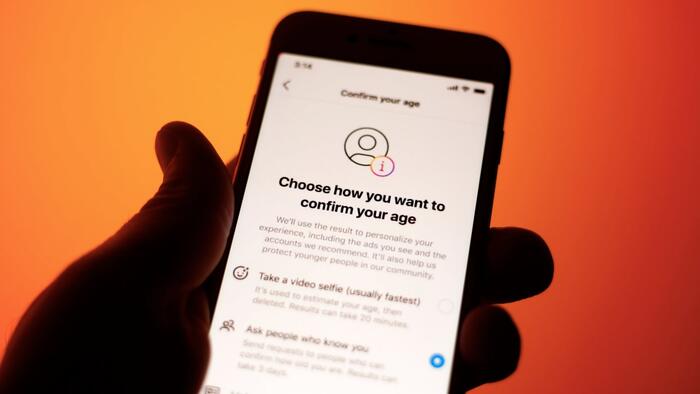
The App Store Accountability Act would require app stores to verify the ages of every user and share age information with app developers. On paper, that sounds straightforward. In practice, it would force companies to collect massive amounts of sensitive personal data simply to download everyday apps.
Want to download a weather app? Verify your age.
Want to install a calculator? Verify your age.
Want to read the news? Verify your age.
The practical result is obvious: app stores would be compelled to gather highly sensitive identity data on tens of millions of Americans and then distribute that information to countless third-party developers.
This could be one of the largest digital identity honeypots ever conceived.
Security experts have been warning about this for months. In fact, 419 cybersecurity and privacy academics from 30 countries recently signed an open letter warning that large-scale age verification systems are “dangerous and socially unacceptable” because they create enormous new attack surfaces for hackers and data thieves.
The logic is simple. If every app download requires age verification, that means sensitive identity data must be stored, transmitted, and accessed across thousands of services. Instead of limiting the spread of personal information, the bill effectively multiplies it.
For cybercriminals, it would be a dream target.
Equally troubling is the bill’s blatant disregard for recent federal court rulings. Lawmakers promoting the legislation often claim that age-verification mandates have already received judicial approval.
That claim collapses under even basic scrutiny.
Just months ago, a federal judge blocked a nearly identical Texas law modeled on the same concept, ruling that it was “exceedingly overbroad” and failed strict constitutional scrutiny.
The court compared the requirement to a government mandate forcing bookstores to check the ID of every customer before allowing them inside. Such a system, the judge explained, would restrict minors from participating in the “democratic exchange of views online.”
In other words, it violates the First Amendment.
Despite that ruling, Congress now appears ready to repeat the same mistake on a national scale.
Supporters of the bill, including lawmakers like Representatives John James (R-MI), Gus Bilirakis (R-FL), and Erin Houchin (R-IN), argue that forcing app stores to verify the age of every user will protect children online. But critics warn the approach risks creating new privacy and security problems while doing little to address the real harms children face on the internet.
Additionally, the proposal ignores the practical realities of how the modern app ecosystem actually functions.
Most apps are not social media platforms. They are mundane tools: banking apps, airline apps, school apps, fitness trackers, weather alerts, home security dashboards, and so forth. The App Store Accountability Act would force age verification for all of them.
Even worse, the bill requires verification across four distinct age brackets: under 13, 13 to 15, 16 to 17, and adults. That may sound bureaucratically tidy, but in the real world, it creates a massive liability problem for app stores.
If a company guesses wrong about whether someone is 12 or 13, it could face penalties from federal regulators. The only way to avoid that risk is to demand hard identification, such as driver’s licenses, credit cards, or even birth certificates to prove parental relationships.
That is the inevitable outcome of the bill’s legal structure.
And millions of Americans do not even possess the required credentials. More than 45 million Americans are either credit unserved or underserved, meaning the law could effectively force them to hand over government IDs simply to download basic apps.
Ironically, many parents do not even support this approach. Surveys show parents overwhelmingly prefer tools that protect children while they use apps rather than a one-time age verification at the app store level.
In other words, the bill creates a massive bureaucracy that fails to solve the problem it claims to address.
More importantly, it distracts from real solutions that actually help protect kids online.
Digital literacy education, stronger parental control tools, and targeted enforcement against platforms that knowingly facilitate exploitation are all more effective approaches. These strategies address harmful behavior without building a nationwide surveillance system for internet users.
The App Store Accountability Act does the opposite. It places the burden on every user, every developer, and every app store while doing little to target the bad actors responsible for real harm.
That is why critics from across the technology and cybersecurity communities are raising alarms. The legislation threatens to create new privacy risks while inviting years of constitutional litigation that will likely end with the law being blocked in court.
If lawmakers truly want to protect children online, they should start by listening to experts instead of rushing through legislation that ignores both legal precedent and technical reality.
Unfortunately, Washington often prefers symbolic victories to workable solutions.
The App Store Accountability Act is a perfect example of what happens when lawmakers regulate technology they clearly do not understand. It risks undermining privacy, weakening cybersecurity, and violating free speech rights all at the same time.
And if Congress insists on passing it anyway, the courts will almost certainly remind them why the Constitution still matters.