
LVMH, the owner of Louis Vuitton, Christian Dior, Fendi, Bvlgari, Moët & Chandon, and dozens of other luxury brands, just posted its worst quarter since the dot-com bust era, making it the worst-performing European luxury stock this year as demand for luxury handbags, shoes, watches, perfumes, and wines continues to soften amid an intensifying Middle East conflict.
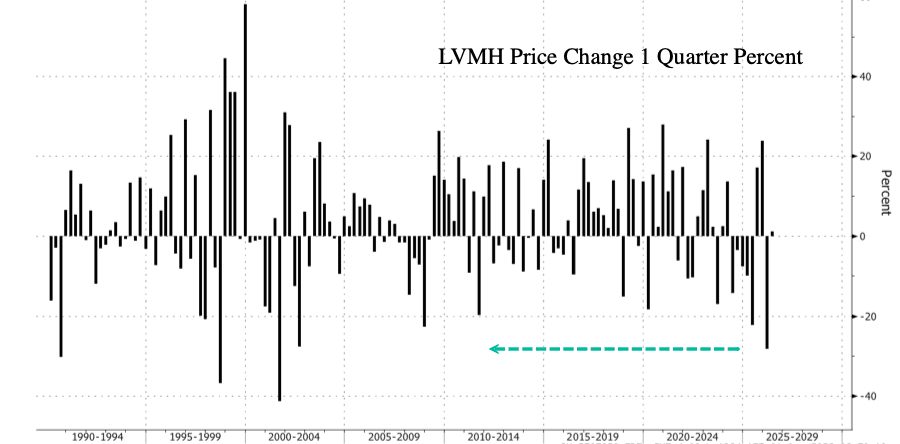
LVMH shares in Paris tumbled 28% in the first quarter, exceeding quarterly declines seen during Covid and the 2008 financial crisis, but not surpassing the 41% third-quarter decline in 2001. Peers Richemont fell 20%, and Hermès slid 25% in the quarter.
“Elevated global uncertainty has generated significant investor anxiety, particularly among those who had been anticipating a long-awaited recovery in luxury demand this year. This has driven a sharp sector de-rating across luxury,” UBS analyst Zuzanna Pusz wrote in a note for clients on Tuesday.
Pusz said geopolitical uncertainty in the Middle East has largely driven de-rating across luxury stocks, leaving sector valuations roughly 15 percentage points below their long-term average relative to the broader market.
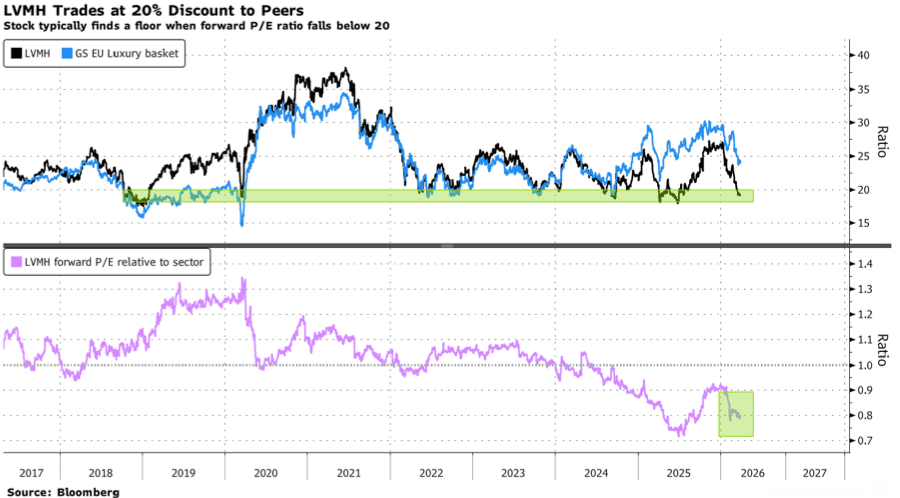
The selloff also reflects LVMH’s mounting problems: soft January guidance, greater exposure to more cash-strapped consumers, and continued weakness in its wines and spirits business, especially Hennessy. As a result, the stock now trades at a 20% discount to its peers.
Pusz noted that, despite the grim outlook for luxury, she has not yet seen clear evidence of a real demand slowdown, particularly in Asia, according to recent channel checks.
She added, “Against a backdrop of very negative market sentiment and depressed valuations, we think that even modest Q1 beats could be disproportionately rewarded. Fundamentally, we continue to expect sequential improvement for most companies, though selectivity remains critical. CFR and LVMH are our top picks.”
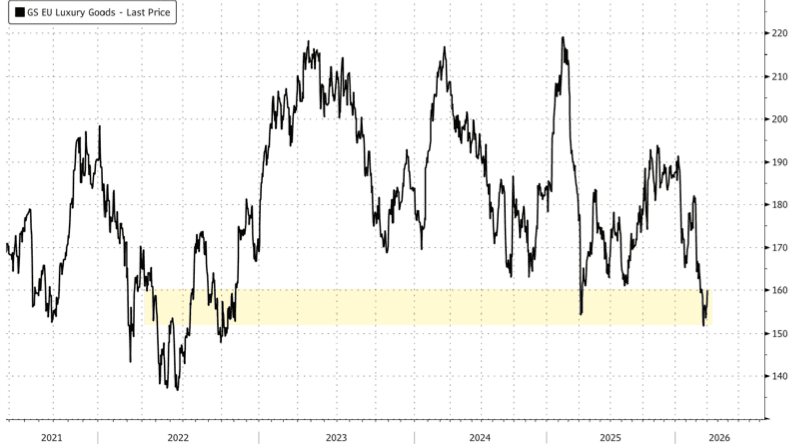
The Goldman Sachs basket of European luxury stocks (GSXELUXG Index) appears to have found support at 2022 trading levels.
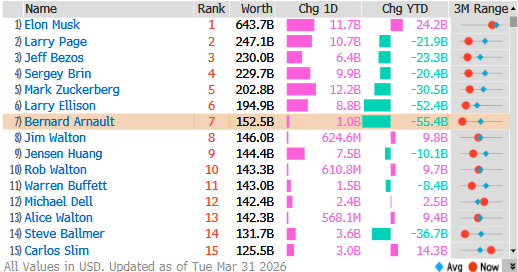
Meanwhile, LVMH CEO Bernard Arnault’s fortune has plummeted by $55.4 billion over the past quarter, the largest drop among the world’s 500 richest people.
“LVMH has become more than a luxury stock, it’s now a barometer of global confidence,” John Plassard, head of investment strategy at Cité Gestion, said. “The issue is not the Middle East exposure itself, but what it signals: uncertainty, pressure on the wealth effect, and fear of a broader slowdown.”
Professional subscribers can read the full UBS “European Luxury” note here at our new Marketdesk.ai portal