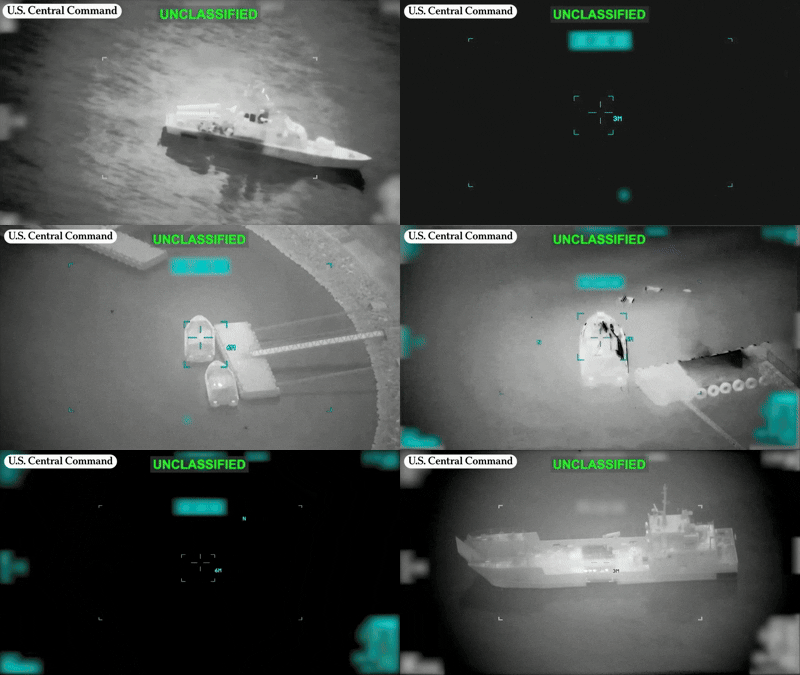
 The U.S. military said on March 12 that it has destroyed more than 30 Iranian minelaying vessels and struck more than 6,000 targets since the campaign against Iran started last month.
In an update on Operation Epic Fury released by the U.S. Central Command (CENTCOM), the military said it is prioritizing the striking of targets to disable the Iranian regime’s security apparatus and will focus on “locations that pose an imminent threat.”
Aside from the more than 30 minelayers, the U.S. military has destroyed 60 Iranian naval vessels, CENTCOM said in a post on X.
On March 12, the price for a barrel of oil surpassed $100 as tankers were attacked in the Strait of Hormuz. Meanwhile, Iran’s new leader, Mojtaba Khamenei, said in a statement that the strait would remain closed as the war continues.
In a social media post, U.S. President Donald Trump wrote that the rising cost of oil is a necessary price to pay to degrade the Iranian regime.
“The United States is the largest Oil Producer in the World, by far, so when oil prices go up, we make a lot of money,” Trump wrote on Truth Social.
But he said that stopping Iran from having nuclear weapons capable of “destroying the Middle East” and the rest of the world is of more importance to him, referring to U.S. officials’ long-standing view that Tehran was working to produce weapons-grade uranium through its nuclear program.
“I won’t ever let that happen,” he said.
About 20 percent of the world’s oil passes through the Strait of Hormuz, which connects the Persian Gulf and the Gulf of Oman, according to the Energy Information Administration.
Buoyed by the rising oil prices, the national average for a gallon of regular gasoline reached $3.60 on March 12, according to AAA data. The price is up by about 2 cents from March 11 and up by more than 60 cents over the average price a month ago.
It comes as Khamenei, who has not been seen in public since he was named as the Iranian leader last weekend, released a statement through state-run media that Iran will work to keep the Strait of Hormuz closed. He also vowed to continue fighting the United States and Israel, which launched their initial strikes against Iran on Feb. 28, and indicated that attacks on Iran’s Gulf neighbors will continue.
“The will of the people is to continue effective defense, and their presence on the scene must be maintained,” he said.
Amid uncertainty about the strait, Iranian Foreign Ministry spokesperson Esmaeil Baghaei said some ships could still pass through if they coordinate with Iran’s navy.
“After the current events, generally we cannot return to conditions before Feb. 28,” Baghaei said in comments carried by state-run media.
International Energy Agency member countries announced on March 11 that they would release 400 million barrels of oil from strategic reserves, nearly half from the United States.